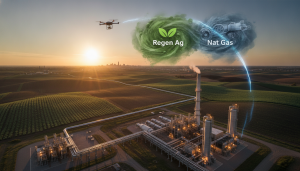
Navigating the Green Pivot: UK Policy, Market Volatility, and Investor Outlook
The UK political landscape is increasingly signaling a determined push towards green investment, a narrative amplified by prominent figures like the Mayor of London. This advocacy for robust Treasury backing of the energy secretary’s ambitious emissions reduction targets — an 81% cut by 2035 — creates a complex backdrop for energy investors. While proponents frame green initiatives as engines for economic growth and job creation, the implications for the traditional oil and gas sector, both domestically and globally, are profound. Investors are keenly watching how such a pivot might reshape the investment environment, particularly as crude prices experience significant volatility. Understanding the nuanced interplay between policy, market fundamentals, and evolving investor sentiment is paramount for strategically navigating the dynamic energy sector.
Crude Market Turmoil: A Shifting Landscape for Energy Investment
The current market snapshot reveals a period of considerable uncertainty, a critical factor for investors evaluating long-term energy strategies amidst the UK’s green agenda. As of today, Brent Crude trades at $90.38, reflecting a substantial 9.07% decrease within the day, with its price range fluctuating between $86.08 and $98.97. Similarly, WTI Crude has seen a sharp decline, now at $82.59, down 9.41% with a daily range of $78.97 to $90.34. This daily slump is not an isolated event; the 14-day trend for Brent crude shows a stark downturn, plummeting from $112.78 on March 30th to its current $90.38 – a significant drop of $22.4, or 19.9%. Such pronounced volatility suggests a market grappling with more than just short-term supply-demand imbalances; it points to deeper anxieties potentially related to global economic slowdowns, geopolitical shifts, or perhaps, an early anticipation of accelerated energy transition impacts. For oil and gas investors, this price environment underscores the increasing risk associated with traditional fossil fuel assets, making the prospect of government-backed green investment even more compelling as a potential hedge or diversification strategy.
Upcoming Catalysts: OPEC+ Decisions and Inventory Data Amidst Policy Shifts
The UK’s proposed green investment push, with its ambitious emissions reduction targets, will unfold against a backdrop of critical global energy events that could significantly influence market dynamics. In the immediate future, investors are keenly awaiting the OPEC+ Joint Ministerial Monitoring Committee (JMMC) Meeting on April 19th, followed by the full OPEC+ Ministerial Meeting on April 20th. These gatherings are pivotal for determining global oil supply policy, including production quotas, and their outcomes could either stabilize or further disrupt the volatile crude market. Any signals from OPEC+ regarding supply adjustments will have a direct impact on pricing, potentially clashing with the long-term demand erosion implied by aggressive green policies like the UK’s 2035 target. Furthermore, the weekly API and EIA Crude Inventory reports (due April 21st, 22nd, 28th, and 29th) will provide crucial insights into immediate US supply and demand fundamentals, while the Baker Hughes Rig Count on April 24th and May 1st will indicate future production trends. While these are predominantly global and US-centric events, a strong commitment to green investment in a major economy like the UK contributes to the broader narrative of declining fossil fuel demand, influencing long-term investment decisions and potentially shaping the rhetoric and strategies of international oil producers.
Investor Concerns: Navigating Long-Term Oil Prices and Portfolio Resilience
Our proprietary reader intent data reveals a clear focus among investors on the future trajectory of oil prices and the resilience of their portfolios in an evolving energy landscape. Key questions frequently asked this week include predictions for oil prices per barrel by the end of 2026 and inquiries into OPEC+’s current production quotas. This highlights investor anxiety regarding long-term market stability and the effectiveness of supply management in the face of demand uncertainties. The UK Labour government’s explicit call for increased green investment, backed by the Treasury, directly impacts these long-term outlooks. If the government successfully frames green initiatives as economic growth drivers, it could accelerate capital reallocation away from traditional fossil fuels, thus dampening long-term oil demand projections. For integrated energy companies like Repsol, which investors are also asking about, a strong policy push towards green energy in developed markets could necessitate even faster diversification into renewables, biofuels, or carbon capture technologies to maintain investor confidence and valuation. The challenge for investors lies in discerning which companies are best positioned to adapt, balancing exposure to traditional energy with strategic investments in emerging green opportunities, especially when policy initiatives could dictate the pace of transition and market competitiveness.
The Green Growth Dividend: Opportunities and Challenges for Energy Incumbents
The Mayor of London’s impassioned argument that green investment can unlock “good growth” and “good jobs” represents a significant policy and rhetorical shift that investors cannot ignore. For the UK Labour government, framing the 81% emissions reduction target by 2035 not as a cost but as an economic opportunity is central to garnering public and political support. From an investment perspective, this narrative suggests a potential wave of capital deployment into areas like renewable energy infrastructure, electric vehicle charging networks, energy efficiency upgrades, and advanced green technologies. This creates clear opportunities for companies operating in these sectors, as well as for traditional oil and gas firms willing and able to pivot their business models. Integrated energy majors, for instance, could leverage their existing engineering expertise, project management capabilities, and capital access to become leaders in offshore wind, hydrogen production, or carbon capture and storage. However, this also presents a substantial challenge for companies heavily reliant on fossil fuel exploration and production, particularly those with significant UK North Sea assets. Without government support for a “just transition” that includes these traditional energy sectors, or direct investment in carbon abatement technologies, they risk being left behind. Investors must scrutinize corporate strategies to identify which firms possess the agility and foresight to capitalize on this green growth dividend, rather than being marginalized by it.