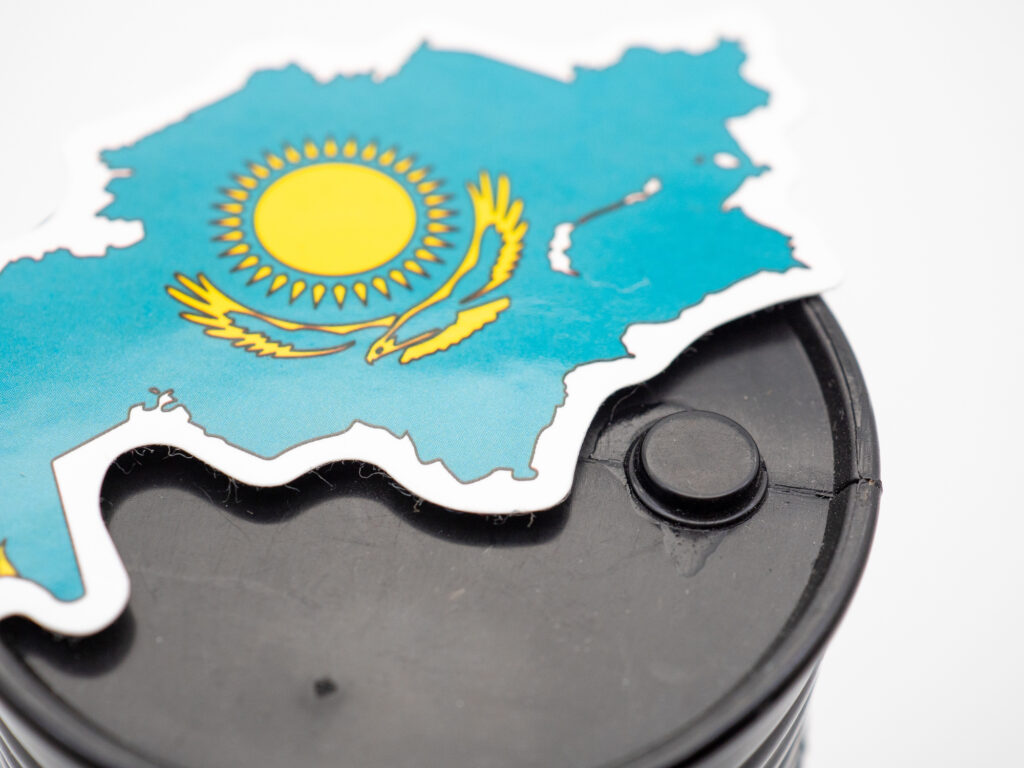
Kazakhstan’s oil and condensate output saw a notable increase in August, climbing to 8.885 million metric tons from 8.631 million tons in July. This translates to approximately 2.150 million barrels per day, a 3% month-over-month surge primarily driven by robust performance from the Tengiz, Kashagan, and Karachaganak oilfields. For energy investors, this production growth from a key non-OPEC+ nation presents a fascinating dynamic, particularly as global markets grapple with supply tightness and evolving demand patterns. Our proprietary data indicates that investors are keenly observing how such regional production shifts influence broader crude pricing and the strategic decisions of major energy players. This analysis delves into the implications of Kazakhstan’s output trajectory, the nuances of its OPEC+ commitment, and the potential market catalysts on the horizon.
Kazakhstan’s Production Surge and OPEC+ Commitments
The latest figures from Kazakhstan reveal a significant uptick in its energy output, with year-to-date oil and condensate production reaching 67.389 million tons through August, a substantial increase from 59.307 million tons recorded in the same period last year. This growth underscores Kazakhstan’s increasing importance in the global energy supply chain. A significant portion of this surge is attributable to Tengizchevroil (TCO), the country’s largest producer, which achieved a record output of 3.715 million tons in August alone. While these figures indicate Kazakhstan is exceeding its nominal OPEC+ quotas, the nation has consistently reaffirmed its commitment to the pact, leveraging the crucial distinction that gas condensate, a type of light oil, is excluded from its production limits. This nuance is vital for investors trying to understand the actual supply impact. Many of our readers are actively asking about “OPEC+ current production quotas,” and Kazakhstan’s situation highlights the complexities within these agreements. The strategic exemption for condensate allows Kazakhstan to ramp up overall liquid output without directly contravening crude production cuts, offering a flexible supply source in a volatile market.
Market Response Amidst Broader Price Volatility
Despite increased production from sources like Kazakhstan, the broader crude market is exhibiting signs of underlying softness. As of today, Brent Crude is trading at $92.76, marking a -0.87% decline, with an intraday range of $97.92-$98.9. Similarly, WTI Crude stands at $90.11, down -1.16%, fluctuating between $89.37-$90.34. Our 14-day Brent trend data paints an even clearer picture of recent bearish sentiment, showing a significant drop from $112.57 on March 27th to $98.57 on April 16th, representing a $14 or 12.4% decrease. This downward pressure, despite regional output increases, suggests that macroeconomic concerns, demand outlooks, or other supply-side factors are currently weighing more heavily on investor sentiment. Investors are naturally asking, “What is the current Brent crude price and what model powers this response?” and our real-time data reflects the dynamic nature of these market forces. The marginal increase in gasoline prices, currently at $3.08 (-0.32%), further indicates a mixed signal environment, where refined products are holding relatively steadier than crude, possibly due to seasonal demand or refining bottlenecks. For investors, understanding this divergence is key to navigating short-term trading opportunities and long-term positioning.
The Future Growth Project: A Long-Term Catalyst for Key Stakeholders
Looking ahead, Kazakhstan’s Energy Ministry has ambitious plans, raising its 2026 target for oil and condensate output to 100.5 million tons. The primary engine for this projected growth is the Tengizchevroil (TCO) Future Growth Project (FGP), which aims to boost TCO’s annual output to 40 million tons upon completion. This initiative represents a significant long-term growth driver, not just for Kazakhstan but also for the major international energy companies that hold substantial stakes in TCO. Chevron, with its 50% ownership, stands to be the largest beneficiary of this expansion. ExxonMobil holds a 25% share, while KazMunayGaz controls 20%, and Lukoil owns 5%. For investors in these companies, the successful execution of the FGP translates directly into increased production volumes, enhanced revenue streams, and potentially higher shareholder returns in the coming years. This forward-looking analysis highlights how strategic capital expenditures today can lock in substantial production capacity for the latter half of the decade, providing a degree of certainty amidst an otherwise unpredictable global energy landscape. The FGP’s progress will be a critical metric for evaluating the long-term prospects of these integrated oil majors and their exposure to the Caspian region.
Navigating Upcoming Market Catalysts
The immediate future holds several critical events that could significantly sway crude prices and investor sentiment, irrespective of Kazakhstan’s steady output growth. This Friday, April 17th, the OPEC+ Joint Ministerial Monitoring Committee (JMMC) convenes, followed by the full Ministerial OPEC+ Meeting on Saturday, April 18th. These meetings are paramount, as market participants will be scrutinizing any signals regarding potential shifts in production policy or adherence to existing quotas. Any indication of further supply adjustments, whether cuts or increases, will likely trigger strong market reactions. Beyond OPEC+, the weekly API and EIA crude inventory reports, scheduled for April 21st/22nd and April 28th/29th respectively, will offer crucial insights into U.S. supply-demand dynamics. Persistent draws or unexpected builds in these reports can create significant volatility. Furthermore, the Baker Hughes Rig Count on April 24th and May 1st will provide a barometer for future U.S. production activity. For investors, the interplay between Kazakhstan’s consistent supply additions and these upcoming global catalysts creates a complex but opportunity-rich environment. Monitoring these events closely, alongside real-time market data, will be essential for making informed investment decisions in the dynamic oil and gas sector.