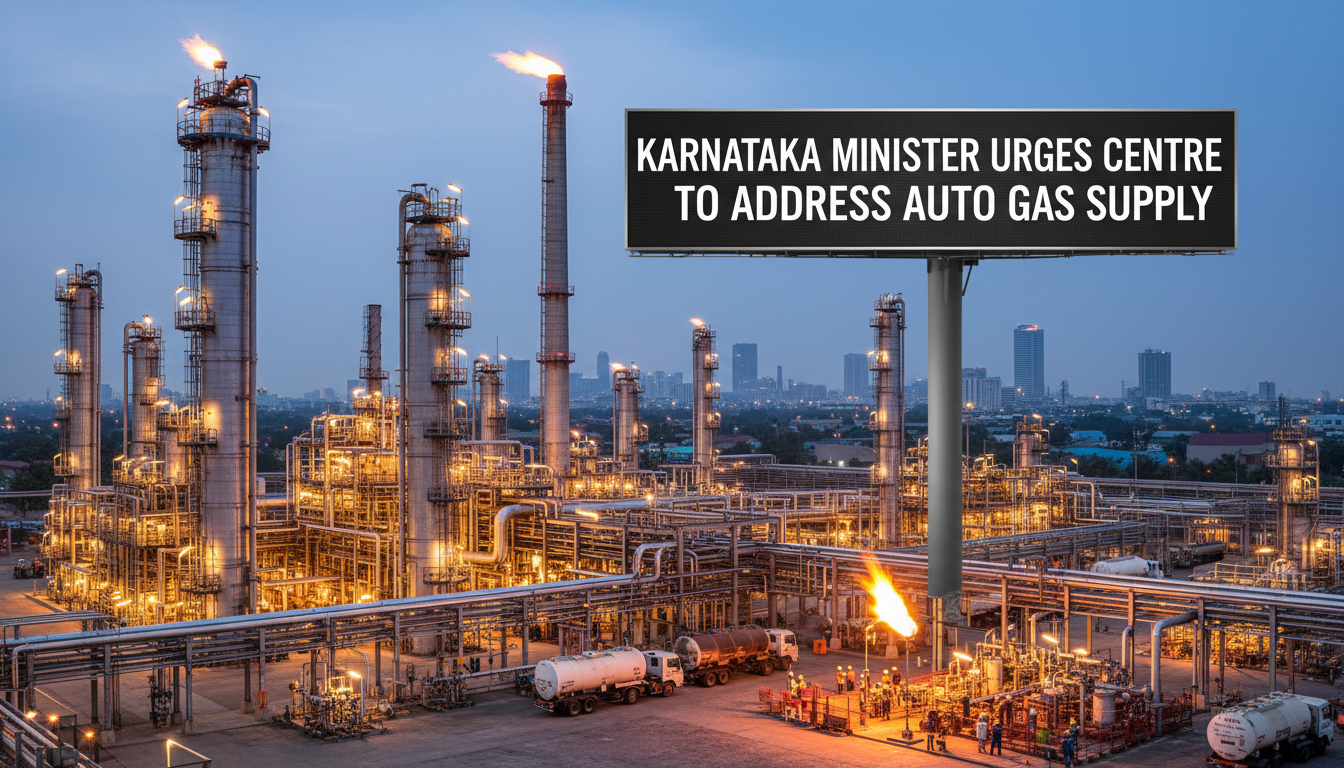
The recent auto gas supply crisis gripping Karnataka, India, serves as a potent reminder of the intricate vulnerabilities within global energy supply chains and their immediate domestic ramifications. While seemingly a localized issue affecting hundreds of thousands of auto drivers, this shortfall in Auto LPG is, in fact, a critical indicator for investors monitoring India’s energy security, the operational dynamics of its oil marketing companies (OMCs), and the broader interplay between geopolitical events and domestic energy markets. OilMarketCap.com’s proprietary data reveals how global crude price volatility, exacerbated by international tensions, directly translates into significant challenges for both private and state-backed energy players, demanding a closer look at upcoming market catalysts and policy responses.
The Karnataka Auto LPG Imbroglio: A Microcosm of Macro Challenges
Karnataka’s food, civil supplies, and consumer affairs minister, K H Muniyappa, has issued an urgent appeal to the central government to address a severe shortage of auto gas. This deficit is causing widespread disruption, particularly in Bengaluru, where an estimated 160,000 auto drivers rely on Auto LPG. Across the state, approximately 300,000 out of five lakh auto-rickshaws are gas-powered, making Karnataka home to the largest fleet of gas-fueled autos in India. The state requires a daily supply of 280 metric tons (MT) of auto gas. However, while state-run giants such as IndianOil, Bharat Petroleum Corporation (BPC), and Hindustan Petroleum Corporation (HPC) manage to supply around 60 MT, the vast majority—220 MT—is historically provided by the private sector. The current crisis stems from a significant failure by these private players to ensure consistent supply, with many stations reportedly shutting down. This has led to extensive queues and operational chaos at the remaining government-run stations, highlighting a critical gap in the nation’s energy distribution resilience, reportedly triggered by the ongoing crisis in West Asia.
Geopolitics and Price Volatility: Squeezing Private Margins
The operational challenges faced by private auto gas distributors in Karnataka are not isolated incidents; they are deeply intertwined with the volatile global energy landscape. The “crisis in West Asia” mentioned by state officials points directly to escalating geopolitical tensions that have a direct and immediate impact on crude oil and refined product prices, including LPG. As of today, Brent Crude trades at $95.83, marking a robust 6.03% increase, while WTI Crude stands at $87.94, up 6.48%. This sharp upward movement in just one trading day underscores the extreme sensitivity of markets to geopolitical shifts. Over the past fortnight, Brent has seen dramatic swings, falling from $112.78 on March 30 to $90.38 by April 17, only to rebound sharply. This kind of intense volatility, coupled with rising crude prices, significantly inflates the cost of feedstock for LPG production and imports. For private distributors operating on thin margins or without the benefit of government-backed pricing mechanisms, such price fluctuations can quickly render their operations unsustainable, forcing them to reduce supply or even cease operations. This dynamic helps explain why private players, responsible for 220 MT of daily supply in Karnataka, have faltered, leaving state-run entities to bear the brunt of demand.
Investor Focus: OMCs and the Shifting Supply Paradigm
For investors keenly focused on the profitability and strategic positioning of India’s oil marketing companies, the Karnataka auto gas shortage presents a nuanced challenge and potential opportunity. Our reader intent data indicates a strong investor interest in the trajectory of crude prices and the performance of major energy players. Questions like “what do you predict the price of oil per barrel will be by end of 2026?” highlight the macro concerns, while inquiries about specific company performance underscore the micro implications. In this scenario, state-run OMCs like IndianOil, BPC, and HPC are under immense pressure to bridge the supply gap left by the private sector’s withdrawal. This could lead to increased sales volumes for these companies in the short term, but also potentially to higher operational costs, especially if they are mandated to sell at subsidized rates or absorb higher import costs without full compensation. Investors should monitor government pronouncements closely for any indications of subsidies, price caps, or directives that could impact the financial health of these public sector undertakings. The crisis also emphasizes the critical role OMCs play in national energy security, potentially reinforcing their strategic importance and long-term stability despite short-term operational hurdles.
Forward Outlook: Upcoming Events and Policy Responses
The resolution of Karnataka’s auto gas crisis, and by extension, India’s broader energy market stability, hinges significantly on upcoming global energy events and the central government’s policy responses. The next two weeks are particularly crucial. On April 20, the OPEC+ Joint Ministerial Monitoring Committee (JMMC) will convene, followed by the full OPEC+ Ministerial Meeting on April 25. Any decisions made regarding production quotas or supply strategies by this influential cartel will directly impact global crude oil prices and, consequently, the cost of LPG feedstock for India. A tightening of supply or continued geopolitical instability could push prices even higher, further challenging domestic distributors. Simultaneously, investors should watch for the weekly API and EIA petroleum status reports (April 21, 22, 28, 29) for insights into global inventory levels, and the Baker Hughes Rig Count (April 24, May 1) for trends in drilling activity. Domestically, the central government’s response to Karnataka’s urgent appeals—which include letters from the Chief Minister and Chief Secretary dating back to April 6—will be critical. Potential actions could range from coordinated import strategies, financial incentives for private players, or even temporary mandates on OMCs to increase supply, regardless of cost. These policy interventions will shape the immediate future of India’s auto gas market and offer clear signals for energy investors.


