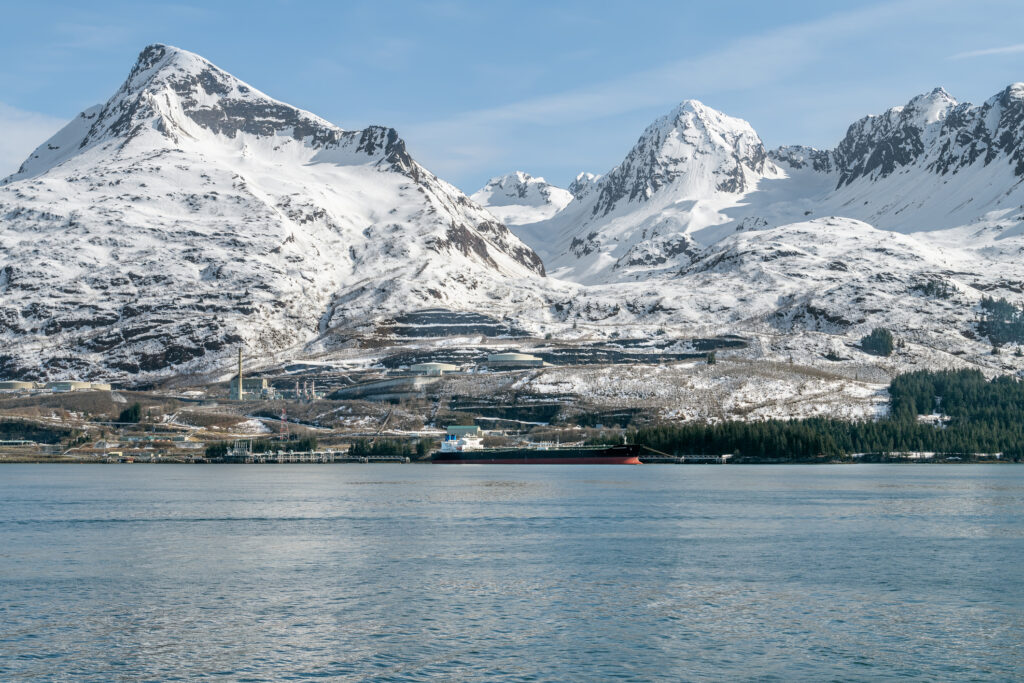
The Alaska LNG project has taken a substantial leap forward with a new Letter of Intent (LOI) signed with JERA, Japan’s largest power generation company. This agreement secures the long-term supply of one million tonnes per annum (MMtpa) of liquefied natural gas (LNG) for two decades, a pivotal development that not only strengthens Japan’s energy security but also significantly derisks one of the most strategically important LNG export initiatives on the U.S. Pacific Coast. For investors tracking the burgeoning U.S. LNG export landscape, this deal signals accelerated commercial momentum and solidifies Alaska LNG’s position as a compelling long-term play amidst evolving global energy demands.
Strategic Offtake Momentum: De-Risking Alaska LNG for Investors
The LOI with JERA is a powerful endorsement of the Alaska LNG project’s viability and strategic value. This 20-year Free-on-Board (FOB) agreement for 1 MMtpa builds upon previous preliminary commitments with CPC in Taiwan and PTT in Thailand. Notably, Glenfarne, which acquired a 75% ownership stake in March 2025, has swiftly moved to accelerate commercial progress, now having secured preliminary agreements covering over half of the project’s substantial 20 MMtpa third-party off-take capacity. This rapid accumulation of commitments underscores strong market demand for U.S. LNG, particularly from the Asia-Pacific region, and reflects Glenfarne’s effective strategy in de-risking the project through robust commercial partnerships. The project’s leadership is currently engaged in discussions with additional potential buyers for volumes exceeding the total capacity, a clear indicator of the project’s attractiveness and the underlying global appetite for diversified and secure LNG supplies.
Alaska LNG’s Distinct Competitive Edge in a Shifting Energy Landscape
Alaska LNG is not just another export project; it possesses inherent advantages that set it apart in the competitive global gas market. Its location on the U.S. Pacific Coast offers the shortest shipping proximity to Asia, translating into lower transportation costs and reduced shipping emissions – a critical factor for buyers focused on supply chain efficiency and environmental footprint. Furthermore, the project benefits from abundant, low-volatility natural gas reserves from Alaska’s North Slope, ensuring a stable and long-term supply source. These fundamental strengths are precisely what investors are scrutinizing, especially as our proprietary data indicates a heightened focus on market fundamentals and supply security. Readers are frequently querying about reliable energy sources and the competitive positioning of major projects, underscoring the importance of these intrinsic project benefits. Beyond logistics, Alaska LNG is engineered to be among the lowest-carbon LNG projects globally. A Department of Energy analysis projects it could cut global CO₂ emissions by up to 77 million tonnes per year by displacing coal use in Asia, aligning with global decarbonization trends and attracting ESG-conscious capital.
Navigating Market Volatility: Macro Trends and Project Resilience
While the Alaska LNG deal demonstrates project-specific strength, it unfolds against a backdrop of dynamic and sometimes volatile crude markets. As of today, Brent crude trades at $98.51 per barrel, reflecting a modest -0.89% dip in intraday trading. This comes on the heels of a more significant correction over the past two weeks, with Brent having fallen by 12.4% from $112.57 on March 27th. This broader market movement, though not directly tied to natural gas prices, influences overall investor sentiment in the energy sector. Our internal data shows that investors are keenly monitoring these fluctuations, with frequent queries regarding current Brent crude prices and the factors driving them. The resilience of large-scale, long-term infrastructure projects like Alaska LNG, with its secured off-take agreements, becomes even more pronounced in such an environment. It signals that foundational energy security projects, particularly those with strategic advantages, can attract capital even when commodity prices experience short-term headwinds, offering a measure of stability in a sector known for its cyclical nature.
Forward Outlook: Approaching FIDs and Upcoming Market Catalysts
Glenfarne’s phased development strategy targets Final Investment Decisions (FIDs) in 2025–2026, placing the project squarely in a critical period for capital commitment. The JERA LOI is a significant step towards securing the necessary commercial backing to move these FIDs forward. Looking ahead, the broader energy market calendar holds several events that could shape the macro environment for these decisions. Investors will be closely watching the upcoming OPEC+ Joint Ministerial Monitoring Committee (JMMC) and Full Ministerial meetings on April 18th and 20th, respectively, for signals on crude supply policies that could impact global energy market stability. Subsequent weekly API and EIA crude inventory reports on April 21st/22nd and April 28th/29th will offer further insights into U.S. supply-demand dynamics. While these events primarily influence crude markets, a stable and predictable macro energy environment is conducive to attracting the significant capital required for multi-billion-dollar LNG projects. The successful conversion of the JERA, CPC, and PTT preliminary agreements into binding contracts will be the next major commercial catalyst, providing further confidence for investors as the project moves closer to its crucial FID window.