Japan’s Hydrogen Engine Breakthrough: A New Compass for Maritime Investment
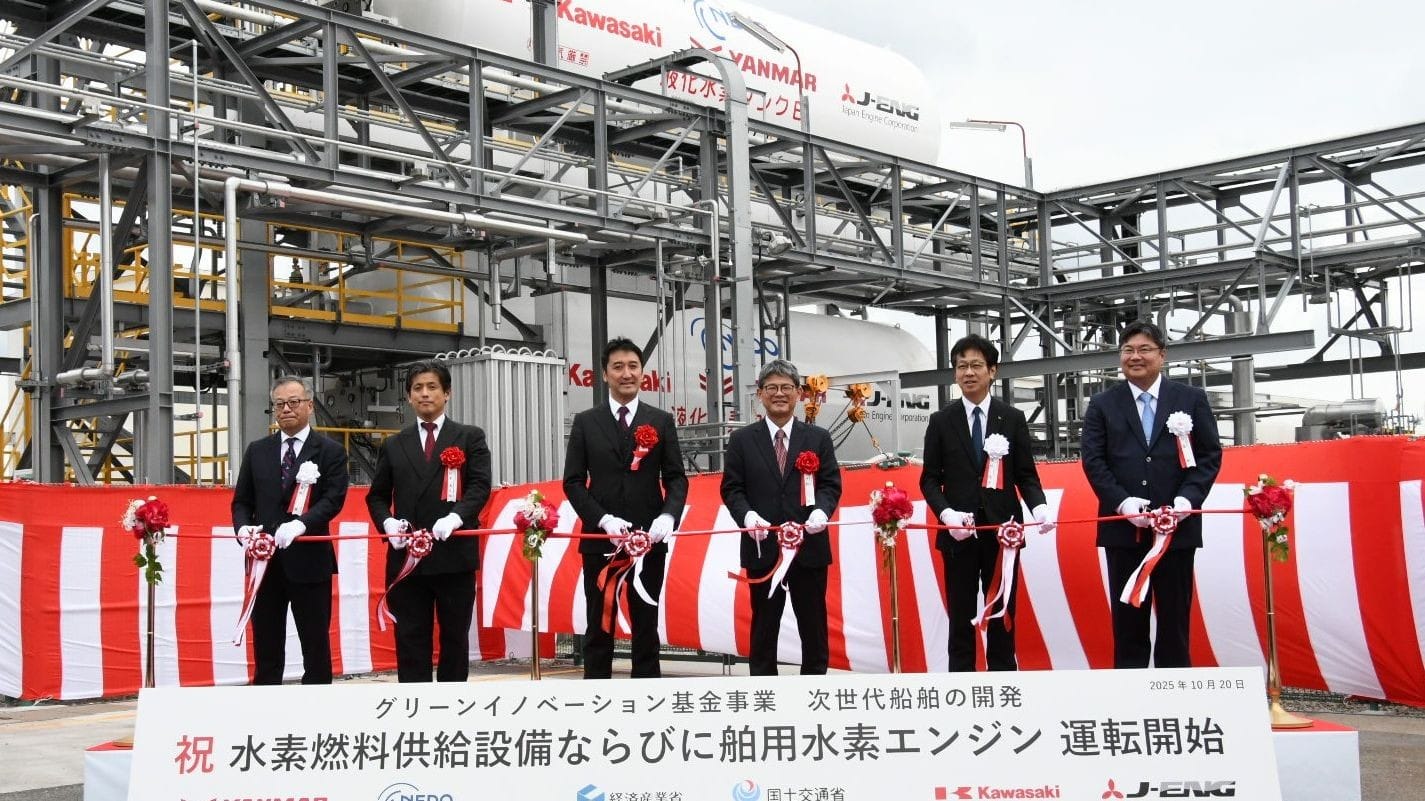
Japan has once again underscored its leadership in energy innovation, taking a critical stride towards decarbonizing global shipping with the world’s first land-based operation of marine hydrogen engines. This monumental achievement, a joint effort by Kawasaki Heavy Industries, Yanmar Power Solutions, and Japan Engine Corporation, is far more than a technical marvel; it signals a significant inflection point for investors eyeing the future of maritime transport and the broader energy transition. Funded under Japan’s robust ¥2 trillion Green Innovation Fund, this initiative is a tangible step towards the nation’s ambitious 2050 carbon neutrality goal, offering dual-fuel hydrogen engines designed to reduce greenhouse gas emissions while preserving vital operational redundancy for deep-sea vessels. For savvy investors, this development highlights key opportunities and challenges in a sector poised for profound transformation.
Market Volatility vs. Long-Term Energy Transition: A Paradox for Investors
The groundbreaking strides in hydrogen technology arrive at a time of considerable flux in global energy markets. As of today, Brent Crude trades at $90.38, a notable decline of 9.07% within the day, having seen a range between $86.08 and $98.97. Similarly, WTI Crude stands at $82.59, down 9.41%. This sharp daily downturn follows a significant trend, with Brent having fallen from $112.78 on March 30th to its current level, marking a nearly 20% drop in just over two weeks. This volatility underscores the ongoing tension between immediate market dynamics and the imperative of long-term energy transition. While investor sentiment often grapples with short-term price swings driven by geopolitical events, supply concerns, or economic data, projects like Japan’s marine hydrogen engine remind us that the structural shift towards decarbonization continues apace. Investors are keen to understand the long-term trajectory, with many asking about the price of oil per barrel by the end of 2026. While hydrogen adoption in shipping won’t immediately alter crude demand, these pioneering efforts lay the groundwork for a future where fossil fuels play a diminished role in specific sectors, posing a long-term demand headwind that investors must factor into their strategic outlooks.
Navigating Near-Term Catalysts Amidst Decarbonization Drives
For all the excitement surrounding hydrogen, the near-term investment landscape for oil and gas remains heavily influenced by traditional supply-demand fundamentals and geopolitical machinations. Upcoming events on the energy calendar will provide crucial signals for market direction. This Sunday, April 19th, marks the OPEC+ JMMC Meeting, followed by the full OPEC+ Ministerial Meeting on Monday, April 20th. These gatherings are critical, especially given current investor interest in OPEC+’s production quotas and how they might react to recent price declines. Any shift in output policy could significantly impact crude prices. Later in the week, on Tuesday, April 21st, the API Weekly Crude Inventory report will offer a snapshot of U.S. supply dynamics, followed by the EIA Weekly Petroleum Status Report on Wednesday, April 22nd, providing official government data. These reports, alongside the Baker Hughes Rig Count on April 24th and again on May 1st, will give investors a clear picture of current supply and demand balances in the world’s largest consumer market. While Japan’s hydrogen engine test points to a greener future, investors in upstream and integrated oil and gas companies must remain acutely aware of these immediate market catalysts, which continue to dictate short-to-medium term earnings and stock performance.
Investment Implications: Identifying Winners in the Green Maritime Shift
The successful land-based demonstration of marine hydrogen engines, particularly the stable combustion achieved by Kawasaki and Yanmar in medium-speed four-stroke engines, is a powerful signal for investors. This project, which includes Japan Engine Corporation’s ongoing development of a low-speed, two-stroke hydrogen engine slated for operation in spring 2026, highlights specific avenues for investment. Companies involved in advanced engine design and manufacturing, like the Japanese consortium members, stand to gain significantly from the anticipated shift towards zero-emission propulsion systems. The dual-fuel configuration, allowing seamless switching between hydrogen and diesel, is particularly attractive from an investment perspective, as it mitigates operational risks and capital expenditure for shipowners during the transition phase. This pragmatic approach could accelerate adoption. Beyond engine manufacturers, opportunities lie with hydrogen producers, developers of liquefied hydrogen fuel supply systems, and infrastructure providers. The scale of governmental backing, exemplified by Japan’s Green Innovation Fund, de-risks early-stage development and signals a committed, long-term national strategy. While many investors are looking at the performance of integrated energy majors, such as how Repsol might perform in April 2026, it’s crucial to recognize that even these traditional players are increasingly pivoting towards low-carbon solutions, including hydrogen. Astute investors should look for companies with robust R&D pipelines, strategic partnerships in the hydrogen value chain, and strong governmental support in key maritime nations.
The Road Ahead: Scaling Hydrogen for Deep-Sea Decarbonization
While the land-based test is a monumental first step, scaling hydrogen technology for deep-sea shipping presents formidable challenges that create additional investment opportunities. Issues surrounding the storage, distribution, and cost-effectiveness of green hydrogen remain. However, the International Maritime Organization’s target for net-zero GHG emissions by or around 2050 provides a clear regulatory tailwind, compelling the industry to innovate. Investors should monitor developments in hydrogen production (electrolysis), liquefaction technologies, and bunkering infrastructure. The commitment from a major shipping nation like Japan, backed by substantial funding, indicates that these challenges are being addressed with serious intent. For long-term investors, the marine hydrogen sector represents a nascent yet high-potential market, echoing the early days of other transformative energy technologies. The companies that can effectively navigate these challenges, from technological refinement to establishing scalable supply chains, will emerge as the true long-term winners in the race to decarbonize global shipping.


