Japan’s Commercial EV Leap: A New Front in Oil Demand Erosion
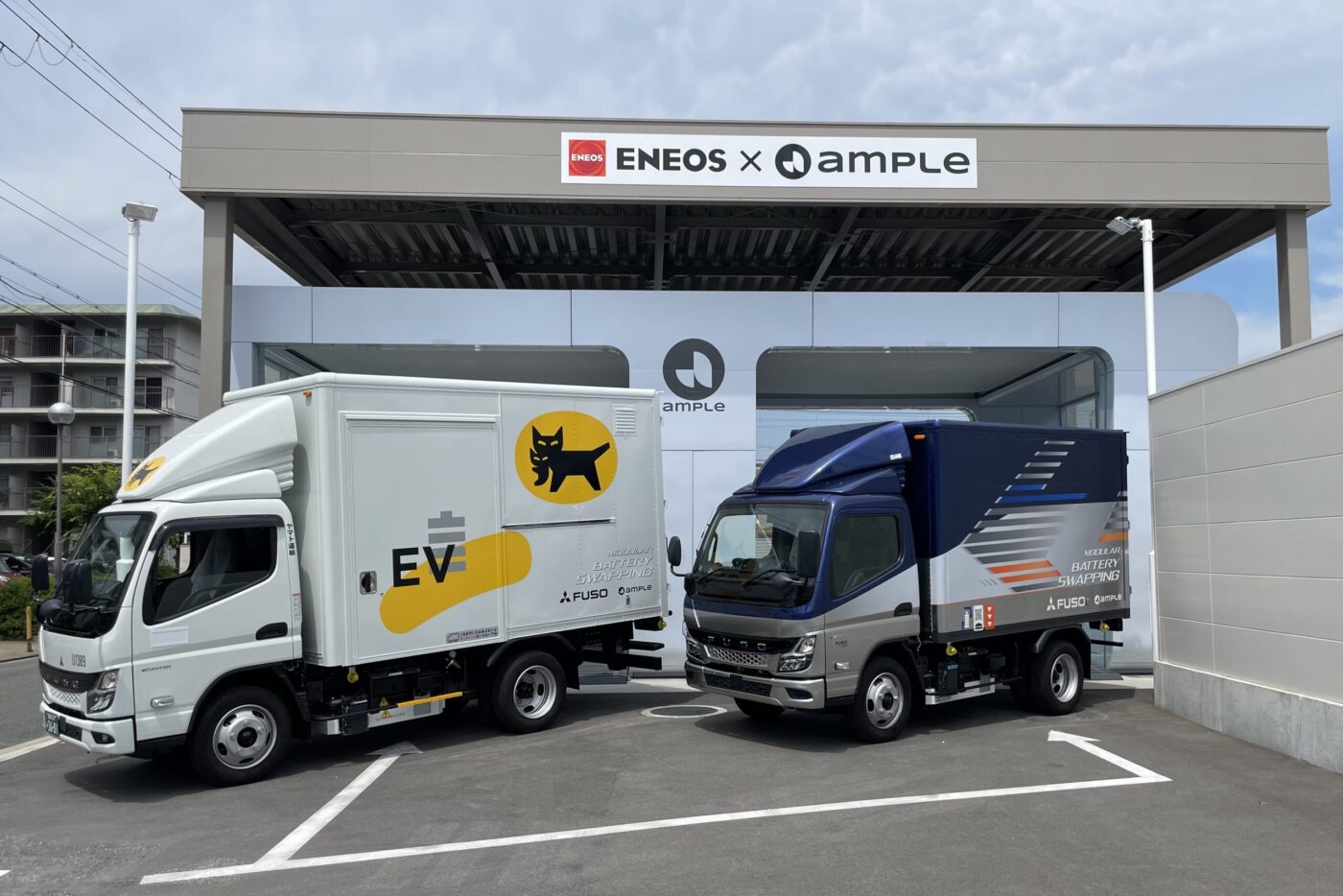
The global energy landscape is in constant flux, with the narrative often dominated by supply-side geopolitics and OPEC+ maneuvering. However, a significant, yet frequently underestimated, pressure on future oil demand is quietly building on the consumption side: the rapid electrification of commercial transport fleets. A groundbreaking multi-year pilot program in Tokyo, set to launch in September 2025, serves as a stark reminder of this evolving dynamic. Involving Mitsubishi Fuso Truck and Bus Corporation (MFTBC), Mitsubishi Motors, battery swapping specialist Ample, and logistics giant Yamato Transport, this initiative will deploy over 150 electric commercial vehicles and 14 modular battery swap stations across the Japanese capital. For oil and gas investors, this is more than just an environmental headline; it represents a tangible and scalable blueprint for sustained oil demand pressure in a crucial sector.
Accelerating the Commercial Fleet Transition with Swappable Batteries
The Tokyo pilot is a direct evolution of earlier, successful demonstrations, including a 2024 Kyoto project that trialed a single eCanter light-duty truck with Ample’s exchangeable battery modules under Yamato Transport’s operation. This larger-scale deployment, now including Mitsubishi Motors’ Minicab EV (a kei-car-class commercial electric vehicle) alongside the Mitsubishi Fuso eCanter, validates the system’s operational benefits and its capability to support diverse vehicle types and brands simultaneously. The core innovation lies in battery swapping technology, which allows commercial vehicles to replace depleted batteries with fully charged ones in approximately five minutes, dramatically minimizing vehicle downtime compared to traditional charging methods. This efficiency is paramount for logistics operators like Yamato, Japan’s largest shipping and logistics group, who began exploring commercial battery swapping as early as 2022. The involvement of major manufacturers like MFTBC and Mitsubishi Motors, backed by Daimler Truck and Toyota’s investments in the MFTBC and Hino Motors merger, signals a serious commitment from industry titans to scale viable electric solutions for last-mile delivery and urban logistics.
Current Market Snapshot Versus Long-Term Demand Realities
As of today, Brent crude trades at $95.62, reflecting a daily gain of 0.88%, though the broader trend has seen a notable decline from $102.22 on March 25th to $93.22 yesterday. WTI crude mirrors this sentiment, currently priced at $92.06. Gasoline prices remain relatively stable at $2.96. While these figures represent the immediate pulse of the market, influenced by short-term supply-demand balances and geopolitical events, astute investors must look beyond daily fluctuations to identify structural shifts. Many in our community are actively querying for a base-case Brent price forecast for the next quarter, and these commercial electrification initiatives, though seemingly localized, are crucial inputs for our longer-term outlooks. They are foundational to the consensus 2026 Brent forecast and beyond, signaling an enduring erosion of demand from the transport sector. Each electric truck deployed, especially those supported by efficient infrastructure like battery swapping, directly reduces diesel consumption, creating a cumulative effect that will increasingly weigh on global oil demand projections over the coming years.
Strategic Impact on Global Logistics and Oil Consumption Pathways
The Tokyo project is not an isolated experiment; it’s a template. Ample’s CEO, Khaled Hassounah, explicitly described Tokyo as an ideal location for showcasing a “scalable solution for commercial fleets” in densely populated urban environments. This scalability is critical. The validated ability of Ample’s platform to service multiple vehicle types and brands removes significant barriers to widespread adoption, making it easier for fleet operators to transition without being locked into a single OEM or battery standard. The advantages for transport providers are multifaceted: minimized downtime translates to higher operational efficiency and profitability, while the modular nature of swappable batteries can also reduce upfront capital expenditure for fleets by allowing for smaller battery packs and a ‘pay-per-use’ energy model. With MFTBC already holding a 9% share in Europe’s diverse light commercial market, the successful deployment and commercialization of this model in Japan could rapidly accelerate similar transitions in other major global markets. This shift represents a direct attack on diesel demand, particularly in urban and regional logistics, a segment traditionally thought to be among the hardest to electrify effectively.
Upcoming Events and the Investor’s Focus on Demand Signals
The coming weeks present several critical junctures for the oil market that investors will be closely monitoring. The OPEC+ Joint Ministerial Monitoring Committee (JMMC) meeting on April 18th, followed by the Full Ministerial Meeting on April 20th, will be paramount in shaping near-term supply expectations. These discussions, often driven by assessments of global demand strength, will undoubtedly factor in broader economic indicators. Further insights will emerge from the API Weekly Crude Inventory reports on April 21st and 28th, and the EIA Weekly Petroleum Status Reports on April 22nd and 29th, which provide crucial data on U.S. supply and demand. While these events typically focus on the immediate supply-demand balance, investors must integrate the long-term, structural shifts, exemplified by Japan’s commercial EV pilot, into their analysis. The steady, programmatic electrification of commercial fleets, though not an overnight game-changer, chips away at demand in a predictable and persistent manner, providing a counter-narrative to any bullish short-term supply constraints. For those evaluating the long-term viability of oil and gas investments, understanding these fundamental demand erosion pathways is as crucial as monitoring OPEC+ decisions or weekly inventory data.


