Ivory Coast’s Ambitious Ascent: A Fivefold Output Surge by 2035
Ivory Coast is charting an ambitious course to transform its energy landscape, targeting a staggering fivefold increase in crude oil production over the next decade. This strategic pivot aims to position the nation as a significant regional oil and gas player and an energy hub on the African continent. With a stated goal of reaching at least 500,000 barrels per day (bpd) of crude oil by 2035, coupled with 1 million cubic feet per day of natural gas, the West African nation is signaling a clear intent to capitalize on its recent offshore discoveries and attract substantial foreign investment. For astute oil and gas investors, this represents a compelling long-term opportunity, demanding a close examination of the underlying projects, market dynamics, and potential hurdles.
The Production Roadmap: Unpacking the Growth Drivers
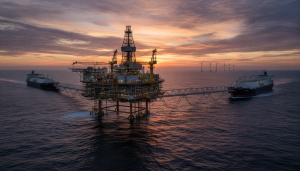
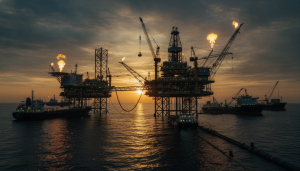
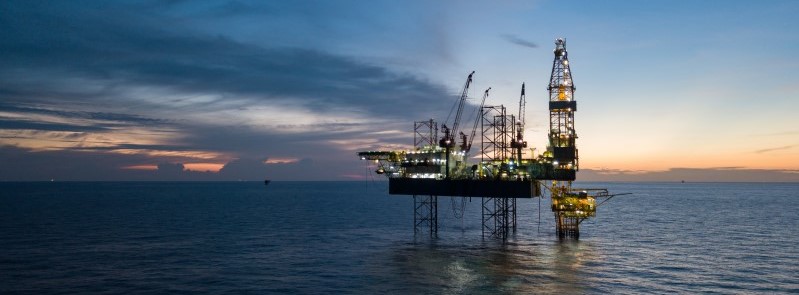
The bedrock of Ivory Coast’s projected production boom lies in significant offshore hydrocarbon discoveries, notably Eni SpA’s Baleine and Calao fields. Eni, a key partner, is already advancing its operations, with the Baleine field central to the expansion. A second phase at Baleine is expected to boost output to 60,000 bpd, with a subsequent third phase projected to more than double that to 150,000 bpd. This phased development approach provides a clear ramp-up trajectory. Beyond Eni’s current projects, the government is actively engaging with other international players. Talks are underway with Houston-based Vaalco Energy Inc. and Brazil’s Petrobras to explore investment opportunities across as many as 10 additional offshore oil blocks. This broad engagement underscores the nation’s commitment to maximizing its hydrocarbon potential and diversifying its operational partners.
The scale of this ambition is further evidenced by the projected financial commitments. Ivory Coast anticipates attracting over $16 billion in investments into its oil sector by 2030. This capital infusion is not solely for upstream development but also encompasses critical midstream and downstream infrastructure, including pipelines, tankers, and railways, essential for efficient crude evacuation and processing. A notable parallel development is the agreement with Washington-based Yaatra Ventures to construct the country’s second petroleum refinery, a project valued at approximately $5.3 billion. These integrated investments highlight a holistic strategy to build a robust and self-sufficient energy ecosystem, moving beyond mere extraction to value-added processing within the country.
Navigating Volatility: A Strategic Play in a Shifting Market
Ivory Coast’s long-term production targets are being pursued against a backdrop of significant, and often unpredictable, global oil market volatility. As of today, Brent crude trades at $90.38, reflecting a notable 9.07% drop within the day’s range of $86.08 to $98.97. Similarly, WTI crude stands at $82.59, down 9.41% from its daily high, navigating a range between $78.97 and $90.34. This sharp downturn follows a broader trend, with Brent having shed $20.91, or 18.5%, from its $112.78 level on March 30th to $91.87 just yesterday. The minister’s earlier comments on surging prices following geopolitical events underscore the acute sensitivity of the market to external shocks, yet current data indicates a recent retreat from those highs.
Despite these immediate price fluctuations, the strategic rationale behind Ivory Coast’s expansion remains compelling. In an environment increasingly concerned with energy security and diversified supply chains, new, stable sources of production from regions like West Africa hold significant appeal. While geopolitical tensions can trigger short-term price spikes, the sustained demand for hydrocarbons, coupled with the long lead times for major projects, means that countries with untapped potential and a clear development strategy can attract long-term capital. For investors, the current market dips might even present a more attractive entry point for companies poised to benefit from future production ramp-ups in emerging basins.
Investor Focus: Forward-Looking Analysis Amidst Market Uncertainty
Our proprietary reader intent data reveals a keen focus on market direction, with investors frequently asking, “what do you predict the price of oil per barrel will be by end of 2026?” This underscores the critical importance of understanding both immediate catalysts and long-term trends when evaluating an investment thesis in emerging producers like Ivory Coast. The nation’s ambitious target of 500,000 bpd by 2035 clearly signals a bet on sustained global demand for oil over the next decade, irrespective of short-term price movements.
The near-term global supply picture, directly influencing price expectations, will be shaped by several crucial upcoming events. The outcomes of the OPEC+ Joint Ministerial Monitoring Committee (JMMC) meeting this Saturday, April 18th, followed by the full Ministerial meeting on Sunday, April 19th, are paramount. These gatherings will provide crucial signals regarding production quotas, directly impacting the supply side as investors look for clarity on 2026 price trajectories. Indeed, our readers are asking “What are OPEC+ current production quotas?” The upcoming meetings are precisely where these will be reviewed or reaffirmed, setting the stage for global supply dynamics. Further impacting investor sentiment will be the API and EIA weekly crude inventory reports on April 21st and 22nd, and again on April 28th and 29th. These regular data releases are vital barometers of demand and stock levels, shaping the immediate trading environment against which long-term investment decisions in emerging producers like Ivory Coast are made. For investors in this region, marrying the long-term strategic vision with diligent monitoring of these immediate market signals is key.
Investment Implications and Risk Considerations
Ivory Coast’s projected fivefold increase in oil output by 2035 presents a significant investment opportunity, offering diversification and exposure to a rapidly developing energy hub. The early involvement of majors like Eni, alongside interest from other established players, lends credibility to the resource potential. Investors stand to benefit from a potential first-mover advantage and the high-growth trajectory of an emerging petroleum province. The commitment to infrastructure, including new refining capacity, further de-risks the long-term value chain within the country.
However, no investment is without its risks. The successful execution of over $16 billion in infrastructure and field development projects by 2030 requires robust project management and consistent capital flow. While West Africa generally offers a more stable geopolitical environment compared to some other oil-producing regions, regional dynamics and potential shifts in government policy over a decade-long horizon always warrant consideration. Furthermore, global commodity price volatility, as evidenced by recent market movements, could impact the profitability of projects and the appetite for continued investment if sustained low prices materialize. Investors must weigh these execution, geopolitical, and market risks against the compelling growth prospects and strategic positioning of Ivory Coast’s burgeoning energy sector.
In conclusion, Ivory Coast is poised to become a significant force in African oil and gas production, leveraging recent discoveries and strategic partnerships to achieve an ambitious output target by 2035. While the global oil market remains dynamic and susceptible to external shocks, the long-term vision of diversified supply and integrated energy infrastructure in Ivory Coast offers a compelling narrative for investors. Monitoring the progress of key projects, the stability of the investment environment, and the broader global supply-demand fundamentals will be crucial for those looking to capitalize on this transformative journey.