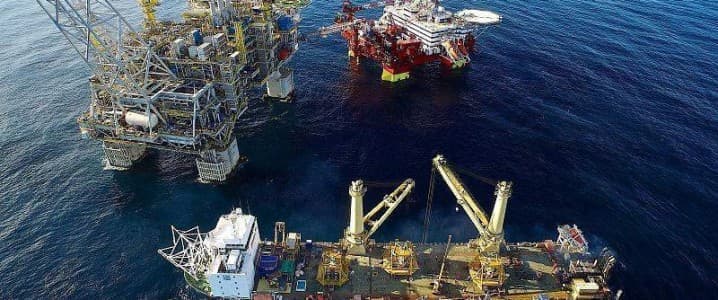
The recent confirmation of a landmark $35 billion natural gas supply agreement between Israel and Egypt, stretching through 2040, marks a pivotal moment for regional energy dynamics and investor sentiment. This massive deal, involving 130 billion cubic meters of natural gas from Israel’s Leviathan field, arrives at a critical juncture for Egypt, which has seen its once-ambitious vision of becoming a regional LNG export hub significantly challenged by declining domestic production. For investors, this long-term, commercially driven accord offers a compelling case study in energy security, strategic partnerships, and de-risked revenue streams amidst an otherwise volatile global energy landscape.
The $35 Billion Lifeline: Egypt’s Shifting Energy Landscape
Egypt’s commitment to import natural gas from Israel’s Leviathan field is a stark indicator of its evolving energy needs. Just a few years ago, the nation was poised to emerge as a significant natural gas exporter, leveraging its strategic location and existing LNG infrastructure. However, this trajectory has been dramatically altered by a rapid and significant decline in domestic gas production. From a peak of approximately 6.6 billion cubic feet per day (bcf/d) in 2021, Egypt’s output plummeted to an eight-year low of below 5 bcf/d by early 2025. This downturn is largely attributed to the natural depletion of mature fields, most notably the Zohr field, which accounts for around 40% of the country’s total gas production and has seen its output drop by roughly a third since 2019. Coupled with a noticeable lack of significant new discoveries since Zohr in 2015, Egypt transitioned from a net exporter to an importer of this vital commodity. The newly confirmed $35 billion agreement, which guarantees a set price for the Egyptian economy, provides a crucial long-term supply anchor, securing energy stability for its industrial and residential sectors and mitigating the challenges posed by its domestic production shortfalls.
Leviathan’s Strategic Role Amidst Volatile Crude Markets
The Leviathan gas field, situated approximately 130 kilometers west of Haifa, Israel, is a true “game-changer” for regional energy independence, holding an estimated 600 billion cubic meters of recoverable natural gas resources. Operated by Chevron Corp. with a 39.66% interest, alongside partners NewMed Energy (45.34%) and Ratio Petroleum Energy (15%), Leviathan’s consistent output underpins this substantial agreement. For investors, the stability provided by such a long-term gas supply contract stands in stark contrast to the recent turbulence observed in crude oil markets. As of today, Brent crude trades at $91.87 per barrel, reflecting a significant 7.57% drop from yesterday’s close, oscillating within a day range of $86.08 to $98.97. Similarly, WTI crude is at $84, down 7.86%, with a range of $78.97 to $90.34. This marks a substantial decline, with Brent having shed $20.91 or 18.5% from its $112.78 peak on March 30th. This volatility underscores the attractiveness of long-term, fixed-price gas agreements, offering predictable revenue streams and a degree of insulation from the daily swings of the global oil market, making Leviathan’s partners particularly appealing in the current environment.
Navigating Geopolitical Headwinds and Future Catalysts
While the Egyptian State Information Service has emphatically stressed the “purely commercial” nature of this gas deal, the broader geopolitical context cannot be ignored. Approved following pressure from Washington and announced by Israeli Prime Minister Benjamin Netanyahu, the agreement holds potential beyond mere energy transactions. Observers suggest it could help repair strained relations between the two countries, particularly in the wake of the two-year conflict in the Gaza Strip. Looking ahead, the stability offered by such long-term gas contracts could prove even more valuable as the broader energy market navigates a series of critical upcoming events. The OPEC+ Ministerial Meeting scheduled for April 18th will be closely watched for production quota decisions that could further influence crude price trajectories. Subsequent API and EIA Weekly Petroleum Status Reports on April 21st, 22nd, 28th, and 29th, alongside the Baker Hughes Rig Count reports on April 24th and May 1st, will offer granular insights into supply, demand, and drilling activity. While these events primarily focus on crude, their outcomes invariably shape the overall sentiment and capital allocation within the energy sector, potentially diverting or attracting investment to stable gas plays like Leviathan, especially as regional energy security becomes an increasing priority.
Investor Focus: De-risking and Long-Term Value Creation
Our proprietary reader intent data reveals a consistent theme among investors this week: a keen interest in long-term predictability. Questions like “what do you predict the price of oil per barrel will be by end of 2026?” underscore a widespread desire for stability amidst market fluctuations. This Israel-Egypt gas deal directly addresses such investor appetite by providing substantial, de-risked revenue streams for the involved private energy companies: Chevron, NewMed Energy, and Ratio Petroleum Energy. The deal’s purely commercial basis, as emphasized by Egypt, is critical for investor confidence, signaling a focus on economic fundamentals rather than solely geopolitical maneuvers. For shareholders in Chevron, NewMed, and Ratio, this agreement provides a robust foundation of guaranteed income spanning nearly two decades, bolstering their balance sheets and offering a clear path to long-term value creation. Furthermore, the deal solidifies the Eastern Mediterranean’s position as a vital gas basin, potentially paving the way for further investment and regional energy integration, appealing to investors seeking growth opportunities in stable and essential infrastructure assets.


