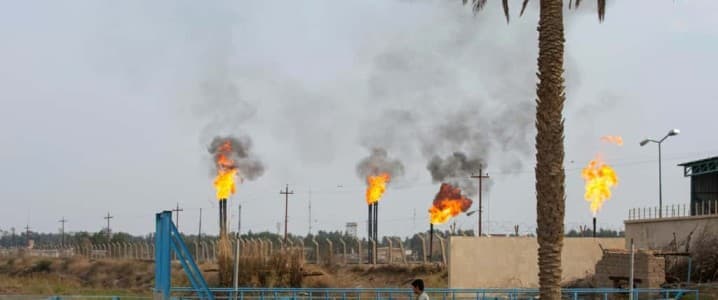
Iraq has delivered one of its most significant production boosts this year, increasing crude output by a combined 80,000 barrels per day (bpd) across three strategic southern fields: Nasiriyah, Gharraf, and Saba. This immediate ramp-up comes as OPEC+ has signaled a phased unwinding of 2.2 million bpd of voluntary cuts starting in the third quarter, a move that surprised many market participants with its speed and scale. For investors tracking global energy supply dynamics, Iraq’s proactive step is a critical indicator, highlighting Baghdad’s intent to stabilize its vital oil revenues and capture market share in a shifting commodity landscape. This analysis delves into the strategic implications of Iraq’s production increase, its interplay with current market fundamentals, and the key events investors should monitor in the coming weeks.
Iraq’s Strategic Pivot in a Rebalancing OPEC+ Era
The 80,000 bpd increase, spearheaded by Dhi Qar Oil Company, is a notable development for Iraq, a nation where oil accounts for over 90% of exports and the vast majority of government income. The Nasiriyah field alone saw production jump from 52,000 bpd to 70,000 bpd, driven by the drilling of seven new wells. This push aligns directly with the recent OPEC+ decision, which provides member states like Iraq the much-desired room to increase output. Baghdad has long advocated for greater production flexibility to meet its budgetary requirements and reduce its near-term reliance on politically contentious northern exports via the Kurdish region, which remain suspended due to ongoing arbitration. This strategic focus on intensifying output from brownfield assets, rather than launching new megaprojects often stalled by financial and logistical hurdles, underscores a pragmatic approach to production growth. While the Oil Ministry has yet to confirm whether the Basra Oil Company, a key player in southern production, will implement similar ramp-ups, Dhi Qar’s actions set a clear precedent for what could become a broader national strategy. However, persistent infrastructure constraints and rising gas flaring risks continue to shadow Iraq’s upstream ambitions, posing potential long-term challenges to sustained growth.
Market Dynamics: Brent’s Trajectory Amidst Rising Supply Signals
Iraq’s production ramp-up unfolds against a backdrop of evolving crude oil market dynamics. As of today, Brent crude trades at $94.8 per barrel, holding relatively steady with a marginal 0.01% gain on the day, after ranging between $91 and $96.89. This current price point is significant when viewed in the context of recent trends. Over the past two weeks, our proprietary market data shows Brent crude experiencing an 8.8% decline, falling from $102.22 on March 25th to $93.22 on April 14th. This recent softening in prices suggests a market perhaps anticipating increased supply or factoring in demand uncertainties. WTI crude, similarly, is trading at $90.87, down 0.45% today. The gasoline market, however, shows some upward momentum, with prices at $3, up 1.01%. Iraq’s swift move to increase output, even before the official Q3 unwinding of voluntary cuts fully takes effect, signals a proactive stance to secure revenue and market share. This action, if mirrored by other OPEC+ members, could contribute to a more balanced, or even slightly oversupplied, market in the coming months, influencing the delicate balance between price support and volume maximization that OPEC+ is currently navigating.
Navigating Upcoming Catalysts: Investor Focus on OPEC+ and Inventory Data
The immediate future holds several critical events that will heavily influence oil price trajectory and investment decisions, particularly in light of Iraq’s recent production boost. Our proprietary event calendar highlights key dates for investors. Most notably, the OPEC+ Joint Ministerial Monitoring Committee (JMMC) is scheduled for April 18th, followed by the full OPEC+ Ministerial Meeting on April 20th. These meetings will be crucial in clarifying the precise phasing and potential distribution of the 2.2 million bpd production unwinding announced last month. Iraq’s current actions could set a tone for discussions, as other members might also seek to articulate their production capabilities and intentions. Beyond OPEC+ policy, weekly inventory data will provide crucial insights into the real-time supply-demand balance. The API Weekly Crude Inventory report on April 21st, followed by the EIA Weekly Petroleum Status Report on April 22nd, will offer fresh data points on U.S. crude stockpiles, refining activity, and product demand. Similar reports are slated for April 28th and 29th. Additionally, the Baker Hughes Rig Count on April 17th and April 24th will indicate activity levels in North American upstream operations. Investors will be scrutinizing these events for any signals of accelerated supply increases from other producers or shifts in global demand that could impact the market’s equilibrium.
Investor Sentiment and Price Outlook Amidst Shifting Sands
Our proprietary reader intent data reveals that investors are actively seeking clarity on future price trends, with recurring questions focused on building a base-case Brent price forecast for the next quarter and understanding the consensus 2026 Brent forecast. Iraq’s 80,000 bpd increase, while not individually market-moving on a global scale, serves as a significant bellwether for the broader OPEC+ strategy. The group’s pivot from strict price defense to a renewed emphasis on market share, as evidenced by the phased unwinding of cuts, introduces a new layer of complexity for forecasting. If other members, particularly those with spare capacity, follow Iraq’s lead in ramping up production quickly, it could contribute to a market environment with potentially lower, or at least more range-bound, prices than if strict cuts were maintained. Investors must consider that while Iraq seeks to stabilize its revenues, increased supply from multiple fronts could temper upward price momentum. Key factors to monitor will be the pace of global economic growth, particularly from major energy consumers, the stability of Iraqi infrastructure, and the extent to which producers adhere to, or diverge from, agreed-upon OPEC+ quotas. The confluence of these supply-side adjustments and demand-side uncertainties will be pivotal in shaping the crude oil price outlook for the remainder of 2026 and beyond.


