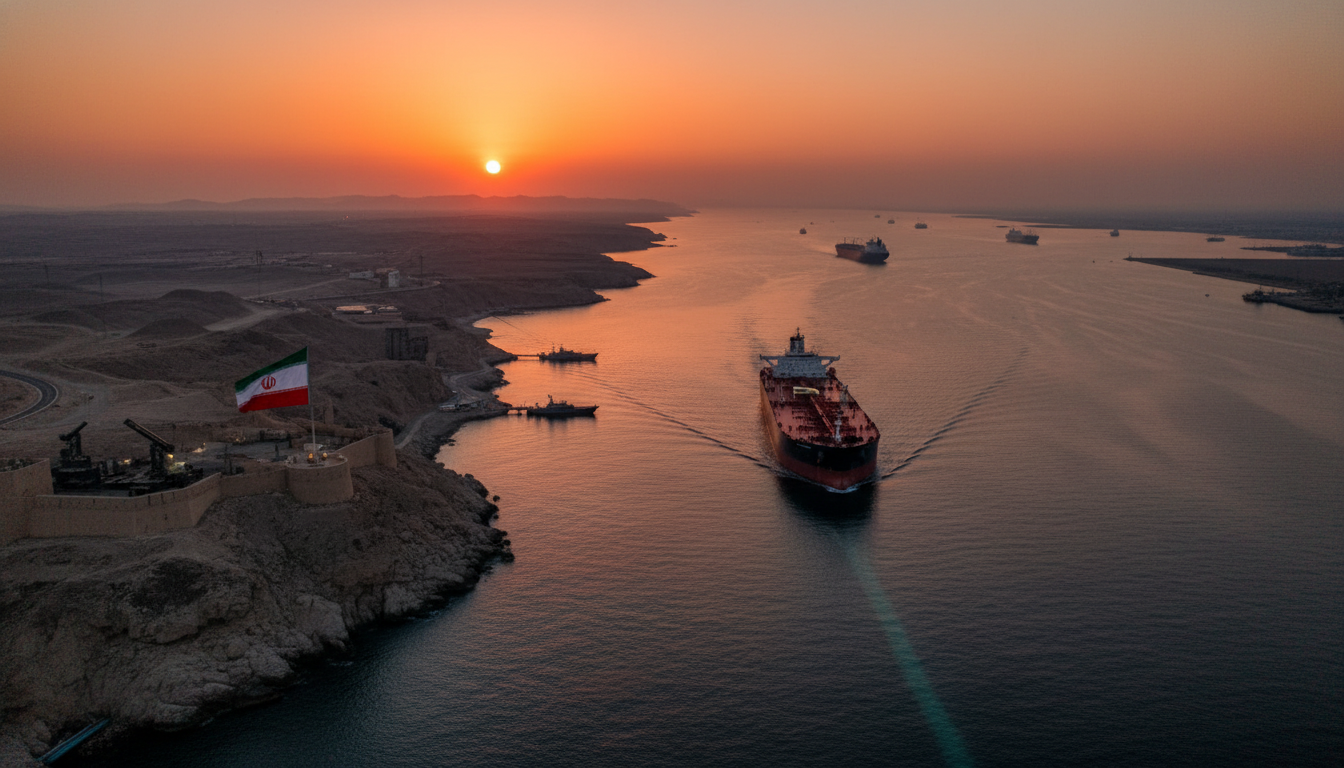
The global oil market is once again grappling with the persistent shadow of geopolitical risk, specifically emanating from the Strait of Hormuz. While diplomatic efforts hint at a broader de-escalation in the Middle East, the reality on the ground, particularly concerning maritime activity, paints a starkly different picture. This disconnect between political rhetoric and operational facts is creating a significant and sustained risk premium for investors in the energy sector, as Iran leverages its strategic position to maintain influence over the world’s most critical oil transit chokepoint. Understanding this nuanced control, its impact on crude flows, and how it intersects with upcoming market catalysts is paramount for navigating the current investment landscape.
Iran’s Strategic Grip on the Strait of Hormuz
Despite ongoing diplomatic discussions suggesting a push for wider regional stability, the operational status of the Strait of Hormuz remains ambiguous and highly constrained. Reports indicate that vessel movements are still limited, and insurers are exercising extreme caution, reflecting an environment far from normal. Iran has explicitly issued directives to ships, effectively asserting a de facto control over this vital corridor. While it’s not a complete closure, the strait is certainly not operating freely. This calculated ambiguity allows Iran to maintain significant strategic leverage, influencing global energy security without resorting to a full blockade. Approximately 20% of the world’s daily oil supply, along with a substantial volume of LNG, traverses this narrow waterway. Even a partial disruption or the mere threat of it has immediate and profound implications for global pricing, insurance premiums, and trade routes, keeping the market on edge.
Market Volatility Reflects Persistent Geopolitical Premium
The tension surrounding the Strait of Hormuz directly translates into market volatility, a trend we’ve observed acutely in recent trading. As of today, Brent Crude is trading at $95.42 per barrel, marking a significant daily increase of 5.58%, after trading in a range between $92.77 and $97.81. Similarly, WTI Crude has seen a robust gain of 5.65%, reaching $87.26 per barrel, with its daily range spanning $85.45 to $89.60. Gasoline prices have also climbed, now at $3.05, up 4.1%. This latest surge follows a period of notable downside pressure; our proprietary data shows Brent crude had declined sharply from $112.78 on March 30th to $90.38 by April 17th, a substantial drop of nearly 20% in just over two weeks. This rapid retracement, followed by today’s rebound, underscores the market’s sensitivity to shifting perceptions of risk. Initial fears of a full disruption had eased on ceasefire headlines, but the underlying reality of constrained shipping and Iran’s asserted control means the geopolitical risk premium remains embedded in current prices, driving these sharp daily swings as traders continuously re-evaluate the durability of any peace agreements against the operational facts on the water.
Upcoming Events and Investor Outlook
Forward-looking analysis is crucial for investors trying to make sense of this environment. Several key events in the coming days and weeks could provide further catalysts or clarify market direction, all while the Hormuz situation continues to simmer. The OPEC+ JMMC Meeting on Monday, April 20th, followed by the full OPEC+ Ministerial Meeting on Saturday, April 25th, will be critical. Investors will be scrutinizing any signals regarding production policy, especially given the current elevated prices and the backdrop of Middle Eastern instability. Any indications of supply adjustments from OPEC+ members could either amplify or mitigate the geopolitical risk premium. Furthermore, the regular API Weekly Crude Inventory reports (April 21st, April 28th) and EIA Weekly Petroleum Status Reports (April 22nd, April 29th) will offer crucial insights into U.S. supply-demand dynamics, which can influence global sentiment even amidst regional tensions. Finally, the Baker Hughes Rig Count on April 24th and May 1st will provide a gauge of future production capacity. Investors are naturally asking, “is WTI going up or down?” and “what do you predict the price of oil per barrel will be by end of 2026?” Our analysis suggests that while inventory data and rig counts provide fundamental signals, the overriding factor for the near to medium term remains the geopolitical premium driven by Iran’s influence over Hormuz. Until there is a clear, verifiable restoration of unrestricted maritime traffic, this persistent risk factor will likely continue to inject volatility and support elevated price levels, making accurate short-term predictions challenging and long-term outlooks highly dependent on geopolitical stability.
The Disconnect: Diplomacy Versus Reality
A significant challenge for investors lies in reconciling the often-conflicting narratives emerging from diplomatic channels and the harsh realities on the ground. While there are reports of diplomatic momentum building around a broader pause in hostilities, with Lebanon pushing for a temporary ceasefire, military actions tell a different story. Israel’s continued large-scale strikes against Hezbollah targets in Lebanon indicate that any Iran-focused ceasefire does not extend across all fronts of the broader conflict. This divergence is the defining characteristic of the current landscape. Washington may frame a ceasefire as a diplomatic win, yet from a strategic energy perspective, Iran appears to have emerged with its leverage over Hormuz intact, if not strengthened. Despite economic and military pressures, Iran retains its missile capabilities and regional influence, crucially maintaining its ability to affect or restrict vital energy flows. This strategic outcome suggests that while headline-driven optimism may temporarily ease prices, the underlying operational and geopolitical risks remain potent, demanding a cautious and well-informed investment strategy.