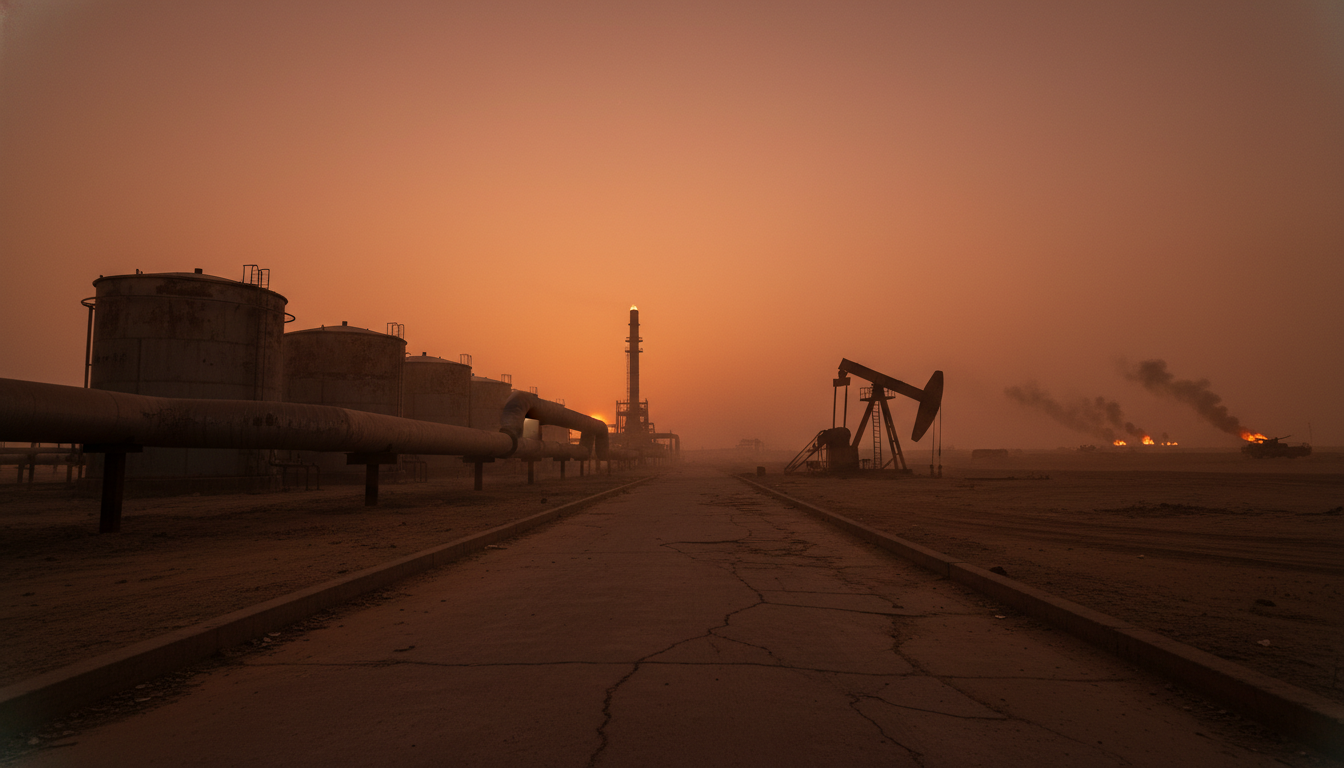
The global energy landscape is undergoing an unprecedented transformation, driven by escalating geopolitical tensions in the Middle East. This instability has not only tightened physical crude markets but has also initiated a profound re-evaluation of long-term energy strategies worldwide. For astute investors, the critical question is whether the current reactive shifts in energy consumption will solidify into permanent structural changes, particularly impacting the future of natural gas demand. Our proprietary data and market insights suggest that while immediate supply concerns dominate headlines, the potential for systemic demand destruction for gas is a rapidly materializing risk that merits immediate attention.
Immediate Market Reaction and Supply Shock Realities
The impact of recent Middle East turmoil on global energy supply has been nothing short of staggering. Since late February, an estimated 500 million barrels of crude oil and condensate have effectively been removed from international markets. This represents the most significant energy supply interruption in recent history, forcing nations heavily reliant on Gulf oil flows to scramble for alternatives. As of today, Brent crude trades at $103.95, reflecting a robust 2.22% gain on the day, with WTI crude similarly buoyant at $98.46, up 2.17%. This immediate price strength underscores the market’s sensitivity to supply constraints. The upward pressure is evident in our 14-day Brent trend analysis, which shows a notable increase of $7.2, or 7.6%, from $94.75 on April 8th to $101.95 on April 27th, indicating persistent underlying bullish sentiment driven by supply concerns and geopolitical risk premium. Energy-importing countries have responded by pivoting towards increased coal burning to meet immediate power demands, alongside an accelerated push for renewable energy deployment. While addressing short-term energy security, these measures carry significant implications for the future trajectory of fossil fuel demand.
The Looming Threat of Structural Demand Destruction for Natural Gas
The most profound long-term consequence of a prolonged Middle East crisis could be the structural demand destruction for natural gas. Industry experts previously anticipated 2026 as a pivotal year, marking a transition from a tightly supplied global gas market to one characterized by oversupply. However, the current geopolitical instability casts a long shadow over this forecast. The question for investors is stark: does the crisis merely delay the anticipated gas glut, or does it fundamentally alter market dynamics, potentially preventing that oversupply scenario from ever materializing? If the current shift to coal and renewables becomes embedded, extending beyond a six-month horizon, it risks permanently eroding natural gas’s market share. This has immense implications for capital allocation across gas infrastructure, exploration, and LNG projects globally. Our reader intent data indicates many investors are keenly focused on our base-case Brent price forecast for the next quarter, and what factors could push Brent above $120. The answer is deeply intertwined with whether current demand shifts become permanent, signifying a critical juncture for energy investment strategies.
Africa’s Untapped Potential Amidst Global Supply Chains
Against this backdrop of global energy upheaval and constrained Middle Eastern supply lines, Africa’s vast, largely uncapitalized natural gas reserves present a compelling, yet often overlooked, investment opportunity. With Gulf flows under pressure, the strategic importance of diversifying gas sources has never been clearer. Africa, holding significant proven natural gas reserves, could step into this void, offering a reliable alternative for energy-hungry nations. However, unlocking this potential requires substantial capital investment in exploration, production, and crucially, export infrastructure like LNG terminals. For investors seeking long-term growth and diversification away from volatile geopolitical flashpoints, well-structured projects in African gas could offer attractive returns. The challenge lies in navigating the unique investment environments and securing the necessary long-term off-take agreements to underpin these capital-intensive developments. The current crisis accelerates the strategic imperative for such investments, transforming what was once a long-term prospect into a near-term necessity for global energy security.
Navigating Future Volatility: Key Events and Investor Focus
The coming weeks will offer crucial insights into the immediate supply-demand balance and market sentiment. With WTI crude hovering around $98.46 today, and gasoline prices at $3.41, up 1.49% on the day, the market is keenly watching for any signs of inventory builds or draws. Key upcoming events include the API Weekly Crude Inventory reports on April 28th, May 5th, and May 12th, followed closely by the EIA Weekly Petroleum Status Reports on April 29th and May 6th. These data releases will provide vital snapshots of U.S. crude, gasoline, and distillate stocks, offering clues to domestic demand and supply dynamics. Furthermore, the Baker Hughes Rig Count on May 1st and May 8th will signal future production trends, directly influencing the supply side of the equation. Investors are actively asking what factors could push Brent below $80 or above $120. The interplay between geopolitical developments, inventory data, and production trends will be paramount. Beyond immediate price movements, our readers are also asking about the impact of EV adoption on long-term oil demand projections. While the current focus is understandably on geopolitical risks and their immediate market effects, strategic investors must also maintain a clear view of these secular trends, as they will define the energy landscape well beyond the current crisis.