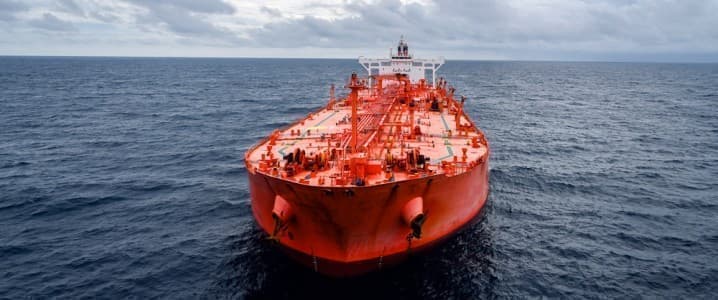
The global oil market is once again grappling with renewed geopolitical instability in the Middle East, following reports of Iranian forces seizing a Marshall Islands-flagged oil tanker, the Talara, in the Gulf of Oman. This incident, occurring after the vessel transited the critical Strait of Hormuz from the United Arab Emirates, immediately reignites concerns over supply disruptions from a region responsible for a significant portion of the world’s crude oil flow. For investors, this development signals a critical shift in the risk landscape, demanding a re-evaluation of current market dynamics and forward-looking strategies. Our proprietary data pipelines at OilMarketCap.com reveal a complex interplay of immediate market reactions, underlying sentiment, and upcoming catalysts that will shape crude oil prices in the coming weeks.
Geopolitical Tensions Return to Key Chokepoints
The seizure of the tanker Talara near Khor Fakkan, UAE, and its diversion into Iranian territorial waters marks a significant escalation, particularly given its proximity to the Strait of Hormuz. This vital maritime chokepoint is indispensable to global energy security, with approximately one-fifth of the world’s daily oil consumption, alongside a substantial volume of LNG, passing through its narrow waters. While the specific cargo of the Talara, high sulfur gasoil loaded in October, may not directly impact crude supply, the act of seizure itself sends a powerful message. It underscores Iran’s capability and willingness to project power in international waters, mirroring tensions seen as recently as June during the Iran-Israel conflict when the market was on high alert for similar disruptions. The incident, as reported by entities like the UK Maritime Trade Operations (UKMTO), reminds investors that the geopolitical premium in oil prices is never truly absent, merely dormant, and can flare up with little warning, fundamentally altering supply risk perceptions.
Market Reaction Amidst Broader Bearish Headwinds
Interestingly, despite the clear escalation of supply risk, the immediate market reaction has been counter-intuitive. As of today, Brent crude trades at $90.38, reflecting a significant decline of 9.07% over the day, while WTI crude stands at $82.59, down 9.41%. Gasoline prices have also seen a notable drop, trading at $2.93, a 5.18% decrease. This paradoxical movement, where an event threatening supply coincides with a price drop, highlights the powerful influence of broader macroeconomic concerns currently weighing on the market. Our 14-day Brent trend data shows a consistent downward trajectory, falling from $112.78 on March 30th to today’s $90.38, a substantial 19.9% decrease. This indicates that while the tanker seizure adds a significant geopolitical risk layer, the prevailing bearish sentiment, likely driven by fears of a global economic slowdown impacting demand, has largely overridden the immediate supply-side fears. Investors appear to be prioritizing demand weakness over potential supply disruption, at least in the short term, suggesting a market that has either become desensitized to regional flare-ups or is heavily discounting their long-term impact in the face of macro headwinds.
Investor Sentiment and Upcoming Catalysts
Our proprietary reader intent data reveals a prevalent theme among investors this week: an intense focus on price direction and future market outlook. Questions like “is WTI going up or down?” and “what do you predict the price of oil per barrel will be by end of 2026?” underscore the significant uncertainty. The recent tanker seizure directly feeds into this anxiety, introducing an unpredictable variable into an already complex equation. Looking ahead, the next two weeks are packed with critical energy events that will be interpreted through the lens of this heightened geopolitical risk. The upcoming OPEC+ JMMC Meeting on April 19th and the subsequent OPEC+ Ministerial Meeting on April 20th will be particularly scrutinized. Will the renewed instability in the Gulf influence their production quotas, potentially leading to a more cautious approach to increasing supply, or will they maintain their current stance, believing macro demand concerns are paramount? Further insights will come from the API Weekly Crude Inventory reports on April 21st and April 28th, followed by the EIA Weekly Petroleum Status Reports on April 22nd and April 29th. These domestic U.S. inventory figures, alongside the Baker Hughes Rig Count on April 24th and May 1st, will offer crucial data points on supply and demand fundamentals that will now be weighed against the backdrop of an elevated geopolitical risk premium.
Investment Implications and Risk Management Strategies
For discerning oil and gas investors, the seizure of the Talara serves as a stark reminder of the inherent volatility and geopolitical sensitivity of the energy market. While current market prices reflect a dominant bearish sentiment tied to demand, the underlying supply risk has undeniably increased. Investors should consider recalibrating their risk exposure, particularly to entities with significant operations or reliance on transit through the Strait of Hormuz and the broader Gulf region. Monitoring diplomatic efforts and shipping advisories, such as those issued by UKMTO, will be crucial for anticipating further escalations or de-escalations. The potential for sudden, sharp price spikes remains a distinct possibility if the situation transitions from a “risk” to an “actual disruption” of significant crude volumes. Diversification, hedging strategies, and a keen eye on the forthcoming OPEC+ decisions and U.S. inventory data will be paramount for navigating this increasingly complex landscape. The dual pressures of uncertain global demand and an acute, re-emergent geopolitical supply risk will define the investment narrative for the foreseeable future, making agile analysis and responsive portfolio adjustments essential.


