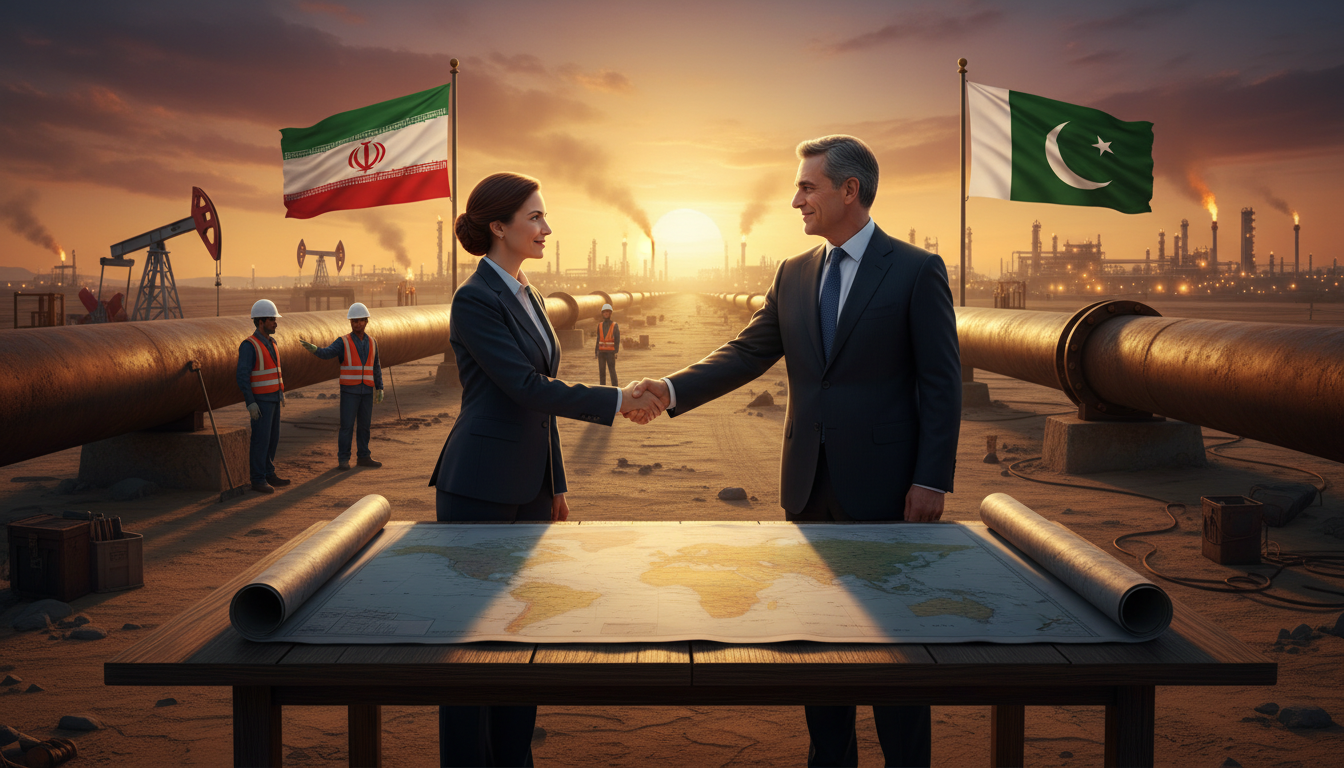
The global energy landscape holds its breath as Pakistan intensifies its high-stakes diplomatic campaign to broker a lasting peace between the United States and Iran. Following a pivotal weekend of stalled negotiations in Islamabad, Field Marshal Asim Munir, Pakistan’s army chief, arrived in Tehran, signaling a renewed push to de-escalate a seven-week conflict that has profoundly rattled international oil and gas markets and fueled inflationary pressures worldwide.
Field Marshal Munir, accompanied by Pakistan’s Interior Minister Mohsin Naqvi and a delegation of senior officials, was met with a warm reception in the Iranian capital. Their Wednesday arrival marks a critical juncture in the ongoing mediation efforts, as evidenced by a photograph shared by Pakistan’s military depicting Munir being cordially greeted by Iran’s Foreign Minister Abbas Araghchi.
Geopolitical Stability and Energy Market Impact
Both Washington and Tehran have publicly lauded Pakistan’s diligent attempts to forge a path out of the intense regional conflict. This appreciation underscores the profound global ramifications of the hostilities, which have claimed thousands of lives and injected significant volatility into crude oil and liquefied natural gas (LNG) prices. Investors keenly watch these developments, understanding that sustained conflict or a breakdown in diplomacy could trigger further supply disruptions and exacerbate global inflation, impacting energy sector profitability and investment decisions.
Iran’s Foreign Minister Araghchi utilized social media platform X to express his delight at welcoming Field Marshal Munir, sharing a video of their embrace and extending gratitude for Pakistan’s role in facilitating dialogue. He emphasized that these efforts reflect the deep bilateral relationship between the two nations. Concurrently, White House Press Secretary Karoline Leavitt echoed this sentiment, praising Islamabad as “incredible mediators” and highlighting their indispensable role in streamlining communication to finalize a peace agreement.
The immediate stakes are particularly high, as a current ceasefire between the US and Iran is slated to expire next week. The outcome of these renewed discussions will heavily influence crude oil price trajectories and LNG supply security in the coming months.
The Roadblocks and the Chokepoint Challenge
Pakistan’s diplomatic offensive, spearheaded by Field Marshal Munir alongside Prime Minister Shehbaz Sharif, seeks to navigate complex geopolitical waters. Islamabad previously hosted negotiators from both sides, with the US delegation led by Vice President JD Vance. However, marathon talks over the weekend failed to yield a breakthrough, primarily due to persistent disagreements surrounding Iran’s nuclear program – a perennial sticking point that complicates any comprehensive peace accord.
Despite these challenges, Pakistan has emerged as an indispensable conduit in de-escalating the crisis. The nuclear-armed nation strategically leverages its robust diplomatic ties with key regional and global players, including Saudi Arabia, Iran, the United States, and China. This unique positioning has enabled Islamabad to serve as a vital communication channel, relaying messages between the warring parties over recent weeks and maintaining a delicate diplomatic lifeline.
A glimmer of hope for energy market stability comes from ongoing discussions about a potential two-week extension to the current ceasefire. Such an extension would provide crucial additional time for negotiators to hammer out a definitive peace deal, thereby mitigating the immediate risk of a resumption of large-scale fighting. However, this cautious optimism is tempered by an intensifying standoff over the Strait of Hormuz, the world’s most critical oil transit chokepoint. Any escalation in this vital waterway, which connects the Persian Gulf to global markets, immediately sends shivers through the crude oil and refined products markets, underscoring the inherent volatility for energy investors.
Historical Precedent and Economic Imperatives
Pakistan’s role as a mediator in the Iran-US conflict is not unprecedented. The nation has a history of facilitating high-stakes diplomatic overtures, notably in July 1971 when it provided cover for then-President Richard Nixon’s National Security Advisor Henry Kissinger’s secret trip to Beijing, paving the way for the groundbreaking rapprochement with China. This historical precedent highlights Pakistan’s long-standing strategic importance in global diplomacy.
More recently, Pakistan has cultivated increasingly close ties with the Trump administration. Following its brief conflict with India in May last year, Islamabad rallied behind President Trump’s efforts to broker peace between the two nations, even nominating him for the Nobel Peace Prize. Field Marshal Munir’s multiple visits to Washington over the past year have further cemented this relationship, with President Trump reportedly referring to him as “my favorite field marshal.”
Beyond enhancing its geopolitical standing, Pakistan’s active involvement in resolving the Iran crisis is driven by significant economic imperatives. Iran’s actions and potential blockades in the Strait of Hormuz represent a direct threat to global energy supplies. For Pakistan, a nation heavily reliant on imported crude oil and liquefied natural gas, the uninterrupted flow of energy through this critical waterway is paramount. Disruptions not only escalate import costs but also pose a severe threat to national energy security and economic stability. Therefore, a peaceful resolution that safeguards the Strait of Hormuz is not merely a diplomatic triumph but an economic necessity for Pakistan and a stability factor for the entire global energy supply chain. Investors must continue to monitor these complex interplays, as the stability of Middle Eastern energy transit routes remains a foundational element for a predictable global oil and gas market.


