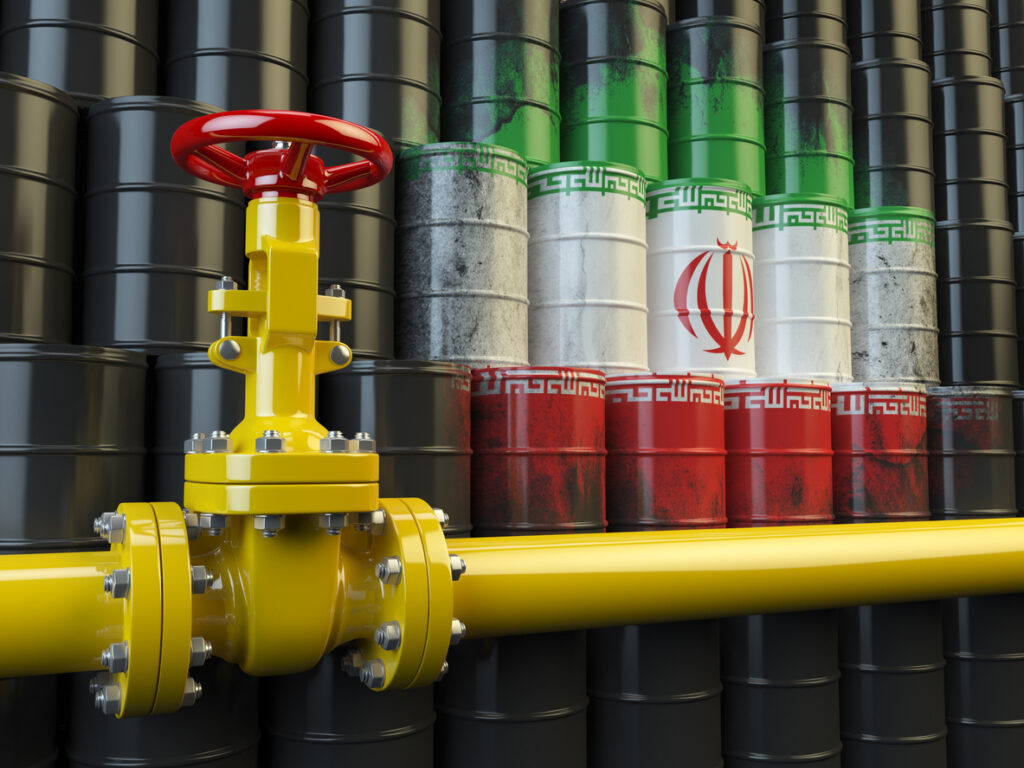
The Iranian energy market stands at a critical juncture for global oil and gas investors. Recent geopolitical developments, including Israeli strikes targeting facilities within Iran, have once again thrust the nation’s hydrocarbon assets into the spotlight. While initial reports from the National Iranian Oil Refining and Distribution Company indicate no damage to refining facilities or oil storage, the specter of escalated conflict inevitably prompts a reassessment of supply stability and market risk premiums. As senior analysts, our focus must extend beyond the immediate headlines to the underlying fundamentals, Iran’s strategic positioning, and the intricate dance of sanctions and global demand that defines its contribution to the world’s energy complex.
Geopolitical Tensions and Iran’s Persistent Production Capacity
Recent military actions in the region underscore the ever-present geopolitical risk associated with Iranian oil supply. Despite these tensions, Iran maintains a significant, if often under-reported, presence in global oil markets. As the third-largest producer within OPEC, the nation currently extracts approximately 3.3 million barrels of oil per day (bpd), accounting for roughly 3% of total world output. This production level remains resilient even under various international sanctions, a testament to Iran’s determination and its established infrastructure. Historically, Iran demonstrated a remarkable capacity, peaking at 6 million bpd in 1974, which represented over 10% of global output at the time. This past performance highlights the significant upside potential should geopolitical conditions and sanctions regimes ever ease. Crucially, Iran is exempt from OPEC+ output restrictions, meaning its production decisions are not bound by the collective quotas that govern other major producers, adding another layer of complexity for supply-side analysis.
The Sanctions Maze: China’s Demand and Investor Insights
One of the most frequent inquiries from our investor base concerns the efficacy of sanctions and the flow of Iranian crude, particularly regarding the role of “Chinese tea-pot refineries.” Our proprietary intent data shows a clear interest in understanding these dynamics. Despite stringent U.S. and EU sanctions, Iran’s crude exports have surged to a multi-year high, reaching an estimated 1.8 million bpd in recent months, levels not seen since 2018. This robust export performance is overwhelmingly driven by demand from China, where private refiners are key buyers. While the U.S. Treasury has placed some of these entities on sanctions lists, our market intelligence indicates limited material impact on the overall flow of Iranian crude to China. Iran has become adept at circumventing sanctions through various tactics, including ship-to-ship transfers and sophisticated satellite signal manipulation. For investors, this signifies that a significant portion of Iranian output will likely continue to find its way to market, primarily to Asia, irrespective of Western pressure, providing a steady, albeit opaque, supply stream that influences global balances.
Market Response and Forward-Looking Price Dynamics
The immediate market reaction to the recent geopolitical flare-up, while initially volatile, has shown a degree of underlying resilience. As of today, Brent Crude trades at $95.67 per barrel, reflecting a modest gain of 0.93% on the day, hovering within a daily range of $91-$96.89. This contrasts with a broader trend observed over the past 14 days, where Brent declined by approximately 8.8%, moving from $102.22 on March 25th to $93.22 on April 14th. This recent price softening, despite regional instability, suggests that the market may already be pricing in a certain level of geopolitical risk, or perhaps more critically, that underlying supply and demand fundamentals are exerting greater influence. Looking forward, investors should closely monitor several key upcoming events. The OPEC+ Joint Ministerial Monitoring Committee (JMMC) meeting on April 18th, followed by the Full Ministerial meeting on April 20th, will be crucial. While Iran is exempt from cuts, the broader group’s decisions on output targets will dictate how much spare capacity, particularly from Saudi Arabia and other Gulf producers, could potentially offset any future disruptions in Iranian supply. Analysts note that OPEC+ spare capacity is becoming increasingly strained, making any significant loss of Iranian barrels even more impactful. Furthermore, the API Weekly Crude Inventory reports (April 21st, 28th) and the EIA Weekly Petroleum Status Reports (April 22nd, 29th) will offer vital insights into U.S. inventory levels, providing a critical barometer for demand and supply balances against the backdrop of Middle Eastern tensions. These data points will be instrumental in forming a base-case Brent price forecast for the next quarter, a key concern for our readership.
Strategic Infrastructure and Untapped Potential
Iran’s energy infrastructure is extensive and strategically located. The country refines approximately 2.6 million bpd of crude and condensate, showcasing its significant domestic processing capabilities. Beyond oil, Iran is a major player in natural gas, producing an impressive 34 billion cubic feet per day, which accounts for 7% of global production. Currently, all of this gas is consumed domestically, highlighting a substantial potential for future LNG exports if infrastructure were developed and sanctions eased. The primary hydrocarbon production facilities are concentrated in the southwest, with the Khuzestan province being central for oil extraction, and the Bushehr provinces, home to the colossal South Pars field, crucial for gas and condensate. Exports of crude oil, condensate, and refined products reach 2.6 million bpd, with a dominant 90% of its crude exports funneling through the strategically vital Kharg Island. This integrated network underscores Iran’s intrinsic capacity to be a much larger global energy supplier. For long-term investors, the potential for significant production ramp-up, leveraging existing infrastructure and vast reserves, represents a dormant upside that could fundamentally alter global supply dynamics should a grander geopolitical shift occur.