Escalating Iran Tensions Threaten Global Oil Supply Stability
The intricate dance of international diplomacy, particularly concerning the nuclear ambitions of the Islamic Republic of Iran, has once again injected a significant dose of uncertainty into global energy markets. Recent statements from U.S. President Donald Trump, signaling a marked decrease in confidence regarding a potential nuclear accord with Tehran, are sending ripples through the oil industry, prompting investors to reassess geopolitical risk premiums and potential supply disruptions.
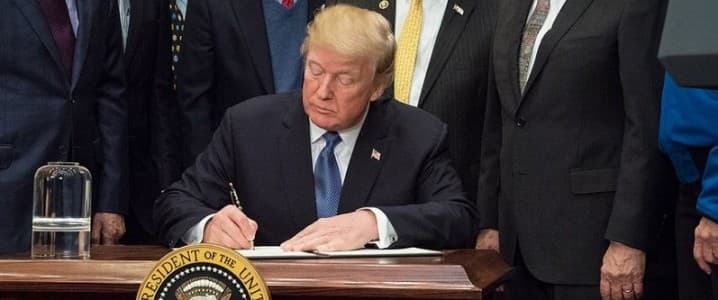
President Trump articulated a distinct shift in his outlook this week, remarking, “I’m less confident now than I would have been a couple of months ago.” He further elaborated on a perceived change in Iran’s disposition, stating, “Something happened to them, but I am much less confident of a deal being made.” This evolving sentiment from the White House chief carries substantial weight for crude oil prices, as the prospect of a diplomatic breakthrough that could reintegrate Iranian oil into global supply chains appears to be receding. The U.S. remains unwavering in its commitment to preventing Iran from developing nuclear weapons through uranium enrichment, with President Trump emphasizing, “But it would be nicer to do it without warfare, without people dying, it’s so much nicer to do it. But I don’t think I see the same level of enthusiasm for them to make a deal.” This underscores a preference for peaceful resolution, yet the perceived lack of engagement from Iran raises the specter of continued, or even intensified, confrontation, a scenario that historically has fueled volatility in the energy sector.
Tehran’s Unyielding Stance on Uranium Enrichment
The core of the diplomatic impasse lies in Iran’s steadfast position on uranium enrichment. Last month, Iranian officials communicated unequivocally that negotiations are destined to “lead nowhere” if the United States persists in demanding a halt to their enrichment activities. Majid Takht Ravanchi, Iran’s Deputy Foreign Minister for Political Affairs, was quoted in May as asserting, “Our position on enrichment is clear and we have repeatedly stated that it is a national achievement from which we will not back down.”
This declaration highlights a fundamental disagreement that appears increasingly difficult to bridge. Iran maintains that its enrichment program is solely for peaceful civil nuclear energy purposes, a claim met with persistent skepticism by the U.S., which insists on the complete cessation of all enrichment activities. For oil market participants, this diplomatic stalemate is not merely a political talking point; it directly impacts the likelihood of sanctions relief and the potential return of millions of barrels per day of Iranian crude to the international market. Should negotiations falter permanently, the existing sanctions regime could be tightened further, keeping Iranian supply off-limits and contributing to a tighter global balance, thereby supporting higher crude oil prices.
The Looming Threat of Regional Conflict and Oil Market Volatility
Adding another layer of significant concern for energy investors is the explicit threat of military retaliation from Tehran should diplomatic efforts fail. Ahead of another scheduled round of talks, Iran’s Defense Minister Aziz Nasirzadeh issued a stark warning on Wednesday. He stated that if negotiations collapse and conflict becomes inevitable, Iran is prepared to strike U.S. military installations across the Middle East. Nasirzadeh was quoted as saying at a weekly press briefing, “Some officials on the other side threaten conflict if negotiations don’t come to fruition. If a conflict is imposed on us … all U.S. bases are within our reach and we will boldly target them in host countries.”
Such hawkish rhetoric immediately elevates the geopolitical risk profile of the world’s most critical oil-producing region. The Middle East, home to vast hydrocarbon reserves and key maritime chokepoints like the Strait of Hormuz, is inherently sensitive to any escalation of tensions. A military confrontation, even a limited one, could severely disrupt oil production, processing, and shipping routes, sending crude prices soaring. The Strait of Hormuz, through which approximately 20% of the world’s total petroleum liquids consumption flows, represents an especially vulnerable artery for global energy supply. Any threat to its unimpeded passage would undoubtedly trigger an immediate and sharp spike in both Brent and WTI benchmarks, as traders price in the potential for catastrophic supply shortages.
Investor Implications: Navigating the Geopolitical Risk Premium
For discerning investors in the oil and gas sector, these developments underscore the imperative of closely monitoring geopolitical currents. The reduced confidence in a U.S.-Iran nuclear deal, coupled with Iran’s unyielding stance on enrichment and explicit threats of military action, introduces a substantial “geopolitical risk premium” into crude oil pricing. This premium reflects the market’s assessment of the likelihood and potential impact of supply disruptions arising from political instability or conflict.
Investors must consider several key factors: the potential for renewed or intensified U.S. sanctions enforcement against Iranian oil exports, the strategic significance of the Strait of Hormuz as a chokepoint, and the broader implications for regional stability. Any progress, or lack thereof, in diplomatic discussions will directly influence investor sentiment and trading strategies. Companies with significant upstream assets in the Middle East, or those heavily reliant on stable shipping lanes, face heightened scrutiny during such periods of uncertainty. Conversely, firms in more stable regions or those with diversified portfolios might offer a safer harbor. Prudent risk management, including hedging strategies, becomes paramount in an environment where a single political statement or military maneuver can dramatically shift market dynamics.
The current trajectory of U.S.-Iran relations suggests a prolonged period of tension and negotiation, rather than a swift resolution. This ongoing uncertainty will likely keep crude oil markets on edge, highly reactive to news from both Washington D.C. and Tehran. Energy investors should brace for continued volatility, recognizing that the delicate balance of global oil supply could be significantly altered by the evolving geopolitical landscape surrounding Iran’s nuclear program.