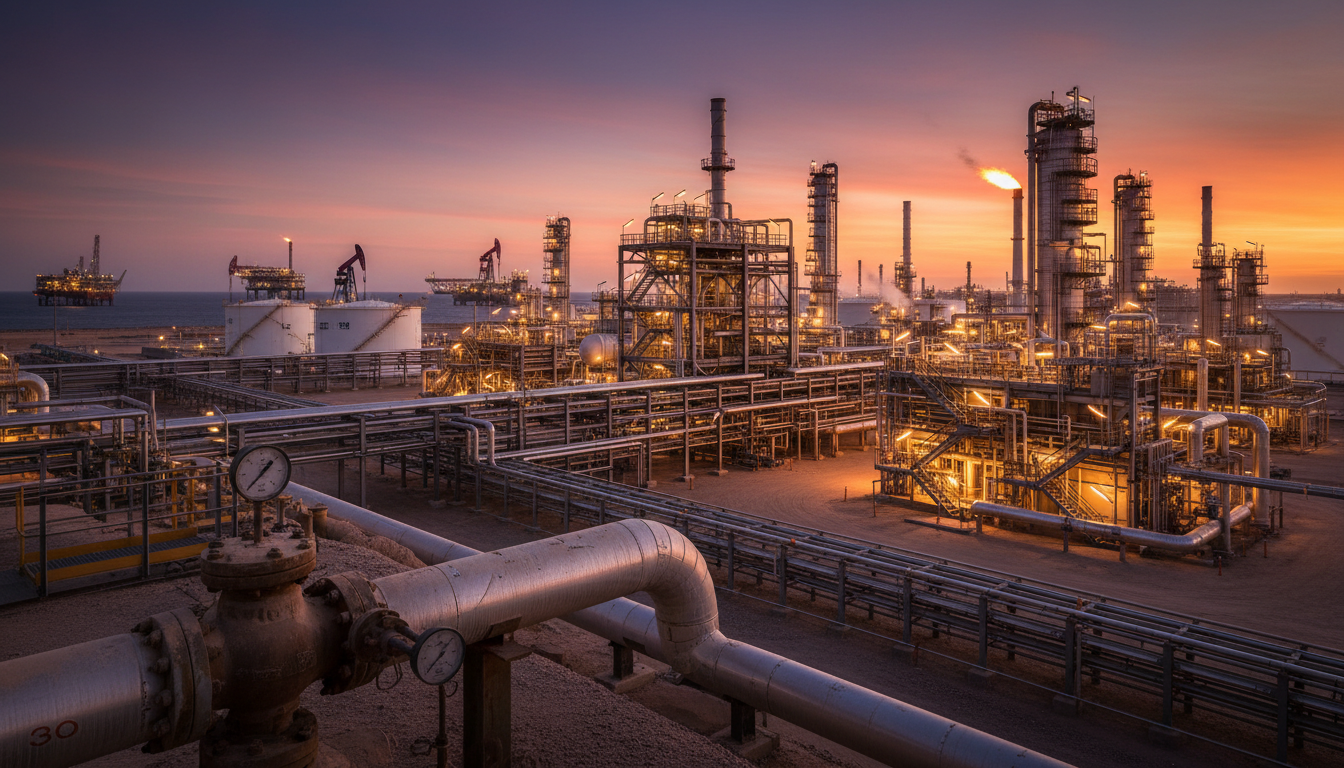
The global energy landscape is once again gripped by heightened geopolitical tensions, with investors closely monitoring an unfolding situation in the Middle East. A looming deadline set by the U.S. President for Iran has sent ripples through commodity markets, particularly impacting European natural gas futures. The ultimatum, threatening significant escalation if a resolution isn’t met and the critical Strait of Hormuz reopened by 8 p.m. eastern time today, underscores the fragility of global energy supply chains and the profound influence of regional conflicts on international energy prices. This immediate pressure point demands a meticulous analysis of market reactions, supply vulnerabilities, and the strategic outlook for energy investors.
Geopolitical Flashpoint Ignites European Gas Volatility
The immediate fallout from the escalating rhetoric centers squarely on European natural gas markets. As the deadline for Iran approaches, the May 2026 contract of the Dutch TTF Natural Gas Futures, Europe’s key benchmark for gas trading, experienced a significant surge. On Tuesday, futures opened 3% higher in Amsterdam, with prices settling just above $58 (50 euros) per megawatt-hour (MWh). This upward movement highlights profound market anxieties stemming from the continued closure of the Strait of Hormuz, a critical maritime choke point through which approximately 20% of daily global liquefied natural gas (LNG) flows. Since the conflict in the Middle East intensified, trapping vital LNG shipments, Europe’s benchmark gas prices have soared by approximately 55%. To put this into perspective, the front-month futures were trading at a significantly lower $37 (32 euros) per MWh on February 27, the day prior to the reported commencement of U.S. and Israeli actions against Iran. European gas storage sites are currently at levels not seen in years following a demanding winter, facing an exceptionally challenging refill season. The current surge in spot LNG prices, exacerbated by aggressive competition from Asian buyers for available supply, threatens to derail Europe’s efforts to replenish its reserves, leaving the continent vulnerable to further price shocks.
Crude Markets and Investor Sentiment: A Nuanced Picture
While European natural gas reacts sharply to immediate geopolitical risks, the crude oil market presents a more complex narrative. As of today, Brent Crude is trading at $94.12, reflecting a 0.94% increase, with its daily range spanning from $91.39 to $94.86. Similarly, WTI Crude stands at $90.33, up 0.74%, having traded between $87.64 and $91.41. These figures indicate an immediate upward pressure, likely in response to the Middle East tensions. However, our proprietary reader intent data reveals a more multifaceted investor perspective, with a recurring question emerging: “is WTI going up or down?” This reflects the underlying uncertainty that extends beyond the current geopolitical event. Indeed, a broader market view shows that despite today’s uptick, the 14-day trend for Brent Crude has been downward, falling from $101.16 on April 1st to $94.09 on April 21st – a notable decline of 7%. This suggests that while geopolitical risk provides upward impetus, other factors like demand outlooks and broader economic concerns have recently tempered crude prices. Investors are also seeking insights into the performance of individual energy companies, with queries like “How well do you think Repsol will end in April 2026?” underscoring the need for a comprehensive understanding of how these macro trends translate into equity performance. The current environment demands vigilance, as the underlying fundamentals of supply and demand continue to wrestle with the unpredictable nature of global politics.
The Strait of Hormuz: Global Supply Chain Vulnerability
The strategic importance of the Strait of Hormuz cannot be overstated, acting as a critical artery for global energy trade. Its effective closure, as witnessed over the past month, has profound implications beyond immediate price spikes. Approximately 20% of the world’s daily LNG flows typically transit this narrow waterway. With no LNG cargo successfully transiting the Strait in over a month—including two Qatari vessels reportedly forced to abandon attempts—the global supply chain is undergoing a significant rerouting. Asia, a major recipient of LNG, has seen a substantial redirection, now receiving about 85% of the LNG supply that historically passed through the Strait. While Europe’s direct supply exposure from this specific route is much lower, at approximately 15%, the ripple effect on global spot LNG prices is undeniable. The intense competition for diverted supplies has driven up costs for everyone, making Europe’s essential refill season a precarious endeavor. The U.S. President’s stark warning that “the entire country can be taken out in one night – and that night might be tomorrow night,” referring to Iran, vividly illustrates the potential for further escalation. Such a scenario, involving U.S. strikes on vital Iranian infrastructure and potential Iranian retaliation, would almost certainly lead to a sustained closure of the Strait of Hormuz, threatening even greater price spikes across both gas and crude markets.
Navigating Future Volatility: Upcoming Events and Strategic Outlook
For discerning investors, the current geopolitical storm necessitates not only an understanding of immediate threats but also a forward-looking strategy that integrates upcoming fundamental data points. While the spotlight remains on the Middle East, a series of key energy events scheduled over the next two weeks will provide crucial insights into market balances and potential price trajectories. On Wednesday, April 22nd, and again on April 29th and May 6th, the EIA Weekly Petroleum Status Report will offer vital statistics on crude oil inventories, refinery activity, and product supplied, giving a snapshot of U.S. supply and demand dynamics. These will be complemented by the Baker Hughes Rig Count on April 24th and May 1st, providing an indicator of future production trends. Additionally, the API Weekly Crude Inventory reports on April 28th and May 5th will offer an early look at U.S. inventory changes. Perhaps most significantly, the EIA Short-Term Energy Outlook on May 2nd will present comprehensive forecasts for global and domestic energy markets, providing a critical framework for understanding mid-term price direction. Investors should closely monitor these scheduled releases, as they offer fundamental counterpoints to geopolitical volatility. An informed investment approach in this environment requires integrating real-time geopolitical developments with a robust understanding of underlying supply, demand, and production trends, seeking diversification and hedging strategies to mitigate risks inherent in a volatile energy market and capitalize on potential opportunities.


