The global energy landscape continues its dynamic shift, with recent developments in the electric vehicle (EV) battery sector underscoring the accelerating pace of the energy transition. Slovakian battery manufacturer InoBat recently solidified its ambitious expansion plans, securing €54 million in grant funding alongside a €456,000 loan from the Spanish Ministry of Industry and Tourism. This significant financial injection is earmarked for the construction of a major gigafactory in Valladolid, northern Spain. While seemingly a story primarily about EVs, these advancements carry profound implications for the traditional oil and gas sector, signaling continued pressure on long-term crude demand and requiring astute investment strategies.
Accelerating EV Supply Chains and Their Demand Implications
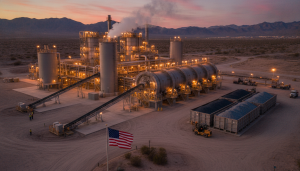
InoBat’s Valladolid gigafactory represents a substantial commitment to scaling up EV battery production. With a planned total investment of €712 million, the facility aims to achieve an impressive production capacity of 32 GWh by 2027, with full operational capacity expected by 2029. This Spanish venture complements InoBat’s other major project: a joint gigafactory with partner Gotion High-Tech in Šurany, southern Slovakia, which targets an initial 20 GWh capacity by 2026. The strategic backing from the Spanish government’s eMobility support program, PERTE, which has previously bolstered industry giants like Seat, Stellantis, and Volkswagen’s PowerCo, highlights the broad institutional support for EV infrastructure development across Europe.
For oil and gas investors, this rapid expansion of battery manufacturing capacity translates directly into an accelerated timeline for widespread EV adoption. Each new gigafactory, like InoBat’s, chips away at future gasoline demand, gradually eroding a core pillar of crude consumption. While the immediate impact on global oil markets may appear marginal, the cumulative effect of such large-scale investments signals a structural shift. The involvement of major players like Gotion High-Tech, whose largest shareholder is Volkswagen, lends significant credibility and operational expertise to InoBat’s ambitious plans, suggesting a higher probability of successful execution and faster market penetration for advanced battery technologies.
Navigating Volatile Crude Markets Amidst Energy Transition Signals
The persistent growth in the EV supply chain provides a long-term demand counterweight to immediate market dynamics. As of today, Brent crude trades at $98.33 per barrel, registering a 1.07% decline within a daily range of $97.92 to $98.67. Similarly, WTI crude is down 1.72% at $89.60, fluctuating between $89.37 and $90.26. This daily softening follows a more significant trend; over the past two weeks, Brent crude has shed a notable 12.4%, dropping from $112.57 on March 27th to $98.57 on April 16th. This substantial correction reflects a complex interplay of factors, including macroeconomic concerns, geopolitical developments, and, crucially, the underlying sentiment around future oil demand.
The expansion of EV battery manufacturing, exemplified by InoBat’s projects, contributes to this long-term demand uncertainty, adding a structural bearish tilt that can amplify short-term market reactions. While gasoline prices are also seeing a slight downturn, with the commodity currently trading at $3.07 per gallon, down 0.65% today, the broader narrative for petroleum products is one of gradual displacement. Investors in the oil and gas sector must increasingly factor in these accelerating energy transition dynamics, as even minor shifts in projected demand can have outsized impacts on crude pricing and upstream investment decisions.
Upcoming Catalysts and the Evolving Demand Outlook
The coming weeks are packed with critical events that will further shape the energy market narrative, requiring close attention from investors. This Friday, April 17th, and Saturday, April 18th, mark the highly anticipated OPEC+ Joint Ministerial Monitoring Committee (JMMC) and Full Ministerial Meetings. These gatherings are pivotal, as member nations will assess market conditions and potentially adjust production quotas, directly impacting global supply. Any decisions made here will be weighed against the backdrop of growing EV adoption and the continuous expansion of battery manufacturing capacity.
Further insights into short-term demand and supply will come from the API Weekly Crude Inventory reports on April 21st and 28th, followed by the EIA Weekly Petroleum Status Reports on April 22nd and 29th. These detailed inventory figures offer crucial snapshots of present consumption trends and refinery activity. While these reports focus on immediate supply-demand balances, the long-term strategic investments in EV infrastructure, such as InoBat’s gigafactory reaching 32 GWh capacity by 2029, represent a foundational shift that will increasingly influence the demand side of the petroleum equation over the coming years. Oil and gas investors must look beyond the immediate headlines and consider how these long-term structural changes will impact the viability and profitability of traditional energy assets.
Investor Concerns: Data Integrity and Future Demand Certainty
Our proprietary reader intent data highlights a persistent theme among sophisticated investors: a growing focus on the reliability and transparency of market data in a rapidly evolving energy landscape. Questions such as “What data sources does EnerGPT use?” and “What is the current Brent crude price and what model powers this response?” underscore a deep-seated need for trusted, granular information. This desire for robust data is intrinsically linked to the uncertainties introduced by the energy transition.
The expansion of EV battery production, as evidenced by InoBat’s substantial funding and ambitious timelines, directly feeds into this uncertainty. How do investors accurately model future oil demand when the pace of EV adoption, fueled by expanding battery supply chains, is accelerating? The challenge of predicting peak oil demand becomes more complex with each new gigafactory announcement. Despite past setbacks, such as InoBat founder Marian Boček’s involvement in the failed Lilium funding, the current strategic partnerships with entities like Gotion High-Tech and the significant government grants indicate a stronger foundation for success. This makes it imperative for oil and gas investors to not only track traditional supply-demand metrics but also to develop sophisticated models that incorporate the rapidly evolving technological and manufacturing capacities of the alternative energy sector.
In conclusion, while the InoBat investment primarily concerns the EV battery market, its implications ripple through the entire energy complex. For oil and gas investors, these developments serve as a potent reminder of the ongoing energy transition and the critical need for diversified portfolios and forward-thinking analysis. Monitoring the growth of the EV supply chain, understanding its impact on long-term crude demand, and staying abreast of immediate market catalysts remain paramount for navigating this dynamic investment landscape.