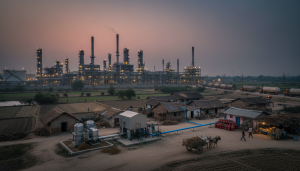
India is poised to emerge as a significant global player in the burgeoning sustainable aviation fuel (SAF) market, potentially shifting from an importer to a net exporter of this critical decarbonization solution. This strategic pivot, driven by a confluence of robust aviation growth and vast domestic feedstock availability, presents a compelling investment narrative for the energy sector.
The global aviation industry, responsible for approximately 2-3 percent of worldwide carbon emissions, faces immense pressure to decarbonize. Sustainable Aviation Fuel is recognized as the most viable immediate pathway to substantially reduce these emissions, offering a significant reduction in lifecycle carbon footprint compared to traditional jet fuel. As the world pushes towards ambitious net-zero targets, the demand for SAF is set to skyrocket, creating an urgent need for scaled-up production capabilities globally.
India’s Aviation Boom Fuels SAF Demand
India’s civil aviation sector is experiencing unprecedented expansion, solidifying its position as one of the fastest-growing markets globally. Projections indicate a massive influx of approximately 2,500 new civil aircraft into the country over the next two decades. This forward momentum is underscored by Indian airlines collectively placing orders for more than 1,000 new airplanes in recent years. While a younger, more fuel-efficient fleet inherently contributes to some level of emissions reduction, true deep decarbonization of this rapidly expanding air travel network necessitates a dramatic increase in SAF adoption.
The sheer scale of this aviation growth within India not only implies a burgeoning domestic market for SAF but also highlights the country’s potential to innovate and industrialize biofuel production for aviation on an international scale. This dual opportunity—meeting internal demand while eyeing export markets—positions India at the forefront of the aviation energy transition.
Untapped Feedstock Riches: A Strategic Advantage
A primary driver for India’s anticipated leadership in SAF production is its extraordinary abundance of diverse feedstocks. The nation possesses extensive agricultural resources, generating considerable volumes of agricultural waste. Coupled with the availability of used cooking oil and other biomass sources, India boasts a formidable reservoir of raw materials ideally suited for SAF manufacturing. Industry experts estimate that India’s domestic feedstock alone holds the potential to yield between 8 to 10 million tonnes of sustainable aviation fuel annually.
This substantial domestic production capacity holds profound implications for the global energy landscape. When juxtaposed against the projected global requirement of 185 million tonnes of SAF per year needed to achieve the aviation industry’s net-zero emissions goal by 2050, India’s potential contribution becomes strikingly clear. The country’s ability to produce 8-10 million tonnes translates to supplying over 5 percent of the world’s total SAF requirements, solidifying its role as a critical exporter and a key enabler of global aviation decarbonization. The transformation of agricultural waste, often an environmental challenge, into high-value aviation fuel represents a remarkable economic and ecological opportunity.
Navigating Economic Hurdles and Unlocking Investment
Despite the clear environmental imperative and strategic advantages, the widespread adoption and scaling of SAF face significant economic hurdles. Currently, Sustainable Aviation Fuel carries a production cost that is 2.5 to 3.5 times higher than conventional Aviation Turbine Fuel (ATF). This substantial price differential represents the primary barrier to broader market penetration and underscores the need for concerted efforts to enhance economic viability.
Addressing this cost disparity requires a multi-pronged approach involving technological advancements, economies of scale in production, and supportive policy frameworks. Investors should look for opportunities in companies driving down production costs through innovative conversion technologies, optimizing supply chain efficiencies for feedstock collection and processing, and those benefiting from government incentives aimed at promoting SAF. The pathway to making SAF economically competitive with traditional jet fuel is not merely an engineering challenge but a critical investment frontier that promises long-term returns as carbon pricing and regulatory mandates intensify globally.
India’s Role in Global Decarbonization and Investor Outlook
India’s potential to become a net exporter of Sustainable Aviation Fuel offers a compelling investment thesis for those looking to capitalize on the energy transition. The convergence of a booming domestic aviation market, abundant and sustainable feedstock, and a global mandate for decarbonization positions India uniquely. Investing in Indian companies focused on SAF production, feedstock aggregation, and conversion technologies could yield significant returns as the global aviation industry moves towards its 2050 net-zero targets.
The strategic importance of transforming agricultural waste into high-value fuel not only addresses environmental concerns but also creates new economic avenues and enhances energy security. For sophisticated investors, India represents more than just a growing market; it is an emerging hub for green energy production with the capacity to influence global supply chains and contribute substantially to the decarbonization of one of the world’s most challenging sectors to abate. The opportunity for India to help decarbonize the global civil aviation industry is not just aspirational but increasingly tangible, driven by fundamental market forces and a clear strategic advantage.