India’s Aerial Strength: Securing Energy Amid Global Turbulence
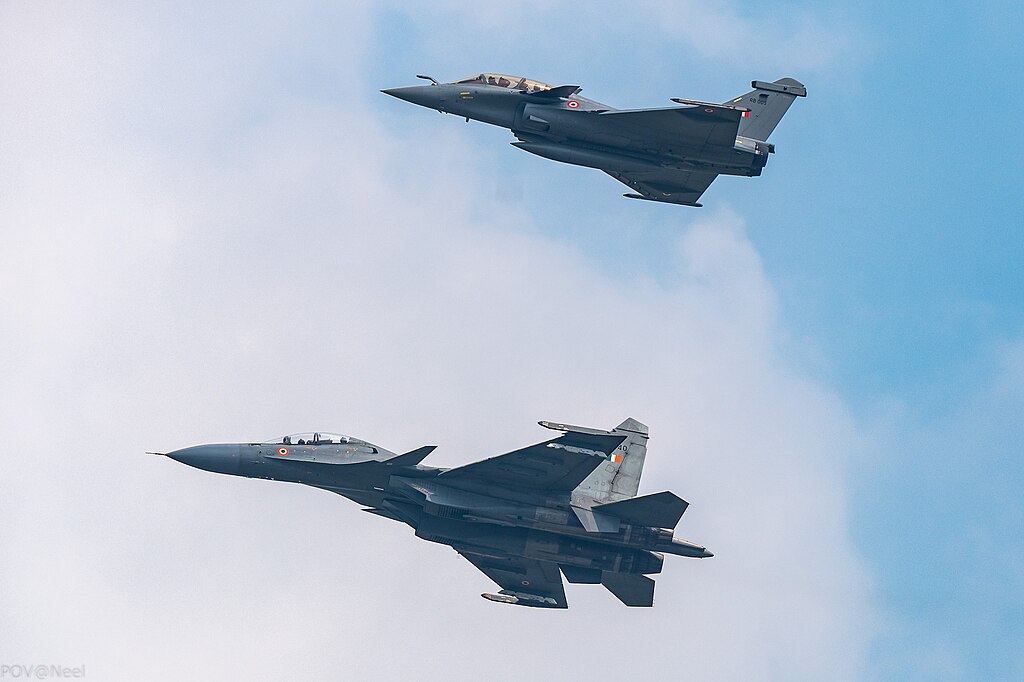
The global stage has recently witnessed an escalation in geopolitical tensions, with modern warfare strategies placing an unprecedented emphasis on air power and advanced air defense systems. For nations like India, this dynamic environment necessitates a robust and constantly evolving military posture. Recent events along its western border, including a terrorist incident in Pahalgam, Jammu and Kashmir, and the subsequent “Operation Sindoor” by the Indian Armed Forces, have starkly underscored the critical imperative to enhance air readiness and overall strategic defense capabilities. This focus on national security directly intertwines with the nation’s broader energy security objectives, influencing everything from supply chain stability to long-term investment prospects in the oil and gas sector.
India’s historical engagement with its neighbors provides ample context for this heightened vigilance. The nation has faced aerial confrontations with Pakistan in conflicts spanning 1965, 1971, and 1999, alongside more recent airstrikes such as those in Balakot. These experiences continually reinforce the necessity for a superior air defense infrastructure. A pivotal report, the Group of Ministers Report on Reforming National Security System, submitted after the Kargil War, explicitly highlighted the vital importance of India’s Air Defence. Furthermore, the burgeoning proliferation and increasing sophistication of unmanned aerial vehicles (UAVs), and their documented incursions across borders, present a new dimension of threat that demands continuous innovation in surveillance and interception technologies. For energy investors, regional stability and minimized geopolitical risk are paramount, making these defense advancements a key indicator of a secure operating environment.
Beyond the Skies: India’s Integrated Defense Strategy
The intricate security landscape surrounding India dictates that air defense extends far beyond mere aerial combat. The Kargil War served as a crucial catalyst, demonstrating the profound value of developing and deploying an integrated air defense system designed not only to safeguard national airspace but also to effectively neutralize aerial threats at multiple altitudes. This strategic imperative directly led to the initiation of the Indian Ballistic Missile Defence (IBMD) Programme in 2001, following the Kargil conflict, under the aegis of the Defence Research and Development Organisation (DRDO). India’s unwavering commitment to advancing its BMD capabilities signals a profound dedication to protecting its populace, critical infrastructure – including vital energy assets – and economic hubs from potential missile attacks. Such advanced defensive posture provides a significant strategic edge, acting as a powerful deterrent against regional aggression and thereby contributing to a more predictable investment climate for energy markets.
Currently, India is making significant strides with Project Kusha, an ambitious endeavor to create a long-range air defense system. This advanced system, engineered to intercept hostile aircraft and missiles, is projected to be fully deployed by 2028–29. It envisions a sophisticated network comprising automatic missile launchers seamlessly integrated with advanced radars, capable of detecting and neutralizing incoming threats with precision. While Project Kusha is in its developmental phase, an existing and equally critical initiative is the establishment of a five-layer defense shield protecting the National Capital Territory (NCT). This multi-layered defense architecture, a subject of discussion since 2019, features an innermost shield constructed with NASAM-II systems, while the outermost layer incorporates indigenous-built BMD systems. The intermediate layers are fortified by a combination of Akash, S400, and Barak 8 systems. The security of the NCT, as India’s economic and political nerve center, is vital for maintaining investor confidence and ensuring the uninterrupted flow of energy and commerce throughout the nation.
Technological Edge and Energy Market Implications
India’s defense innovation continues to accelerate. In 2024, the DRDO achieved a significant milestone with the successful test of the Phase-II interceptor missile, designed for high-altitude interception as part of the ongoing BMD program. This achievement represents a leap forward in the nation’s ability to counter sophisticated aerial threats. Concurrently, India has commenced the induction of indigenously developed Active Electronically Scanned Array (AESA) radars, significantly enhancing its early warning and surveillance capabilities. For energy market participants, robust early warning systems are crucial as they allow for timely responses to potential disruptions, safeguarding supply chains and infrastructure.
Further bolstering its strategic capabilities, the Combat Air Teaming System (CATS), a collaborative manned-unmanned teaming initiative between Hindustan Aeronautics Limited (HAL) and DRDO, aims to pair advanced fighter jets with autonomous drones. This groundbreaking synergy will enable complex offensive and reconnaissance missions, optimizing operational efficiency and reducing risk to human pilots. The integration of the Tapas-BH UAV further augments India’s capacity in Intelligence, Surveillance, and Reconnaissance (ISR). These advanced UAVs are set to be utilized by the armed forces, providing critical real-time intelligence that can inform strategic decisions, including the protection of vital energy transport routes and offshore exploration assets. From an investment perspective, these technological advancements contribute to a more secure operational environment, potentially reducing geopolitical risk premiums associated with energy projects in the region.
In essence, India’s comprehensive and proactive approach to air power and defense is more than just military posturing; it is a fundamental pillar of its long-term energy security strategy. By investing heavily in advanced defense systems, indigenous technological development, and integrated operational capabilities, India is actively mitigating regional risks and safeguarding its economic interests. For oil and gas investors, this translates into a more stable and predictable environment for exploration, production, and distribution, ensuring the continuous flow of energy that powers one of the world’s fastest-growing economies. A strong defense posture ultimately underpins a robust and resilient energy market, making India’s aerial strength a critical factor for anyone monitoring global energy investments.