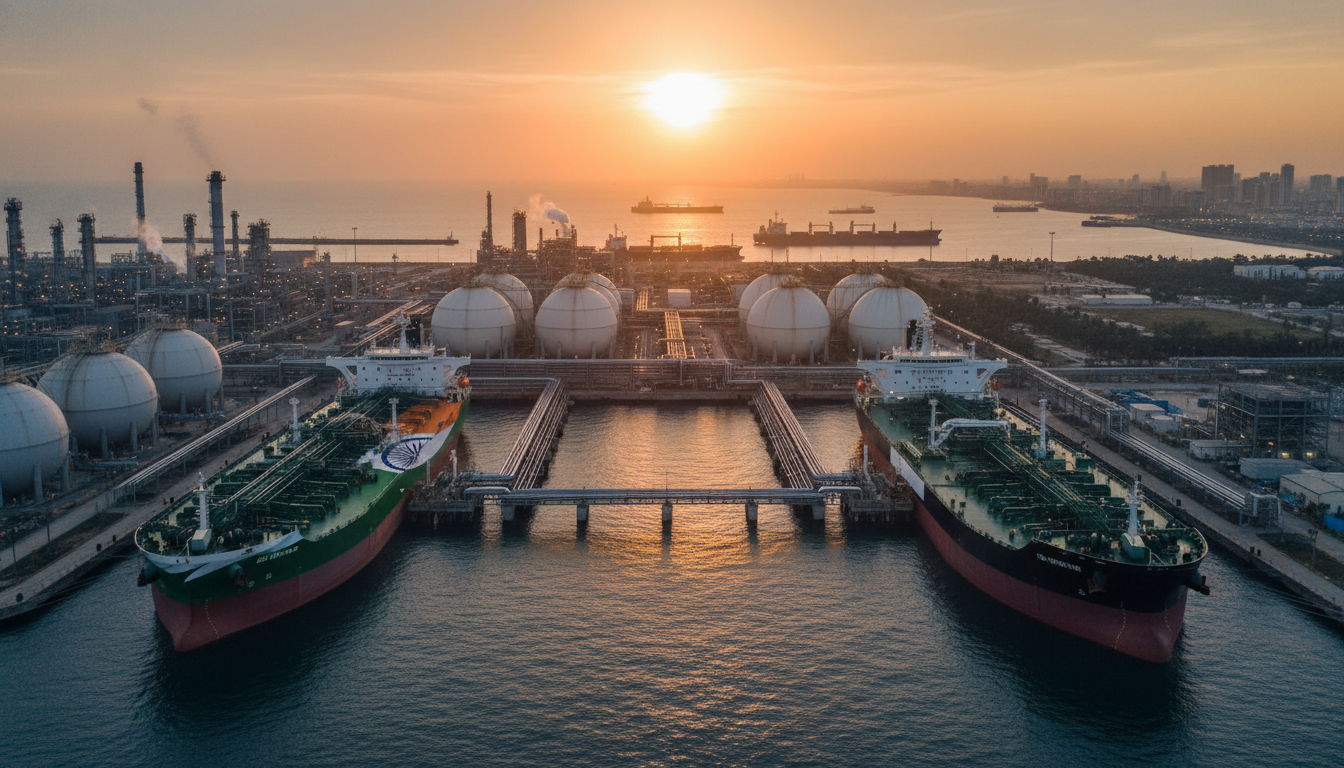
India Fortifies Energy Security with UAE Deals Amidst Chokepoint Pressures
In a decisive move to stabilize its energy landscape, India has recently forged critical agreements with the United Arab Emirates, securing liquefied petroleum gas (LPG) supplies and establishing a strategic petroleum reserves pact. These developments underscore India’s urgent efforts to insulate its economy from escalating global energy market volatility, particularly as geopolitical tensions severely impact vital shipping lanes and drive up commodity prices. The urgency of these bilateral agreements highlights India’s proactive stance in safeguarding its significant energy import requirements.
The agreements were formalized during a swift, two-hour visit by Indian Prime Minister Narendra Modi to the UAE. This high-level engagement emphasizes the strategic importance New Delhi places on diversifying its energy procurement and bolstering its strategic reserves. For investors monitoring global energy markets, these pacts signal India’s determination to ensure consistent energy flows and manage the economic fallout from disrupted supplies, especially for crucial domestic fuels like LPG, which serves as a primary cooking fuel for millions across the nation.
Mounting Economic Pressure Prompts Domestic Fuel Price Adjustment
The ink on the UAE agreements was barely dry when India’s state refiners implemented a retail price hike for gasoline and diesel, the first such adjustment in four years. This increase, amounting to over 3%, directly reflects the significant surge in global crude oil prices, which had pushed India’s refiners into an unsustainable loss-making position. The decision, though long anticipated by industry observers, highlights the immense pressure external market forces exert on domestic economic stability in a major emerging market like India.
Historically, the Indian government has demonstrated considerable reluctance to pass on rising global energy costs to consumers, recognizing the profound sensitivity of the populace to fuel price increases. This latest hike, therefore, serves as a stark indicator of the severity of current energy market conditions and the unavoidable necessity to align domestic pricing with international benchmarks. For energy sector investors, this suggests a potential shift towards more market-reflective pricing mechanisms, though still managed to cushion consumer impact, offering a nuanced outlook on profitability for refiners and distributors operating within India.
Geopolitical Flashpoints and the Strait of Hormuz Impact
The intensifying economic strain on India is directly attributable to ongoing geopolitical conflicts that have significantly choked vital energy transit routes, most notably the Strait of Hormuz. This critical chokepoint, a lifeline for global oil and gas shipments, has seen disrupted flows since the onset of the ‘Iran war’ (as referred to in the source context), severely constricting the supply of LPG and crude to importing nations. While some LPG tankers have managed to navigate the Strait, including one that successfully transited following a mid-April blockade, the overall uncertainty and risk premiums remain exceptionally high.
India, a colossal energy consumer, finds itself grappling with a dual challenge: higher prices for LPG imports sourced from alternative, more distant locations, and elevated costs for crude oil that can circumvent the Strait of Hormuz. These increased expenditures are placing considerable pressure on the nation’s current account balance and foreign exchange reserves, underscoring the profound financial implications of sustained geopolitical instability in key energy-producing regions. Investors should recognize India’s vulnerability here, noting the direct link between Middle Eastern stability and India’s economic resilience.
Government’s Multi-pronged Strategy to Navigate Energy Crisis
In response to these escalating challenges, the Indian government is deploying a multi-pronged strategy encompassing international diplomacy, domestic conservation efforts, and strategic infrastructure development. Prime Minister Modi’s engagement with the UAE on LPG supplies and strategic reserves is a cornerstone of this strategy, aiming to secure long-term, reliable energy partnerships.
Domestically, the administration is actively urging its citizens to adopt more conservative energy consumption habits. Oil Minister Hardeep Singh Puri emphasized the national imperative to curb gasoline and diesel usage, advocating for increased reliance on public transportation and carpooling. Puri articulated that “measures such these will help the nation conserve energy, save on the energy import bill and overcome the challenges arising out of the serious military conflict involving many energy producing nations.” This public appeal underscores the collective responsibility being sought to mitigate the impact of external energy shocks.
Investor Implications: Resilience and Risk in India’s Energy Sector
For investors, India’s current energy maneuvers present a compelling case study in resilience against global volatility. The proactive sealing of supply agreements, the strategic bolstering of reserves, and the managed domestic price adjustments illustrate a nation acutely aware of its energy vulnerabilities and determined to mitigate risks. While the immediate economic pain from higher import bills and domestic inflation is undeniable, these strategic responses aim to stabilize the long-term energy outlook.
The focus on diversifying sourcing, particularly through pacts like the one with the UAE, could de-risk India’s energy supply chain over time. However, the immediate pressures on India’s current account and foreign reserves remain significant. Investors should continue to monitor geopolitical developments impacting the Strait of Hormuz closely, as well as India’s ongoing efforts to balance consumer affordability with the financial health of its state-owned energy enterprises. The trajectory of global crude and LPG prices will largely dictate the success of India’s current strategy, offering both opportunities and risks for those invested in or looking at the Indian energy market.


