India’s strategic engagement with the Gulf Cooperation Council (GCC) nations has evolved significantly, moving beyond traditional expatriate linkages to robust economic and strategic partnerships. This shift is underscored by a series of Free Trade Agreements (FTAs) and Comprehensive Economic Partnership Agreements (CEPAs) designed to deepen trade, secure energy supplies, and foster investment across diverse sectors. While the India-UAE CEPA has already demonstrated tangible success, pushing bilateral trade beyond $100 billion in FY2025, attention is now turning to potential similar agreements with other key GCC players, notably Oman. An impending India-Oman FTA represents a pivotal next step in this broader strategy, promising to fortify India’s energy security, expand trade horizons, and create new avenues for investment amidst a dynamic global energy landscape.
The Expanding India-GCC Economic Corridor
The success of the India-UAE CEPA serves as a compelling blueprint for India’s engagement with the wider GCC bloc. Signed in 2022, this agreement propelled bilateral trade from $72.87 billion to over $100 billion in FY2025, exceeding initial objectives and expanding into non-traditional sectors. This strong performance highlights the mutual benefits of such comprehensive agreements, driven by proactive roles from both Indian state governments, chambers of commerce, and UAE business groups. The total trade volume with the GCC region, estimated at $178.56 billion in 2024-2025, underscores the immense economic interdependence. For oil and gas investors, this robust economic corridor signals a deepening integration of supply chains and a commitment to long-term partnerships, providing a more stable environment for energy flows and related infrastructure investments. As major energy importers, India’s proactive approach to securing favorable trade terms with producer nations like those in the GCC is a critical component of its energy diversification and stability strategy.
Oman’s Strategic Significance for India’s Energy Future
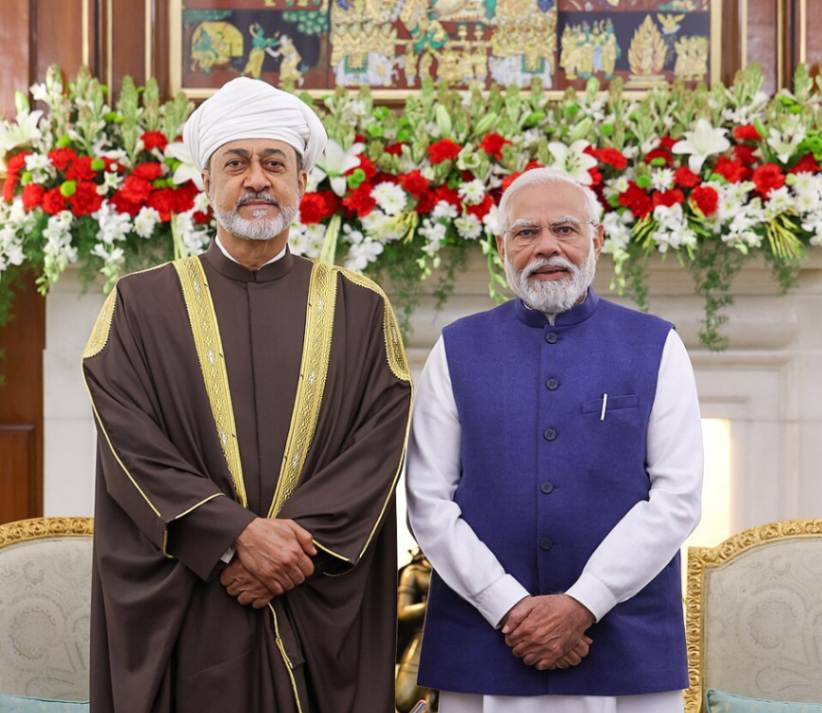
India’s relationship with Oman has gained considerable strategic momentum, highlighted by His Majesty Sultan Haitham bin Tarik’s state visit to India in December 2023. This visit culminated in the release of a joint vision document titled ‘A partnership for the future,’ which outlined key areas of cooperation including maritime collaboration, enhanced connectivity, energy security, and a strong emphasis on green energy initiatives. For investors monitoring India’s long-term energy trajectory, a question frequently posed relates to the future price of oil per barrel and how India plans to navigate global energy transitions. Oman’s role is crucial here; it offers not just traditional hydrocarbon supplies but also a strategic partner for India’s burgeoning green energy ambitions and a gateway for maritime trade. The integration of India’s UPI payments and RuPay card systems with Oman’s digital payment infrastructure, initiated via an MoU in October 2022, further illustrates the deepening, multifaceted nature of this bilateral bond, extending beyond purely energy-centric transactions to a broader economic ecosystem.
Navigating Market Volatility: The Imperative of Stable Partnerships
The inherent volatility of global energy markets underscores the critical importance of stable, long-term supply agreements like a potential India-Oman FTA. As of today, Brent crude trades at $90.38 per barrel, reflecting a significant 9.07% decline within a day’s range of $86.08 to $98.97. Similarly, WTI crude is priced at $82.59, down 9.41% from its daily high. This recent downward pressure follows a pronounced 14-day trend where Brent crude fell by over 18.5%, from $112.78 on March 30th to $91.87 on April 17th. Such dramatic price swings highlight the global energy market’s susceptibility to geopolitical events, supply-demand imbalances, and speculative trading. For a rapidly growing economy like India, securing preferential access to energy resources through agreements with reliable partners like Oman offers a vital hedge against this unpredictability. While an FTA won’t directly control global prices, it can ensure more stable supply volumes and potentially favorable pricing structures, thereby mitigating the impact of market fluctuations on India’s economy and energy-intensive industries.
Upcoming Catalysts and Forward-Looking Energy Strategy
The broader context for energy investment decisions is constantly shaped by key industry events, and the potential India-Oman FTA aligns perfectly with India’s strategic responses to these dynamics. Investors, who frequently inquire about OPEC+’s current production quotas and their impact on future oil prices, will be keenly watching the upcoming OPEC+ Joint Ministerial Monitoring Committee (JMMC) and full Ministerial meetings scheduled for April 18th and 19th. These meetings are pivotal in determining short-to-medium term global supply levels. Furthermore, the API Weekly Crude Inventory reports (April 21st, 28th) and the EIA Weekly Petroleum Status Reports (April 22nd, 29th) will offer crucial insights into U.S. supply-demand fundamentals, directly influencing market sentiment and price action. For India, a robust FTA with Oman, built on the foundations of energy security and green energy cooperation outlined in their joint vision, represents a forward-looking strategy. It aims to insulate India from some of the volatility stemming from these global events by securing diversified, stable supply lines and fostering investment in future-proof energy solutions, thereby enhancing long-term energy resilience and investor confidence in the region’s growth story.