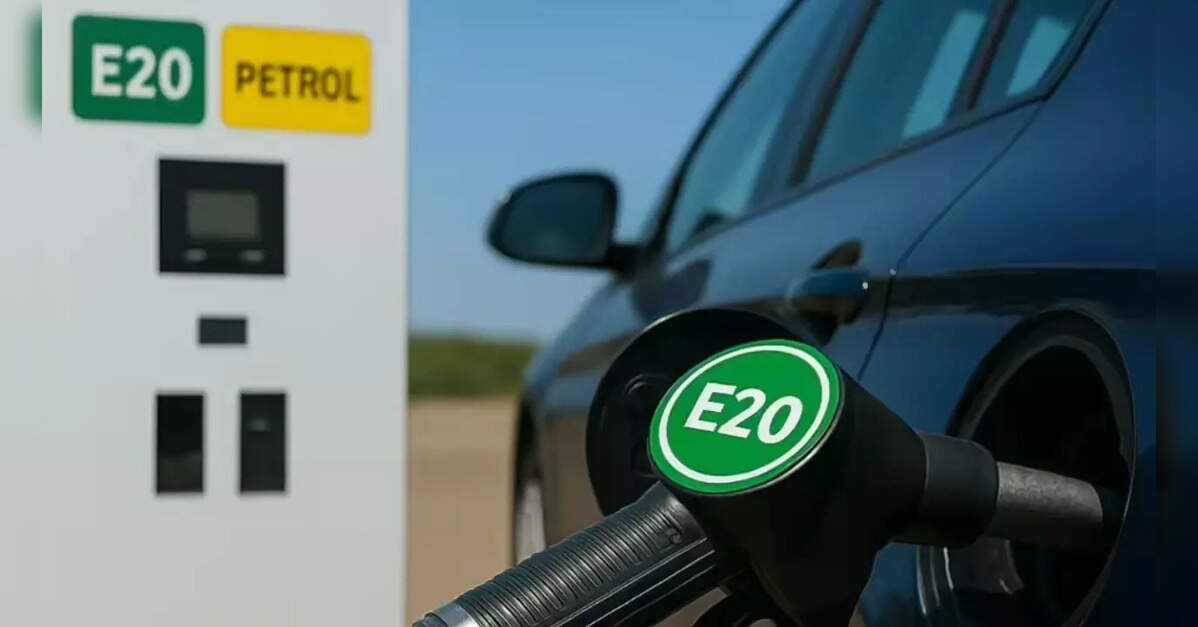
India’s E20 Mandate: A Structural Headwind for Future Oil Demand
India’s recent directive mandating E20 petrol nationwide from April 1, 2026, signals a significant structural shift in one of the world’s most critical oil demand centers. This move, requiring petrol to contain up to 20% ethanol with a minimum Research Octane Number (RON) of 95, is more than just an environmental initiative; it represents a proactive strategy by the Ministry of Petroleum and Natural Gas to enhance energy security, reduce crude oil imports, and support its agricultural sector. For investors in the global oil and gas markets, this policy is a powerful signal of impending demand erosion that must be factored into long-term portfolio strategies, especially as the market grapples with a volatile near-term outlook.
The Immediate Demand Headwind from India’s E20 Push
The transition to E20 fuel in India, effective April 1, 2026, presents a clear and quantifiable headwind to future crude oil demand. By blending petrol with 20% ethanol, India aims to significantly reduce its reliance on imported crude. Government data already highlights the substantial foreign exchange savings achieved through ethanol blending since 2014-15, exceeding Rs 1.40 lakh crore. Projecting this forward, a nationwide E20 mandate will amplify these savings and, critically, diminish India’s need for crude oil imports. This policy’s impact isn’t just theoretical; it’s a concrete plan for demand destruction in a nation that has historically been a key driver of global oil consumption growth.
The market is already sensitive to demand signals, as evidenced by recent trading patterns. As of today, Brent Crude trades at $93.52, reflecting a modest daily uptick of 0.3%, while WTI Crude stands at $90.25, up 0.65%. However, this current snapshot exists within a broader context of significant price re-evaluation. Over the past 14 days, Brent crude has seen a substantial decline, dropping from $118.35 on March 31 to $94.86 just yesterday, marking a nearly 20% reduction. This sharp correction underscores how quickly market sentiment can shift, often influenced by a complex interplay of supply expectations, demand concerns, and geopolitical factors. The E20 mandate, while future-dated, contributes to this underlying demand uncertainty that helps explain such volatile moves.
Broader Implications for Global Oil Supply and Demand Dynamics
India’s E20 mandate is not an isolated event but rather a significant piece in the evolving global energy transition puzzle. Combined with similar initiatives in other nations, it collectively reshapes the long-term demand curve for crude oil. Ethanol, with its naturally high octane rating of approximately 108 RON, inherently improves fuel quality and engine efficiency when blended, reducing “knocking” and potentially leading to better fuel economy for consumers. This efficiency gain could further dampen overall gasoline consumption, creating a compounding effect on demand erosion.
Many investors are currently debating whether WTI crude will trend up or down in the coming months and what the price of oil per barrel will be by the end of 2026. India’s E20 mandate introduces a powerful variable into these complex forecasts. While immediate supply disruptions or geopolitical tensions can drive prices higher in the short term, structural shifts like this policy create a persistent downward pressure on long-term demand expectations. Oil majors and refiners, particularly those heavily invested in conventional gasoline production, must now accelerate their strategic pivot towards lower-carbon fuels and higher-value products to mitigate the risks posed by such mandates in major consumption markets. Conversely, agricultural commodities and companies involved in ethanol production stand to benefit from increased demand for feedstocks like sugarcane and maize, creating an interesting cross-sector investment opportunity.
Navigating Near-Term Volatility Amidst Structural Shifts
While the E20 mandate is a structural, long-term demand-side factor, its announcement immediately impacts market psychology and future investment decisions. Investors must reconcile these long-term trends with the ongoing volatility of the short-term market. The coming weeks present several crucial data points and events that could trigger significant price movements, further complicating the outlook.
Tomorrow, April 22nd, the EIA Weekly Petroleum Status Report will provide fresh insights into U.S. crude oil and gasoline inventories, offering a critical gauge of current demand and supply balances. The subsequent EIA report on April 29th will continue this trend. Meanwhile, the Baker Hughes Rig Count on April 24th and May 1st will indicate the direction of North American drilling activity, influencing future supply projections. Perhaps most significant this week is the OPEC+ JMMC Meeting today, April 21st. The decisions or signals from this meeting regarding production quotas will directly confront the demand uncertainty propagated by policies like India’s E20 mandate. Any indication of sustained or increased production could exacerbate downward pressure on prices, particularly if global demand growth projections are revised lower due to such blending mandates. The EIA’s Short-Term Energy Outlook on May 2nd will then attempt to synthesize these various factors, providing updated forecasts that will be closely scrutinized by the market. These near-term events, against the backdrop of long-term demand shifts, highlight the need for agility and a nuanced understanding of market drivers.
Investment Implications and Strategic Positioning
For sophisticated investors, India’s E20 mandate underscores the accelerating pace of energy transition, even in developing economies crucial for oil demand growth. The immediate takeaway is that a significant portion of future gasoline demand from India will be met by domestically produced ethanol, not imported crude. This reduces the upside potential for global crude oil prices in the long run and puts pressure on upstream producers whose growth models rely heavily on sustained demand from emerging markets.
Refiners with significant exposure to the Indian market and limited capabilities to process alternative feedstocks or produce higher-value petrochemicals may face headwinds. Conversely, companies in the biofuels sector, ethanol production, and related agricultural value chains are poised for growth. Investors should assess their portfolios for exposure to these shifting dynamics. Given the questions about WTI’s direction and end-of-2026 price predictions, it’s clear that the market is grappling with these very uncertainties. While specific price targets are challenging, the strategic imperative is clear: diversify beyond traditional crude oil exposure, consider investments in renewable fuels and agricultural commodities tied to ethanol production, and favor integrated energy companies demonstrating a clear strategy for navigating a future with structurally lower oil demand growth. The era of assuming perpetual, strong oil demand growth from emerging markets is evolving, and investment strategies must evolve with it.


