India’s Gas Infrastructure Boom: Modi Unveils ₹10.1 Billion West Bengal CGD Project
India’s ambitious energy transition and economic growth agenda recently received a significant boost with Prime Minister Narendra Modi laying the foundation stone for a substantial City Gas Distribution (CGD) project in West Bengal. This strategic development, valued at a robust ₹1,010 crore (approximately $120 million USD), marks another critical stride in expanding natural gas access across the nation, presenting compelling investment prospects for the energy sector.
The newly initiated project, centered in West Bengal’s Alipurduar district, is poised to dramatically transform the energy landscape for hundreds of thousands of residents. Its primary objective is to extend piped natural gas (PNG) connectivity to over 250,000 households across Alipurduar and the adjacent Cooch Behar districts. This expansive reach underscores the government’s commitment to delivering cleaner, more affordable energy directly to consumers, a key driver for long-term gas demand growth in India.
Strategic Expansion: Beyond Residential Connections
While household penetration is a cornerstone of this initiative, the project’s scope extends far beyond residential users, encompassing crucial provisions for commercial and industrial consumers. This multi-faceted approach ensures a diverse demand base, enhancing the project’s economic viability and attractiveness to investors. Industrial and commercial establishments are increasingly migrating to natural gas due to its cost-effectiveness, environmental benefits, and consistent supply, making them vital anchors for CGD networks.
Furthermore, the infrastructure plan includes the establishment of approximately 19 new compressed natural gas (CNG) stations. This expansion is directly aligned with the government’s minimum work programme targets, signaling a concerted effort to bolster the nation’s CNG vehicle ecosystem. India’s burgeoning automotive market continues to witness a surge in CNG vehicle adoption, driven by lower operating costs compared to traditional fuels and stricter emission norms. Each new station represents a critical piece of the puzzle in building out a comprehensive refueling network, unlocking further growth potential for gas marketers and infrastructure providers.
Government Mandate and Vision for a Developed India
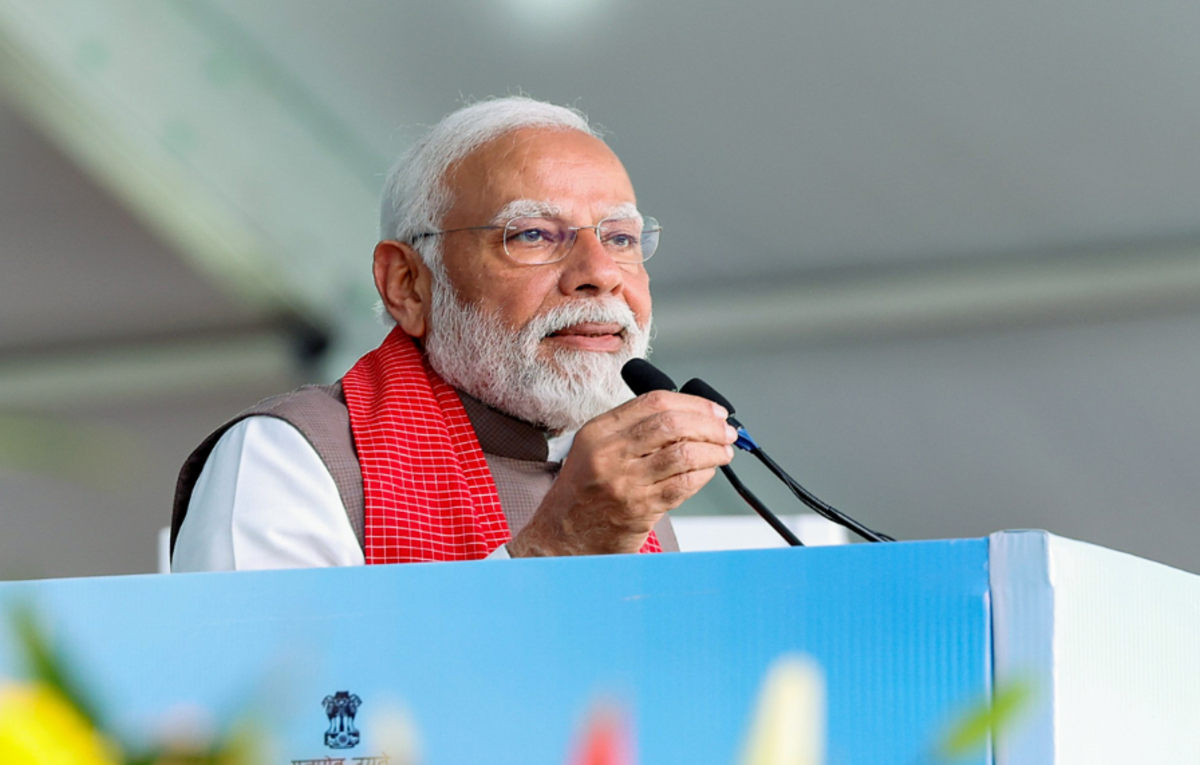
Speaking at the launch event, Prime Minister Modi articulated the broader vision behind such infrastructure initiatives. He emphasized that this is “not just a pipeline project” but a tangible manifestation of the government’s commitment to ‘doorstep delivery’ of essential services and schemes. This philosophy provides a strong policy tailwind for CGD projects, as political will and bureaucratic support are crucial for successful, large-scale infrastructure deployment.
Modi framed the project within India’s overarching ambition to become a ‘Viksit Rashtra’ or developed nation. He highlighted West Bengal’s indispensable role in this national development narrative, asserting that the central government is actively injecting new impetus into infrastructure, innovation, and investment within the state. For investors, this translates into a clear signal of long-term government backing for projects that align with national development goals, particularly in key growth regions like West Bengal.
The project is expected to yield significant socio-economic benefits, including ensuring a stable fuel supply and generating substantial employment opportunities across the region. These benefits not only foster local development but also create a favorable environment for project execution by garnering community support and reducing potential implementation hurdles.
Investment Implications for the Oil & Gas Sector
This ₹1,010 crore investment in West Bengal is a microcosm of India’s broader natural gas push, offering a compelling narrative for investors eyeing opportunities in the subcontinent’s energy sector. The expansion of CGD networks promises predictable, long-term revenue streams for gas distribution companies, underpinned by a growing base of residential, commercial, and industrial customers.
Companies involved in pipeline construction, gas compression, metering technology, and last-mile connectivity stand to benefit significantly from this and similar upcoming projects. The government’s proactive stance, evidenced by the setting of minimum work programme targets, ensures that these projects move from conception to execution, translating policy into tangible market opportunities.
Moreover, the focus on clean and affordable energy aligns with global ESG (Environmental, Social, and Governance) investment trends. Natural gas, often considered a bridge fuel in the transition to renewables, plays a pivotal role in de-carbonizing India’s energy mix, making investments in this segment increasingly attractive to a wider pool of capital.
The demand for natural gas in India is projected to grow substantially in the coming decade, driven by urbanization, industrialization, and the shift away from more polluting fuels like coal and liquid petroleum gas (LPG). Projects like the West Bengal CGD initiative are fundamental to meeting this rising demand by building the necessary infrastructure to deliver gas efficiently to end-users.
Outlook: Sustained Growth in Indian Gas Market
The foundation stone laying on May 29, 2025, marks the beginning of a significant phase of development for the Alipurduar and Cooch Behar regions, integrating them more deeply into India’s evolving energy grid. This project exemplifies the nation’s commitment to enhancing energy security, promoting environmental sustainability, and fostering economic development through robust infrastructure investment.
For financial stakeholders, India’s CGD sector remains a high-growth arena. The combination of strong government support, a vast untapped consumer base, and the strategic imperative for cleaner fuels creates an enduring investment thesis. As India continues its journey towards becoming a developed economy, the natural gas sector, propelled by initiatives like this West Bengal expansion, is set to be a key beneficiary and a significant contributor to the nation’s economic vitality.