The global oil and gas sector finds itself at a pivotal juncture, navigating not only the inherent volatility of commodity markets but also a fundamental redefinition of value creation. For too long, ESG initiatives have been perceived, and often managed, as a compliance burden or a public relations exercise. However, a significant paradigm shift is now underway: the competitive advantage is moving beyond mere sustainability narratives to verifiable, decision-grade evidence of impact. This evolution is reshaping how companies attract capital, secure contracts, and ultimately, drive shareholder returns, transforming impact evidence into a tangible revenue and capital advantage for those who master it.
The New Mandate: From ESG Narratives to Verified Impact
In the current investment landscape, the era of narrative disclosure for environmental, social, and governance (ESG) performance is rapidly drawing to a close. Boards, investors, and even critical procurement teams are no longer satisfied with broad commitments or aspirational statements. The market’s interrogation has evolved from “what did you commit to?” to “what changed, what is attributable, and how does it stand up under scrutiny?” This demands a shift from ESG as a periodic reporting function to a more profound, operational discipline. Companies are increasingly expected to provide defensible proof of their impact, tied directly to enterprise value, rather than simply describing performance against frameworks. This strategic asset, often termed ‘Purpose Management,’ requires robust governance mechanisms and clear alignment between impact metrics and financial performance, moving beyond mere intention to tangible, auditable outcomes.
Navigating Volatility: Verified Impact as a Competitive Edge
The oil and gas market remains highly dynamic, presenting both opportunities and significant challenges for investors. As of today, Brent Crude trades at $93.86, showing a strong daily gain of 3.79%, while WTI Crude stands at $90.22, up 3.2%. This upward surge comes after a significant downturn over the past two weeks, where Brent saw nearly a 20% decline from $118.35 to $94.86. Such pronounced price swings underscore the inherent volatility that O&G companies and their investors constantly face. Our reader intent signals confirm this focus, with frequent inquiries like “is WTI going up or down” and predictions for the “price of oil per barrel by end of 2026” dominating investor questions. In an environment where commodity prices are unpredictable, companies cannot solely rely on market tailwinds for value creation.
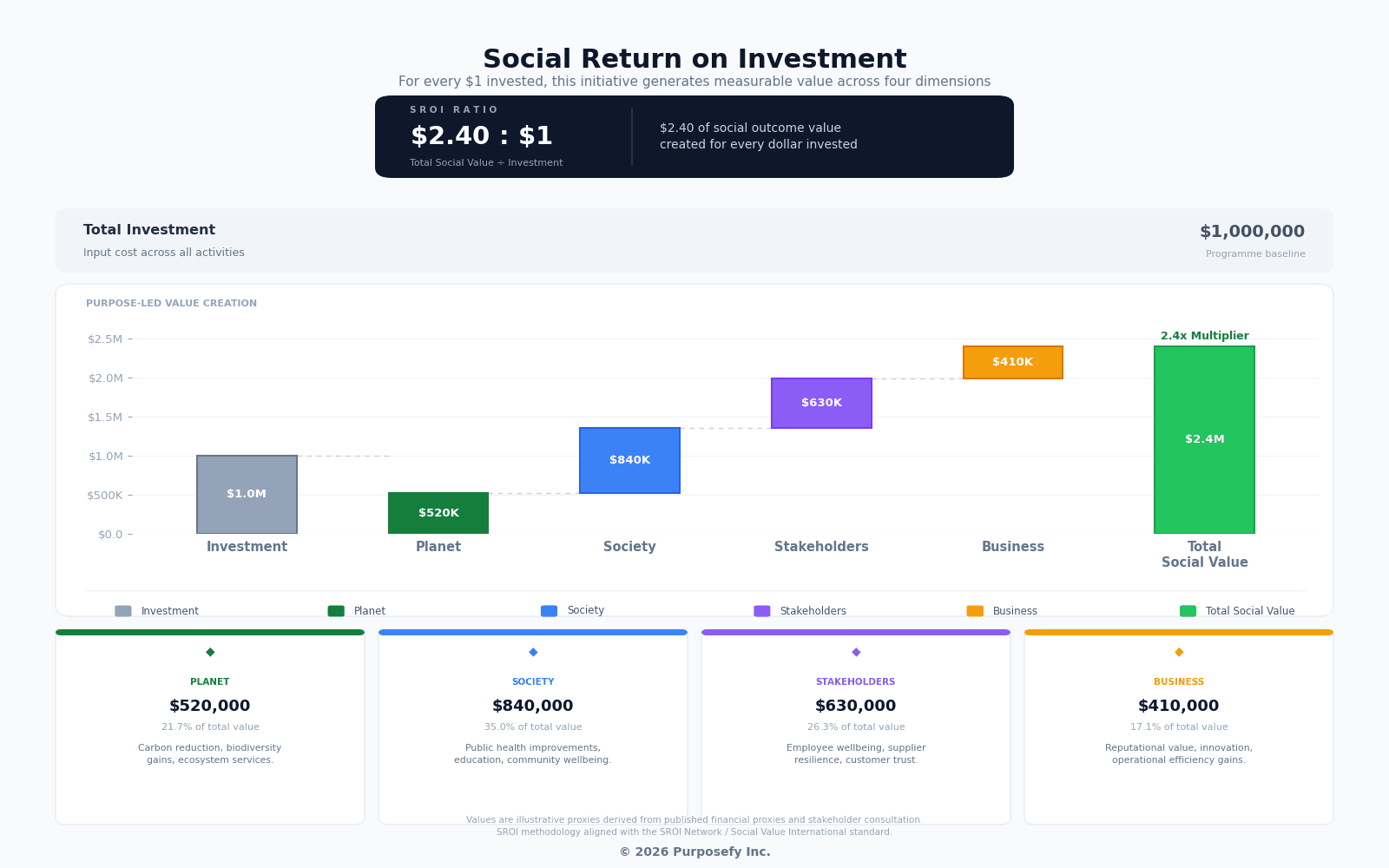
This is precisely where verifiable impact evidence becomes a critical differentiator. Investors are struggling to obtain consistent, auditable data that allows them to assess not just financial ROI but also social ROI (SROI). The credibility gap is widening, making it harder for capital to flow to companies that cannot substantiate their ESG claims. As stakeholder expectations rise and regulatory scrutiny intensifies, robust, verifiable impact data is rapidly becoming a prerequisite for access to capital and competitive positioning. This demand for ‘decision-grade evidence’ is forcing a strategic pivot, integrating impact evidence directly into operational strategies rather than just communications.
Strategic Foresight: Operationalizing Purpose for Future Value
The transition from ESG as a compliance function to ‘Purpose Management’ as an executive discipline is fundamentally about operationalizing impact. This means embedding impact measurement, validation, and alignment with financial performance directly into the core governance and operational structures of an oil and gas company. Boards are now requiring mechanisms that hold leadership accountable for long-term impact performance, understanding that sustainable practices are intrinsically linked to sustainable returns. Research consistently shows that companies achieving “triple outperformance” – excelling in revenue growth, profitability, and ESG improvement – generate higher total shareholder returns than their peers. The key differentiator is not just setting intentions, but proving outcomes.
This forward-looking approach becomes even more critical when considering upcoming market milestones. For example, the OPEC+ JMMC Meeting today, April 21st, and the subsequent EIA Weekly Petroleum Status Reports on April 22nd and April 29th, will provide crucial insights into supply-demand dynamics. Additionally, the Baker Hughes Rig Count reports on April 24th and May 1st offer leading indicators of future production. As the industry anticipates these regular disclosures, O&G companies that can simultaneously demonstrate verifiable progress in their impact metrics will signal superior strategic foresight and resilience. Looking further ahead, the EIA Short-Term Energy Outlook on May 2nd will offer critical forecasts for the energy market. Companies that have proactively integrated ‘Purpose Management’ will be better positioned to navigate the long-term trends identified in such reports, ensuring their business models are robust against both commodity price fluctuations and evolving sustainability demands.
Investor Implications: Identifying Future Leaders in the O&G Space
For discerning investors in the oil and gas sector, the shift to verifiable impact represents a significant opportunity to identify future industry leaders. Companies that embrace ‘Purpose Management’ are not merely ticking boxes; they are strategically building a durable competitive advantage. This involves moving beyond superficial reporting to developing auditable systems for measuring, validating, and aligning their impact with financial performance. Our internal data suggests investors are increasingly sophisticated in their queries, often asking about the underlying “data sources” and “APIs or feeds” that power market analysis. This mirrors the industry’s demand for transparent, robust data, not just on market prices but also on corporate impact.
Investors should therefore prioritize companies that demonstrate a clear commitment to this paradigm. Look for robust governance structures, transparent reporting on specific, measurable impact outcomes, and clear links between these outcomes and financial value creation. Companies that excel in this area will likely enjoy preferential access to capital, secure more favorable financing terms, and attract discerning procurement partners who demand defensible claims. In an industry where volatility is a constant, the ability to demonstrate verifiable, positive impact provides a crucial layer of stability and differentiation, ultimately translating into enhanced long-term shareholder returns and a more resilient investment thesis. The future of O&G investing will undoubtedly be defined by those who can prove their purpose, not just profess it.


