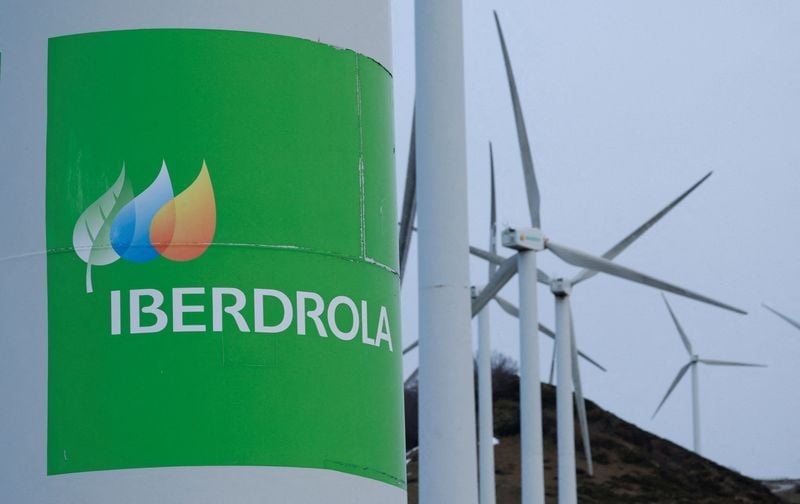
Iberdrola, Europe’s largest utility, has laid out an ambitious €110 billion ($120 billion) investment blueprint through 2031, signaling a decisive strategic shift towards regulated grid networks. This move, unveiled to investors, positions the United States and the United Kingdom as core growth engines, pivoting away from the higher volatility often associated with standalone renewable generation projects. For investors navigating an increasingly complex energy landscape, this renewed focus on stability and predictable returns offers a compelling narrative, especially as broader commodity markets experience significant price swings.
The Definitive Pivot to Regulated Assets
Iberdrola’s updated strategy cements a commitment first articulated in 2022: prioritizing stable, predictable returns over the inherent risks of pure generation assets. The company intends to elevate its annual capital expenditures to approximately €15 billion, a notable increase from the previous €12 billion. Critically, two-thirds of all spending through 2028 will be channeled into power transmission and distribution infrastructure. This allocation underscores a clear intent to transform Iberdrola’s operational profile into a more regulated entity, with its vast network assets serving as the primary vector for growth. Executive Chairman Ignacio Sánchez Galán articulated this vision, stating that the plan aims to reshape the company’s profile towards a more regulated model, with networks as a fundamental growth driver. This long-term commitment to infrastructure development, particularly in mature economies, provides a robust foundation for consistent earnings and dividend growth, attracting investors seeking resilience amidst market fluctuations.
Navigating Global Volatility with Targeted Investment
The strategic deployment of capital highlights Iberdrola’s discerning approach to global markets. Between 2025 and 2028, a substantial €58 billion is earmarked for investment, with nearly two-thirds directed specifically at the US and UK grid networks. An additional €45 billion is slated for the period between 2029 and 2031, reinforcing the long-term commitment. In the United States, despite prevailing political uncertainties around certain renewable energy initiatives, Iberdrola is carefully managing its exposure. The company has clarified that it will only advance offshore wind projects already under construction, while new capital is strategically directed towards grid infrastructure within Democratic-governed states such as New York, Massachusetts, Connecticut, and Maine. This selective approach reflects a growing caution across the broader renewables sector, where permitting bottlenecks, political resistance, and volatile returns have prompted many developers to recalibrate their expansion plans. This disciplined allocation contrasts sharply with the broader energy market’s current volatility. As of today, Brent Crude trades at $90.38, reflecting a significant 9.07% drop just within the day, with its 14-day trend showing a steep decline of 18.5% from $112.78 to $91.87. Similarly, WTI Crude stands at $82.59, down 9.41% today. This pronounced downturn in crude prices, alongside gasoline trading at $2.93 after a 5.18% decrease, underscores an environment where stable, regulated returns in infrastructure are increasingly valued by investors seeking shelter from commodity price swings.
Financial Targets and Investor Confidence
Iberdrola’s financial projections underpin a strong case for investor confidence. The company anticipates an adjusted annual net profit of €7.6 billion by 2028, marking a significant €2 billion increase from 2024 figures. Over the same period, cash flow is projected to reach €52 billion, partially bolstered by €13 billion in planned asset sales and partnerships, three-quarters of which have already been successfully executed. A key highlight for shareholders is the commitment to return approximately €20 billion in dividends between 2025 and 2028, representing a payout ratio of 65–75% of earnings, with a guaranteed minimum payout of €0.64 per share. This transparent and substantial dividend policy directly addresses a core concern for many investors, particularly those currently asking about the stability and performance of European energy players like Repsol, or those attempting to predict the trajectory of oil prices by the end of 2026. In an environment where the future price of oil remains a significant unknown, a company offering clear, predictable dividend growth from regulated assets presents a highly attractive alternative. Furthermore, the investment program is set to create 15,000 new jobs, underscoring its broader economic impact and operational expansion.
Forward-Looking Stability Amidst Market Dynamics
The implications of Iberdrola’s strategy extend beyond its balance sheet, offering a compelling case for long-term portfolio stability. By dedicating substantial capital to regulated grid assets, the company is positioning itself to be a crucial enabler of the energy transition, providing the essential infrastructure needed to integrate renewables, enhance grid resilience, and facilitate electrification. This pivot allows Iberdrola to participate in the growth of clean energy without bearing the full brunt of generation-side development risks, such as permitting delays or volatile power purchase agreements. For investors, this creates a defensive play in the utility sector that is inherently tied to the broader decarbonization trend. Looking ahead, the energy market continues to present a dynamic landscape. Upcoming events such as the OPEC+ Joint Ministerial Monitoring Committee (JMMC) meeting tomorrow, April 18, and the full Ministerial Meeting on April 19, will shape global crude supply and potentially introduce further commodity price volatility. Similarly, the recurring API Weekly Crude Inventory and EIA Weekly Petroleum Status Reports, scheduled for April 21, 22, 28, and 29, will continue to drive short-term market sentiment. Against this backdrop of ongoing commodity market fluctuations and geopolitical uncertainties, Iberdrola’s deliberate focus on regulated, long-term infrastructure projects provides a beacon of predictability, offering investors a clear pathway for stable growth and consistent returns that are less susceptible to the daily swings of the crude oil market.


