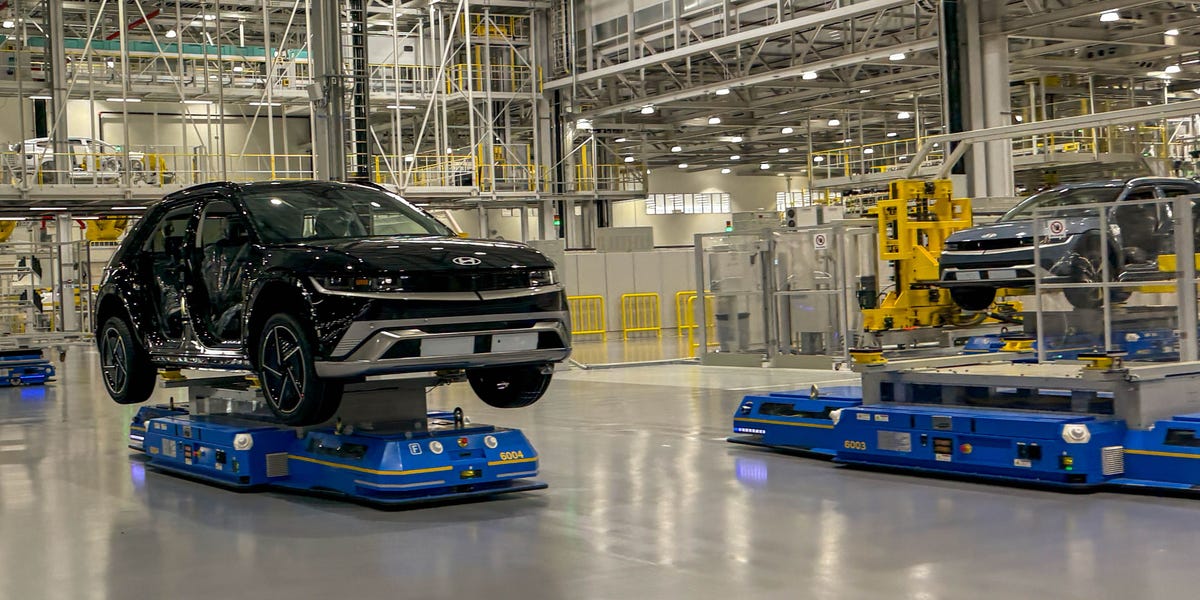
The global energy landscape is undergoing a profound transformation, and the latest significant investment from the automotive sector underscores the accelerating shift away from fossil fuels. Hyundai Motor Group’s new state-of-the-art electric vehicle (EV) manufacturing facility in the United States represents a colossal $7.6 billion commitment, poised to add considerable momentum to the electrification of transportation and exert tangible pressure on future oil demand.
Opened its doors in March of this year, the Hyundai Motor Group Metaplant America (HMGMA), located strategically near Savannah, Georgia, is far more than just another car factory. It’s a vertically integrated production hub designed to churn out up to 500,000 electric and hybrid vehicles annually across the Hyundai, Kia, and Genesis brands. This massive undertaking includes not only vehicle assembly but also the integrated production of EV batteries, signaling a comprehensive strategy by the South Korean automotive giant to control key aspects of the EV supply chain.
Quantifying the Future Impact on Gasoline Consumption
For investors focused on the oil and gas sector, facilities like HMGMA demand close attention. Each electric vehicle that rolls off the production line and replaces a gasoline-powered counterpart directly contributes to a reduction in fuel demand. Industry analysis suggests that an average gasoline vehicle consumes between 375 and 400 gallons of fuel per year. Applying this metric to HMGMA’s full annual capacity of 500,000 EVs and hybrids reveals a significant potential displacement: an estimated 187.5 million to 200 million gallons of gasoline annually.
Translating these figures into terms more familiar to oil market participants, this annual reduction equates to approximately 4.46 million to 4.76 million barrels of gasoline, or roughly 12,230 to 13,046 barrels per day. While this specific volume may seem modest when compared to global oil demand, which hovers around 100 million barrels per day, it’s crucial to understand that HMGMA is just one piece of a rapidly expanding global EV manufacturing puzzle. The cumulative effect of such investments worldwide will be transformative.
Hyundai-Kia’s Aggressive Stance in the EV Race
Hyundai and Kia have already established themselves as formidable players in the nascent EV market. In 2023, the combined entities captured an impressive 8% share of the U.S. EV market. Their current EV lineup, featuring popular models like the IONIQ 5, IONIQ 6, and Kia EV6, demonstrates their engineering prowess and market appeal. The HMGMA plant is set to bolster this portfolio further with new models, including the highly anticipated IONIQ 7 and Kia EV9, directly targeting the growing consumer appetite for larger electric SUVs.
The latest sales figures reinforce this upward trajectory. In the first quarter of 2024, Hyundai and Kia collectively sold approximately 21,000 electric vehicles in the U.S., marking a robust 80% year-over-year increase. This growth significantly outpaced the overall U.S. EV market, which saw a more modest 2.6% rise in sales to 270,000 units during the same period. For context, the U.S. EV market closed 2023 with a total of 1.2 million units sold, representing a substantial 47% increase from the prior year. These numbers clearly indicate that, despite some recent narratives about slowing growth, the underlying trend toward electrification remains strong.
Broader Market Implications and Future Outlook
The strategic importance of facilities like HMGMA extends beyond the direct reduction in gasoline demand. It signifies a broader commitment from major global automakers to accelerate the energy transition. Industry analysts, including S&P Global Mobility, project that electric vehicles could account for 25% to 30% of all new car sales in the U.S. by 2030, a significant leap from the 8% recorded in 2023. Globally, the International Energy Agency (IEA) forecasts an even more aggressive adoption rate, with EVs potentially reaching 45% of the total market share by 2030 under their Net Zero Emissions scenario.
These projections, coupled with multi-billion-dollar investments from industry titans, paint a clear picture for oil and gas investors: the era of peak gasoline demand is not merely a theoretical concept but an increasingly tangible reality. While crude oil demand remains robust for other sectors like petrochemicals, shipping, and aviation, the automotive industry’s shift directly attacks the largest segment of refined product consumption.
Investing in a Transforming Energy Landscape
For those navigating the complexities of oil and gas investments, the implications are multifaceted. A facility like HMGMA provides a concrete example of demand destruction taking root. Investors must consider how this ongoing transition will reshape long-term profitability for refiners, distributors, and upstream producers heavily reliant on gasoline sales. Diversification, careful analysis of regional demand trends, and a deep understanding of the pace of EV adoption in key markets will be paramount.
The $7.6 billion Hyundai Metaplant in Georgia is more than just a testament to advanced manufacturing; it is a powerful economic indicator of the accelerating energy transition. It underscores the undeniable momentum building in the electric vehicle sector, signaling an inevitable and sustained erosion of gasoline demand. Savvy oil and gas investors must integrate these developments into their strategic planning, recognizing that the future of energy is being built, one electric vehicle at a time.


