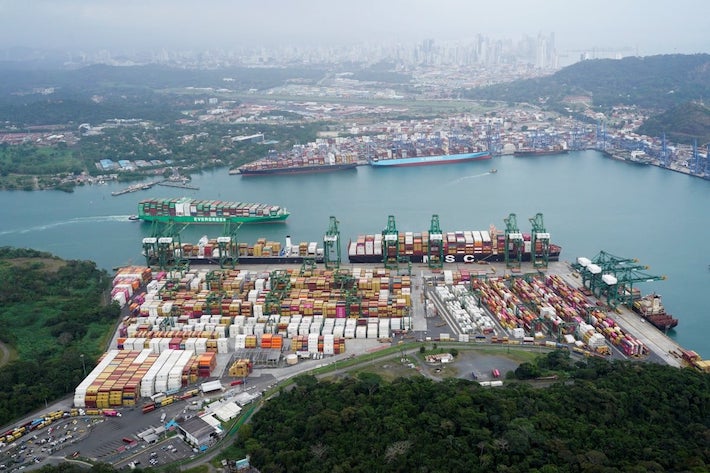
The proposed $22.8 billion sale of CK Hutchison’s extensive global ports business stands as a pivotal indicator of the increasingly intertwined relationship between geopolitical strategy, global trade, and the energy sector. This complex transaction, involving 43 ports across 23 countries, including strategically vital locations near the Panama Canal, is navigating a labyrinth of international approvals, most notably involving major global powers. For energy investors, understanding the trajectory of such significant infrastructure deals is crucial, as they directly impact the efficiency and security of global supply chains – the very arteries through which the world’s oil and gas flow. Our proprietary data suggests readers are keenly focused on market direction and long-term price stability, and this deal offers a lens through which to assess the underlying structural forces shaping the global economy, far beyond daily commodity price movements.
Geopolitical Stakes and Strategic Asset Control
The “reasonable chance” of CK Hutchison’s ports deal progressing, even with the inclusion of a major Chinese strategic investor like COSCO, underscores the high-stakes geopolitical maneuvering for control over critical global infrastructure. The initial proposal, spearheaded by BlackRock and MSC, faced significant scrutiny, particularly from the US, given the strategic importance of port assets. The mention of two ports near the Panama Canal, a gateway for over 40% of US container traffic valued at an estimated $270 billion annually, highlights the national security implications. For energy investors, this dynamic is critical: control over global shipping lanes and port facilities directly impacts the resilience and cost-efficiency of oil and gas transportation. Any shifts in ownership or influence at these chokepoints can lead to increased logistical costs, supply chain disruptions, or even perceived security risks, all of which have direct ramifications for crude and natural gas prices. The extended approval timeline, encompassing China, the US, Britain, and the European Union, reflects the intricate balance of economic interests and national security concerns at play.
Navigating Market Volatility with Long-Term Infrastructure Plays
While the CK Hutchison deal unfolds over an extended timeline, the broader energy market remains highly dynamic. As of today, Brent Crude trades at $94.25, reflecting a -1.29% movement, while WTI Crude stands at $85.9, down -1.74%. This follows a significant 14-day Brent trend, which saw prices drop from $118.35 on March 31st to $94.86 on April 20th, a decline of nearly 20%. Such volatility often prompts our readers to ask about the immediate direction of prices, with questions like “is wti going up or down” frequently appearing in our intent data. However, major infrastructure investments, such as this $22.8 billion port acquisition, represent a different kind of investment thesis. They signal long-term confidence in global trade and the enduring need for robust logistics, irrespective of short-term commodity price swings. The fact that CK Hutchison’s port business delivered stronger-than-expected earnings and cash flow this year, leading co-managing director Frank Sixt to deem the longer approval process “not particularly troublesome,” reinforces the underlying resilience and strategic value of these assets. For astute investors, these long-term plays offer a hedge against the inherent volatility of crude and natural gas spot markets.
Upcoming Events and Forward-Looking Catalysts
The prolonged discussions surrounding the inclusion of a Chinese strategic investor in the CK Hutchison deal illustrate the complex interplay between corporate strategy and geopolitical realities. As the deal seeks approvals across multiple jurisdictions, the broader energy calendar continues to present its own set of potential market catalysts. For instance, the upcoming OPEC+ JMMC Meeting on April 21st will be closely watched for any signals regarding production policy. A decision by OPEC+ to adjust output could significantly impact crude prices, influencing the overall economic sentiment that underpins global trade and, by extension, the strategic value of port assets. Similarly, the EIA Weekly Petroleum Status Reports on April 22nd and April 29th, or the EIA Short-Term Energy Outlook on May 2nd, will provide critical insights into US supply and demand dynamics. Any shifts in these metrics could affect freight rates, shipping volumes, and ultimately, the profitability of global port operations. Investors must consider how these macro energy events could either facilitate or further complicate the approval process for a deal of this magnitude, particularly given the sensitive nature of Chinese involvement and concerns from the US, UK, and EU regarding critical infrastructure ownership.
Investor Focus: Beyond Daily Swings to Strategic Value
Our proprietary reader intent data reveals a consistent investor interest in long-term oil price predictions, with questions like “what do you predict the price of oil per barrel will be by end of 2026?” This focus on long-term outlook aligns with the strategic nature of the CK Hutchison ports deal. While daily price fluctuations for Brent and WTI are influenced by immediate supply/demand and geopolitical headlines, the acquisition of critical logistical hubs by entities like COSCO, a vertically integrated marine transportation firm with over 1,100 vessels, represents a profound long-term bet on global trade and energy movement. The reported 11% rise in CK Hutchison’s first-half underlying profit to HK$11.3 billion ($1.44 billion) highlights the intrinsic value and robust performance of these assets. For investors seeking stability and strategic exposure in the energy sector, understanding the control and efficiency of global shipping infrastructure is paramount. These transactions, despite their complexity and extended timelines, offer a window into the enduring importance of physical assets that facilitate the flow of goods and energy worldwide, providing a foundation for long-term value creation irrespective of transient market headwinds.