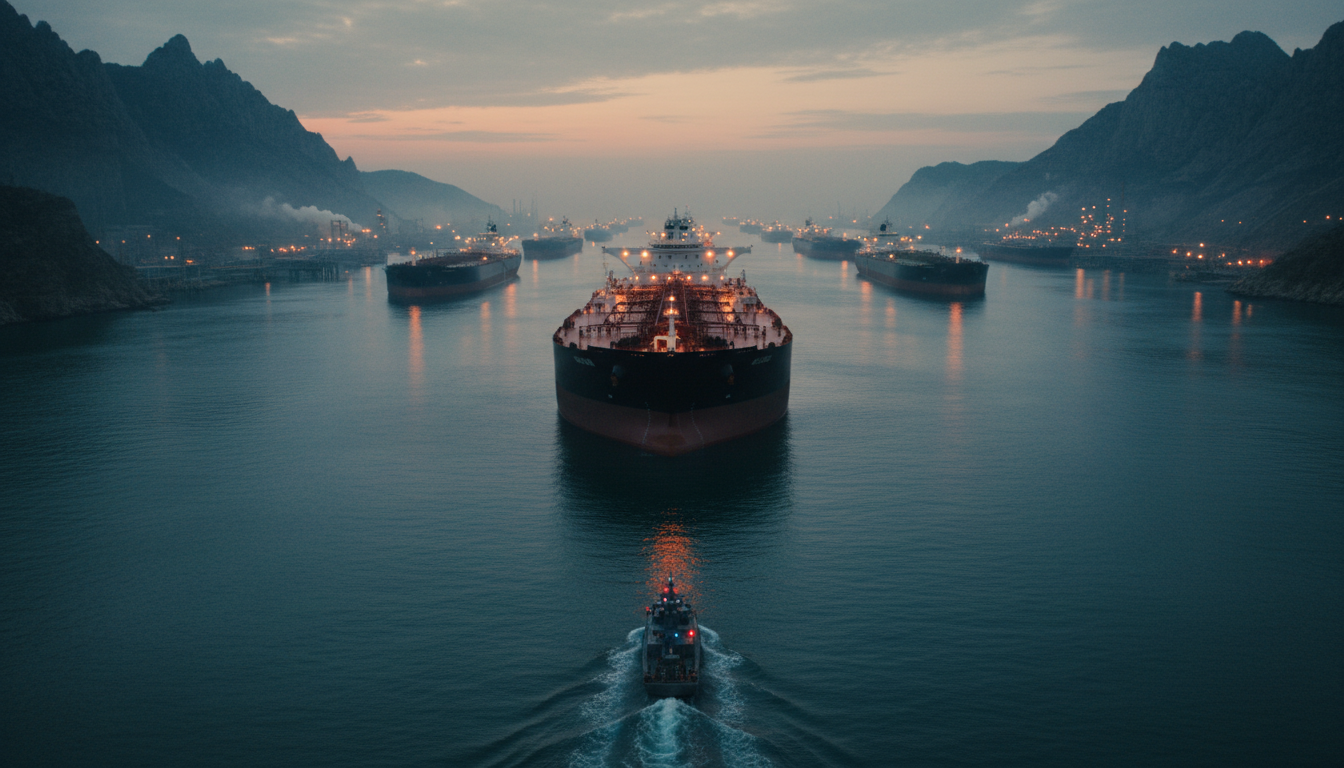
The global oil market is once again fixed on the volatile Strait of Hormuz, following the dramatic halt of a U.S.-sanctioned supertanker carrying Iranian crude. This incident underscores the escalating maritime tensions in the world’s most critical oil chokepoint, presenting a complex risk landscape for energy investors monitoring global supply chains and geopolitical stability.
The vessel in question, the supertanker Yuri, laden with approximately 2 million barrels of Iranian crude oil sourced from Kharg Island, ceased its transit through the Strait of Hormuz on Friday. Ship-tracking platforms like Kpler and Vortexa observed the vessel coming to a stop near Larak Island, after having reappeared off Sirri Island earlier in the week following several days of dark navigation. This pause is widely interpreted as a direct response to, and an acknowledgement of, the formidable U.S. blockade operations aimed at curtailing Iran’s illicit oil exports.
The Dual Pressures on Shipping in the Strait
The current situation in the Strait of Hormuz represents a perilous convergence of U.S. interdiction efforts and Iran’s own assertive posture. American forces have significantly ramped up their presence and activities, with the U.S. Central Command reporting the redirection of 33 vessels since the initiation of its blockade. Crucially, this includes the interception of two Iranian oil tankers within the past week alone, sending a clear message regarding the enforcement of sanctions against Tehran’s energy trade.
Simultaneously, Iran continues to demonstrate its intent to control its territorial waters and exert influence over this vital waterway. Instances of Iranian forces firing upon commercial ships and the documented seizure of at least two vessels highlight Tehran’s readiness to disrupt maritime traffic. This creates a challenging “double blockade” scenario, where both major players impose significant risks on shipping, leading to a demonstrable decline in attempted transits through the strait.
The market witnessed other telling movements as the Yuri paused. A bulk carrier, reportedly delivering foodstuffs to Iran, was observed sailing near the Yuri before executing a U-turn within the strait, redirecting back into the Persian Gulf. Hours prior, a container ship that had departed from the Iranian port city of Bandar Abbas proceeded south into the Gulf of Oman, after having spent four days traversing the strait. These maneuvers paint a vivid picture of heightened caution and uncertainty among maritime operators navigating the contested waters.
Understanding the Sanctions and Their Reach
The supertanker Yuri finds itself directly in the crosshairs of U.S. sanctions, having been designated in 2024 specifically for its involvement in Iran’s petroleum exports. The opaque nature of such operations is further underscored by the fact that maritime databases, such as Equasis, list no identifiable contact details for the vessel’s management or ownership. This lack of transparency is a common characteristic of fleets engaged in circumventing international restrictions, complicating enforcement efforts but not deterring them.
The U.S. strategy aims to choke off a primary source of revenue for the Iranian regime by disrupting its crude sales. For investors, the effectiveness of these sanctions directly impacts global crude supply dynamics. Successful interdiction removes barrels from the market, potentially tightening supply and supporting oil prices, while failures or circumventions could introduce greater volumes of unsanctioned oil, impacting price stability. The ongoing cat-and-mouse game between sanction enforcers and those seeking to evade them introduces a persistent element of unpredictability into the energy investment landscape.
The Helm’s Odyssey: A Glimpse into Sanctions Evasion Tactics
Further demonstrating the pervasive challenges in tracking sanctioned vessels, another U.S.-sanctioned supertanker, the Iranian-flagged Helm, has re-emerged on tracking platforms. Its current location is reported near Singapore in the Strait of Malacca, laden with crude oil but without indicating a clear destination. This vessel’s journey offers a stark illustration of the tactics employed to circumvent monitoring and sanctions.
The Helm loaded its crude cargo from Kharg Island in late March, subsequently crossing the Strait of Hormuz in early April, notably with its transponder turned off. The critical question for market observers and sanctions authorities is whether this vessel managed to exit the Gulf of Oman before the U.S. blockade officially commenced on April 13. The reappearance of such a vessel in a distant, strategic chokepoint like the Strait of Malacca underscores the global reach of Iranian oil exports despite stringent sanctions and the persistent challenges in achieving complete enforcement. These “dark fleet” operations add a layer of complexity to assessing genuine global crude supply and demand balances.
Investor Implications: Navigating the Geopolitical Premium
For savvy energy investors, these developments in the Strait of Hormuz carry significant implications. The persistent geopolitical tensions and the tangible risks of maritime conflict in a region responsible for a substantial portion of global seaborne oil trade inevitably bake a “geopolitical premium” into crude oil prices. This premium can lead to increased volatility and sudden price spikes, demanding agile portfolio management and robust risk assessment.
Moreover, the heightened security environment translates into increased operational costs for tanker operators. Higher insurance premiums for vessels transiting the Gulf, potential rerouting to avoid perceived threats, and longer transit times can impact the profitability of shipping companies and, in turn, influence the delivered cost of crude. Investors in shipping equities or related logistics should closely monitor these evolving cost structures.
The efficacy of U.S. sanctions enforcement against Iranian crude exports remains a pivotal factor in shaping global oil supply. Any perceived weakening of enforcement could see more Iranian oil enter the market, potentially exerting downward pressure on prices. Conversely, successful and sustained interdiction efforts will continue to constrain supply, supporting crude valuations. The current stalemate and cautious movements, as seen with the Yuri, suggest that the U.S. blockade is having a palpable deterrent effect, at least for now.
As the international community grapples with energy security concerns and the stability of critical maritime lanes, investors must remain keenly attuned to these evolving dynamics. The Strait of Hormuz, a narrow waterway with immense strategic importance, will continue to be a barometer of geopolitical risk, directly influencing global energy markets and the strategic decisions of major oil and gas players worldwide. Constant vigilance and an understanding of the intricate interplay between geopolitics, sanctions, and maritime operations are paramount for navigating the complex energy investment landscape.