The geopolitical currents in the Persian Gulf are once again sending significant ripples through global energy markets, directly impacting liquefied natural gas (LNG) flows and raising urgent questions about the resilience of vital shipping lanes. This escalating tension, particularly centered around the Strait of Hormuz, presents a complex challenge for energy investors who must navigate increased volatility and evaluate potential supply disruptions. Recent maneuvers by Qatari LNG carriers offer a stark illustration of the mounting maritime security concerns in this critical chokepoint, forcing a re-evaluation of energy supply chain stability.
Hormuz Bottleneck Tightens Grip on LNG Markets
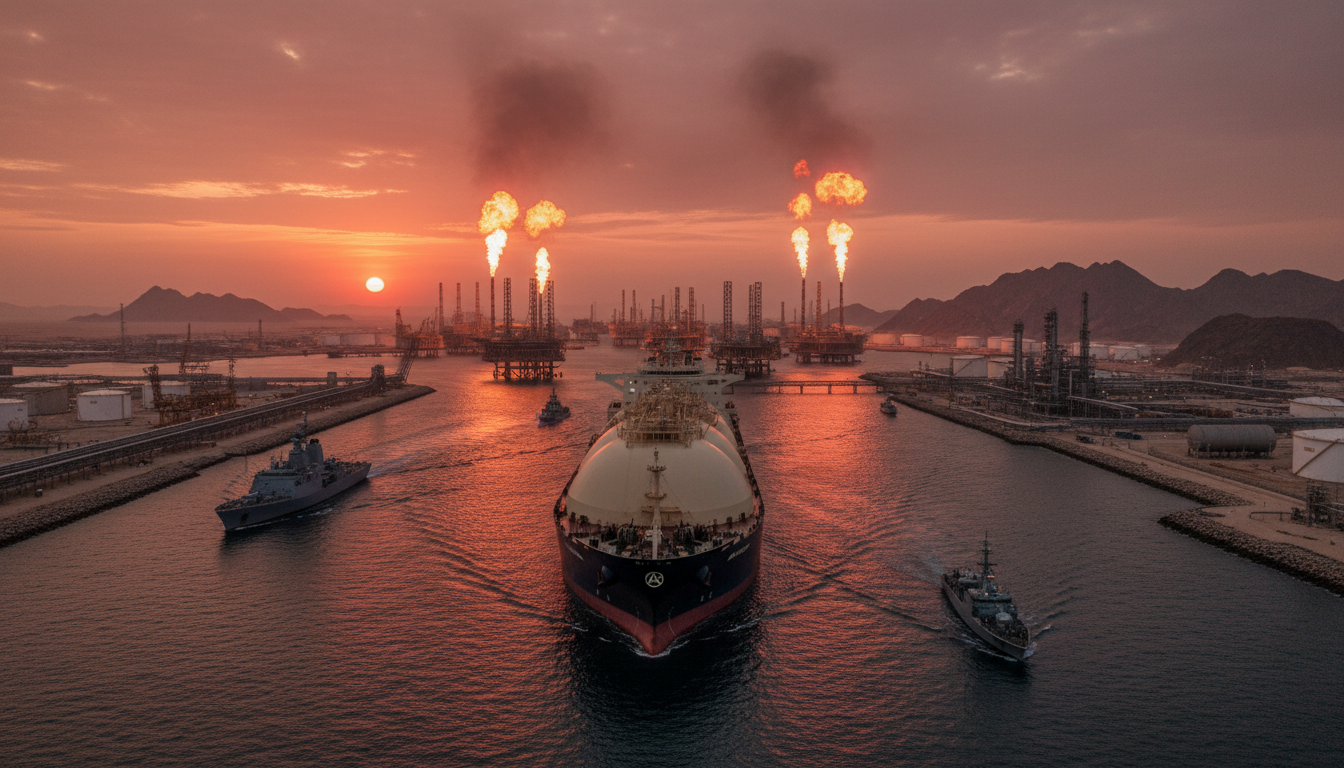
The Strait of Hormuz, a narrow passage bordered by Iran and the Arabian Peninsula, is arguably the most critical maritime chokepoint for global energy, typically facilitating approximately one-fifth of the world’s total LNG supply. The recent events involving the Qatari LNG carriers Al Daayen and Rasheeda underscore the precarious state of regional shipping. Both vessels, laden with LNG from Qatar’s massive export facilities, initially indicated an eastbound transit towards the Strait. However, proprietary ship-tracking data revealed an abrupt reversal in their course, executing a distinct U-turn away from the strategic waterway. This marked the first observed attempt by loaded Qatari LNG carriers to navigate the Strait since military actions involving the U.S., Israel, and Iran intensified late last month. Our analysis indicates that no loaded LNG tanker has successfully passed through Hormuz since late February, signaling a significant constriction of this vital artery.
As of today, Brent crude trades at $94.46, marking a 1.31% gain within a day range of $91.39-$94.86. WTI crude similarly saw an uptick, reaching $90.71, up 1.16% today. This daily upward movement, despite Brent’s broader 7% decline over the past two weeks from $101.16 on April 1st to $94.09 on April 21st, underscores the market’s extreme sensitivity to supply-side shocks and geopolitical risk premiums. The inability of loaded tankers to transit Hormuz introduces considerable uncertainty into international gas markets, directly impacting natural gas prices and global supply agreements for investors. This volatile environment demands vigilant monitoring of supply routes and a nuanced understanding of geopolitical undercurrents.
Qatar’s Pivotal Role and Supply Chain Adaptations
Qatar stands as a powerhouse in global LNG exports, having supplied nearly one-fifth of all LNG worldwide last year. Its operational continuity is therefore vital to global market stability. The massive Ras Laffan export facility, recognized as the world’s largest LNG export plant, has reportedly faced disruptions for over a month due to ongoing regional hostilities. The unhindered transit through Hormuz provides a crucial lifeline for Qatar, enabling the shipment of already loaded cargo to key markets. The recent rerouting of the Al Daayen and Rasheeda is particularly telling. While Al Daayen initially indicated a final delivery destination in China, both vessels have now updated their intended ports of call to Pakistan.
This significant shift highlights the immediate need for supply chain adaptation. Pakistan, a major importer of Qatari LNG, is actively exploring options, including allowing critical cargo to sail under its flag. Reports suggest Iran has agreed to permit up to 20 Pakistani-flagged vessels through the Strait of Hormuz. While this could signal a diplomatic effort to de-escalate maritime blockades for essential deliveries, it remains a limited and potentially precarious solution, offering only a partial workaround to a systemic problem. Investors should consider the potential for increased shipping costs, longer transit times, and the broader implications for global LNG pricing dynamics as these rerouting and diplomatic efforts unfold.
Investor Sentiment and Forward-Looking Market Dynamics
Our proprietary reader intent data reveals a keen focus among investors on the future trajectory of energy prices, with many actively asking about the direction of WTI crude and seeking predictions for oil prices per barrel by the end of 2026. This ongoing standoff in Hormuz directly impacts such forecasts, adding a significant risk premium to the market. Investors are clearly trying to gauge the longevity and broader impact of these geopolitical risks on global energy supply and demand balances.
Looking ahead, investors should closely monitor several upcoming calendar events that will provide crucial data points. The EIA Weekly Petroleum Status Report, scheduled for release on April 22nd, April 29th, and May 6th, will offer critical insights into U.S. inventory levels. Any tightening in these inventories could exacerbate concerns stemming from constrained global LNG flows. Similarly, the API Weekly Crude Inventory reports on April 28th and May 5th will offer further indications of market health. Perhaps most critically, the EIA Short-Term Energy Outlook on May 2nd will provide updated forecasts, which are highly anticipated to incorporate the latest geopolitical developments and their potential impact on supply-demand balances and price projections for the coming months. These reports will be instrumental in shaping investment strategies and market sentiment in an increasingly volatile landscape.
Strategic Implications and Outlook for Energy Investors
The effective constriction of the Strait of Hormuz, even if temporary or partially mitigated by diplomatic efforts, carries significant strategic implications for the global energy sector. Beyond the immediate impact on LNG prices and supply routes, this incident underscores the vulnerability of relying on single chokepoints for a substantial portion of global energy trade. For energy investors, this situation necessitates a re-evaluation of portfolio resilience, particularly regarding exposure to LNG producers, shipping companies, and nations heavily reliant on Qatari exports or Hormuz transit.
The long-term consequences could include an acceleration of diversification efforts by major LNG buyers, increased investment in alternative energy sources, and potentially higher shipping insurance premiums and freight rates as perceived risk in the region escalates. While the current agreement for Pakistani-flagged vessels offers a glimmer of hope for localized solutions, the broader geopolitical landscape involving the U.S., Israel, and Iran suggests that volatility will persist. Investors should prepare for continued market fluctuations, placing a premium on companies with diversified supply chains, robust geopolitical risk management strategies, and strong contractual agreements. The “new normal” in the Strait of Hormuz may well involve a sustained geopolitical risk premium baked into energy prices, making agile portfolio management and deep market intelligence more critical than ever.