Global Energy Landscape Reworked: Hormuz Crisis Reimagines Access Risk for Investors
The global energy system is currently navigating an unprecedented stress test, with market dynamics demonstrating a rapid evolution from initial reactive measures to more deliberate, coordinated international strategies. Investors closely monitoring the oil and gas sector must understand that this critical juncture is reshaping long-held assumptions about energy security and global supply chains.
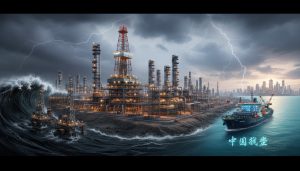
At the forefront of this re-evaluation is the ongoing blockade of the Strait of Hormuz by Iran. This pivotal maritime chokepoint, through which an astounding 20% of the world’s total oil and liquefied natural gas (LNG) flows, has been effectively severed. The sheer scale of this disruption has prompted discussions among over 40 nations, all focused on the urgent task of restoring open passage. Even partial closures of this vital channel are enough to send seismic shocks through international energy markets, underscoring its indispensable role.
Predictably, financial markets have responded with immediate intensity to this major supply shock. Following signals from President Donald Trump indicating further potential escalation against Iran, U.S. crude prices jumped by more than 11%. This sharp upward movement in commodity values highlights a fundamental truth: markets rapidly reprice risk not just when raw supply is threatened, but critically, when the very ability to transport that supply to global consumers comes under duress.
Beyond the immediate market volatility, significant diplomatic maneuvering is underway. Bahrain, a key regional player, is actively advocating for a revised resolution to address the Hormuz crisis. This diplomatic push reflects a growing consensus for a unified international response aimed at quickly restoring stability to global energy flows and mitigating broader economic fallout.
Yet, what is truly emerging from this crisis is a more profound, structural shift in how energy leaders perceive global energy security. Top executives are increasingly framing the disruption not merely as a localized geopolitical flare-up, but as a critical global economic challenge. The CEO of ADNOC, for instance, has called for robust, coordinated international action, characterizing the obstruction of Hormuz as a form of economic coercion. This perspective rightly emphasizes the far-reaching impact, from directly influencing fuel prices to indirectly raising the cost of essential goods like food and medicine across the globe.
Beyond Barrels: The Dominance of Access Risk
This reframing is crucial for investors because it shifts the focus from simply the quantity of available crude or gas to the unimpeded access to these resources. For decades, the pillars of energy security were largely defined by the volume of proven reserves and the capacity for production. However, the current crisis illuminates a different, equally critical vulnerability: the logistical capability to deliver energy to where it is needed.
Even when vast quantities of oil and gas exist, the ability to transport them is becoming increasingly challenging. Several factors are amplifying this “access risk”:
- Constrained Shipping Routes: Geopolitical tensions are making traditional maritime pathways hazardous or unavailable.
- Rising Insurance Costs: Increased risk in critical transit zones directly translates into higher insurance premiums for shipping, inflating overall costs.
- Increased Transit Times: Vessels may be forced to take longer, alternative routes, adding to delivery times and logistical expenses.
- Infrastructure as a Target: Energy infrastructure, from pipelines to terminals, is becoming increasingly vulnerable to attack or sabotage, further disrupting supply.
The compounding effect of these issues means that what might otherwise be manageable supply disruptions are now amplified by complex logistical challenges. This paradigm shift demands a fundamental rethink of future strategy, not only for governments but critically for energy companies and their investors.
Strategic Imperatives: Policy and Investment Transformation
The initial responses to the Hormuz crisis already indicate profound, long-term shifts in policy and investment priorities. The fact that numerous nations are coordinating efforts on Hormuz, alongside advancing formal diplomatic initiatives such as Bahrain’s proposed resolution, points to an accelerated move towards more collective and robust energy security frameworks.
For investors, this crisis is likely to expedite several key long-term trends within the energy sector:
1. Diversification of Supply Routes: Expect a stronger push from nations to develop and leverage alternative export pathways. This includes significant investment in new pipelines, the expansion of secondary port capacities, and the exploration of non-Hormuz-dependent shipping corridors to mitigate reliance on single chokepoints.
2. Strategic Infrastructure Investment: The value proposition of robust, resilient energy infrastructure will escalate dramatically. Investments in new pipelines, expanded strategic storage facilities, and domestic refining capacity will become paramount. These assets offer crucial buffering capabilities when global energy flows become uncertain or disrupted, presenting attractive opportunities for infrastructure-focused investors.
3. Regional Energy Alignment: Import-dependent countries will likely deepen their strategic alliances with stable, reliable energy suppliers. This could mean a willingness to pay a premium for guaranteed access and reliability, prioritizing supply security over pure cost optimization. Such shifts will create more stable, long-term demand for producers in politically secure regions.
4. Greater Role for Coordinated Intervention: Multinational responses will become a more common feature of global energy management. This could manifest through increased naval protection for critical shipping lanes, the coordinated release from strategic petroleum reserves, and enhanced policy alignment among major energy consumers and producers to manage future disruptions.
Investor Takeaway: Value Shifts Towards Resilience
Crises of this magnitude rarely merely cause price fluctuations; they fundamentally reshape priorities and investment landscapes. The current disruption in the Strait of Hormuz reinforces a critical, yet often overlooked, reality: energy security is no longer solely about the volume of energy a nation produces, but critically, about its assured ability to access that energy precisely when it matters most.
Indeed, the Hormuz situation may very well accelerate strategic decisions that were already in motion but lacked the immediate impetus for implementation. For governments, this is an undeniable call to action to fortify supply chains and secure unimpeded energy access. For energy companies, it serves as a stark reminder that robust logistics and resilient infrastructure are just as vital, if not more so, than upstream production capabilities. And for astute investors, this crisis signals a definitive shift in value creation, prioritizing companies and assets that demonstrate exceptional resilience and strategic positioning within the evolving global energy access paradigm.
In today’s complex and volatile market, the paramount risk is not merely a global energy shortage; it is the critical inability to reach and utilize the energy that exists.