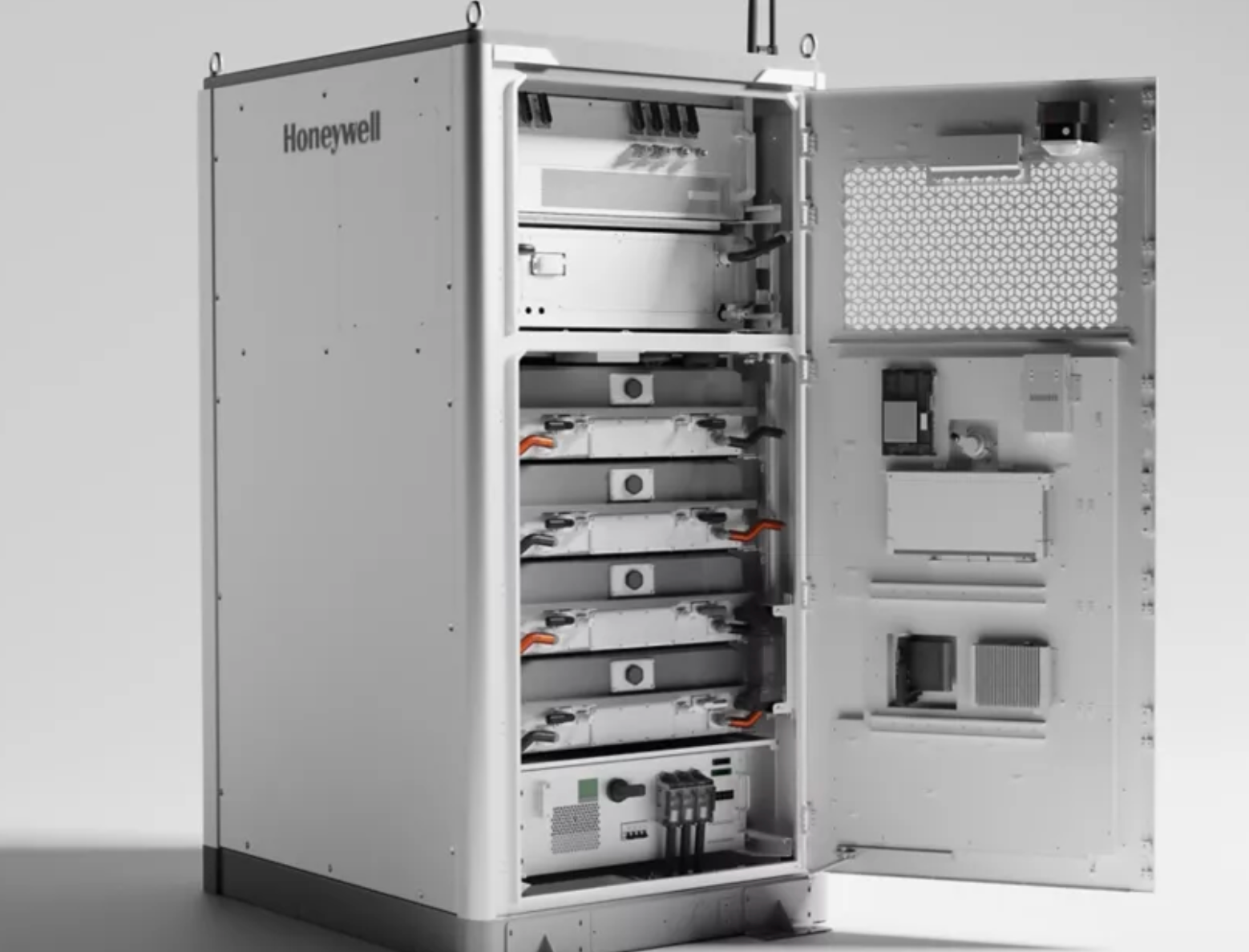
In a significant strategic move, industrial giant Honeywell has unveiled its latest innovation, the Honeywell Ionic, a modular all-in-one battery energy storage system (BESS) designed specifically for the commercial and industrial (C&I) sectors. This launch signals a clear intent to capitalize on the rapidly expanding market for distributed energy resources, offering businesses a robust solution to manage energy costs, enhance grid stability, and secure reliable backup power. For oil and gas investors navigating an increasingly complex energy landscape, Honeywell’s foray into advanced C&I BESS is more than just a product release; it’s a bellwether for the broader energy transition and a potential indicator of where future investment opportunities lie.
Honeywell’s Strategic Play in Commercial & Industrial Storage
The Honeywell Ionic system is engineered for scalability and resilience, boasting a nominal storage capacity of 255 kWh per unit, with the flexibility to connect up to 20 units in parallel to achieve a substantial 5.1 MWh total capacity. This modularity is key for diverse C&I applications, allowing businesses to tailor energy storage to their specific needs, from demand charge management to peak shaving and ensuring business continuity during outages. At its core, the system integrates advanced control software and energy management capabilities, fortified with ISA Secure 2 cybersecurity to protect against evolving digital threats. The robust hardware specifications, including 314 Ah LFP cells arranged in a 256S1P configuration, deliver a nominal power of 125 kW at 480 V, boasting a round-trip efficiency exceeding 90% and a cycle life of over 8000 charge-discharge cycles. This combination of cutting-edge technology and security underscores Honeywell’s commitment to delivering high-performance, reliable energy solutions.
The C&I segment represents a fertile ground for BESS adoption. Businesses are increasingly pressured to optimize energy consumption and reduce operational expenditures, especially with fluctuating energy prices and growing sustainability mandates. Honeywell’s offering directly addresses these pain points, providing a sophisticated tool for organizations to take greater control over their energy profiles. This strategic focus by a major industrial player like Honeywell highlights the accelerating shift towards decentralized energy solutions, a trend that traditional oil and gas investors must closely monitor for its long-term implications on energy demand patterns and infrastructure.
Navigating Market Volatility and Investor Sentiment
The timing of Honeywell’s push into C&I BESS is particularly pertinent given the current volatility in global energy markets. As of today, Brent crude trades at $90.38 per barrel, marking a significant decline of 9.07% within the day, with its price oscillating between $86.08 and $98.97. This daily swing is part of a broader trend, where Brent has fallen from $112.78 on March 30th to $91.87 just yesterday, representing an 18.5% drop in less than three weeks. Such dramatic shifts in crude prices directly impact the cost of energy for industrial consumers, making predictable and controlled energy expenses a top priority.
Our proprietary reader intent data reveals that investors are keenly focused on understanding future price trajectories, with common questions including “what do you predict the price of oil per barrel will be by end of 2026?” and inquiries about OPEC+’s production quotas. This intense focus on price stability underscores the value proposition of BESS for C&I clients: by enabling them to optimize energy usage, participate in demand response programs, and reduce reliance on grid power during peak price periods, these systems offer a critical hedge against energy market unpredictability. For investors, this translates into a growing, resilient market for companies providing such solutions, offering a degree of insulation from the swings of the crude oil market and potentially stabilizing revenue streams for firms like Honeywell.
Geographic Rollout and Future Growth Catalysts
Honeywell’s market entry strategy is phased, beginning with the Americas market, where the Ionic system has already secured UL certification. Deliveries are projected to commence as early as Q1 2026, positioning Honeywell to capture immediate demand in a region increasingly embracing distributed energy. Looking ahead, the company has ambitious plans for European expansion, contingent upon securing IEC certification, which is anticipated as soon as Q2 2026. This staggered rollout allows Honeywell to fine-tune its operations and leverage regional certifications to penetrate key markets effectively.
The broader energy calendar provides a backdrop to these strategic maneuvers. While direct impacts are limited, upcoming events such as the OPEC+ Ministerial Meeting scheduled for tomorrow, April 19th, will influence global crude supply and, consequently, the macroeconomic environment for industrial energy consumers. Similarly, the EIA Weekly Petroleum Status Reports on April 22nd and April 29th will offer crucial insights into U.S. inventory levels and demand trends. These events, though primarily focused on traditional hydrocarbons, inevitably shape the economic incentives for C&I entities to invest in energy independence and efficiency, thereby bolstering the long-term demand for BESS solutions. Investors should view Honeywell’s measured geographical rollout as a methodical approach to capturing market share in a segment driven by evolving regulatory landscapes and increasing economic pressures to decarbonize and optimize.
Investment Implications for Diversified Portfolios
For oil and gas investors, Honeywell’s aggressive move into C&I energy storage represents both a competitive landscape shift and a potential diversification opportunity. Companies like Honeywell, traditionally known for industrial controls and aerospace, are leveraging their engineering prowess to address new facets of the energy transition. This signals that the future energy ecosystem will be increasingly integrated, with technology companies playing a pivotal role alongside traditional energy producers.
The robust design of the Honeywell Ionic, capable of operating in extreme temperatures from -30°C to 50°C and at altitudes up to 2,000 meters with an IP55 protection rating, demonstrates its suitability for demanding industrial environments. These specifications are critical indicators of product reliability and longevity, factors that directly influence return on investment for C&I customers. As investors evaluate their portfolios, considering exposure to companies that are successfully bridging the gap between traditional industrial capabilities and cutting-edge energy solutions becomes paramount. Honeywell’s strategic focus on C&I BESS, supported by a three-year standard warranty and a commitment to cybersecurity, positions it as a significant player in the evolving energy storage market, offering a compelling case for those looking to diversify beyond conventional oil and gas assets into the broader energy infrastructure space.