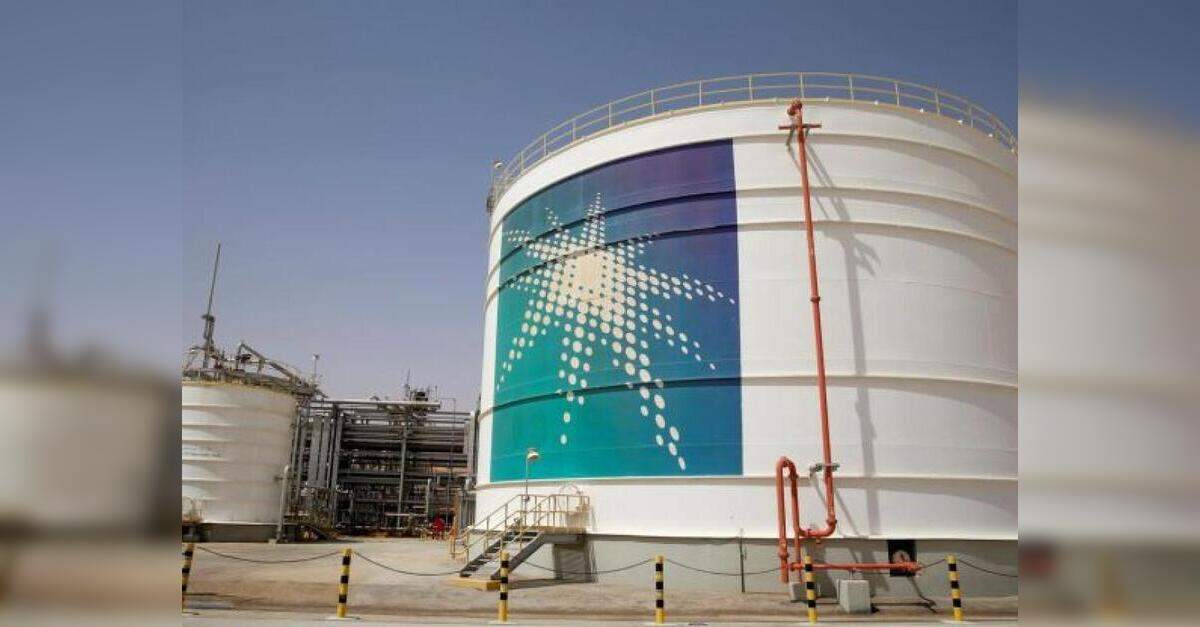
The energy landscape is in constant flux, but strategic investments that anticipate future demand shifts often cut through the noise. HPCL Mittal Energy Limited (HMEL) recently announced a significant commitment, earmarking ₹2,600 crore for expansion at its Guru Gobind Singh Refinery in Bathinda. This isn’t merely an upgrade; it’s a calculated pivot towards high-value petrochemicals and fine chemicals, signaling a broader diversification strategy that warrants close attention from investors. In an environment where traditional fuel margins face increasing pressure and market volatility remains a constant, HMEL’s move to bolster its downstream capabilities offers a compelling case for long-term growth and resilience, positioning the company to capture new revenue streams beyond conventional refining.
Strategic Diversification Amidst Market Headwinds
HMEL’s decision to invest heavily in polypropylene downstream units and fine chemical projects reflects a proactive strategy to de-risk its revenue streams and tap into burgeoning industrial demand. This move is particularly pertinent given the current market dynamics. As of today, Brent Crude trades at $89.95, marking a -0.53% shift within a day range of $93.87-$95.69. WTI Crude also shows weakness at $86.28, down -1.3% for the day. This recent softness in crude prices is not an isolated event; the 14-day trend for Brent has seen a significant decline from $118.35 on March 31st to $94.86 on April 20th, representing a substantial 19.8% drop. While such volatility can squeeze refining margins for traditional fuels like gasoline, which currently sits at $3.03, HMEL’s investment in petrochemicals provides a crucial hedge.
The company, through its Managing Director and CEO Prabh Das, explicitly stated its intent to broaden its industrial footprint beyond fuels. This diversification into fine chemicals, leveraging the existing infrastructure of a refinery that already contributes significantly to India’s polypropylene demand (meeting nearly 14% of the nation’s total), positions HMEL to capitalize on sectors less directly exposed to the immediate swings of crude oil prices. For investors scrutinizing the “up or down” trajectory of WTI, this strategy offers a compelling narrative of stability and growth, as the demand for plastics and specialty chemicals often follows different drivers than transportation fuels, providing a more robust revenue profile.
Unpacking the Investment’s Economic Ripple Effect
The ₹2,600 crore investment into the Bathinda refinery is not just a corporate decision; it’s a significant regional economic catalyst. The Guru Gobind Singh Refinery, commissioned in 2011 and spanning 2,000 acres, already boasts an annual turnover of approximately ₹90,000 crore and contributes around ₹2,100 crore annually to the state exchequer. It accounts for a substantial 5-6% of India’s petrol and diesel production. This fresh capital infusion is expected to generate additional employment and spur growth in refinery-linked industries across Punjab, further strengthening the region’s industrial ecosystem.
The Punjab government’s enthusiastic support for this expansion underscores its strategic importance. Minister of Industry & Commerce Sanjeev Arora has assured HMEL of time-bound approvals, streamlining bureaucratic processes crucial for large-scale projects. Furthermore, the state is considering developing a dedicated plastic industrial park near Ludhiana, an initiative that would complement HMEL’s enhanced polypropylene production and foster a robust local manufacturing base. This synergistic relationship between a major industrial player and supportive government policy creates a fertile ground for sustained economic development, making HMEL’s expansion a bellwether for industrial growth in the region.
Forward-Looking Growth: Petrochemicals and Future Fuels
HMEL’s expansion plan is inherently forward-looking, addressing both immediate market opportunities in petrochemicals and long-term energy transition trends. The focus on polypropylene downstream units will enhance value addition, transforming basic petrochemical feedstocks into higher-margin products essential for various industries, from packaging to automotive. The venturing into fine chemical projects further diversifies the product portfolio, tapping into specialized markets with potentially higher profitability and intellectual property value.
Beyond chemicals, HMEL is also preparing for the evolving transportation fuel landscape. The company plans to establish petrol pumps across Punjab, with a notable acceleration in licensing, now issued within two days. Critically, future outlets will be designed as multi-fuel stations, offering petrol, diesel, Compressed Natural Gas (CNG), and electric vehicle (EV) charging. This foresight aligns with global energy transition trends and hedges against the eventual decline in demand for traditional liquid fuels. From an investor perspective, this strategy demonstrates adaptability and a willingness to embrace new technologies and consumer behaviors. The coming weeks hold important market signals, with the OPEC+ JMMC Meeting on April 21st and EIA Weekly Petroleum Status Reports on April 22nd and 29th, which will provide crucial context on crude supply and demand balances, impacting feedstock costs and refining margins. The EIA Short-Term Energy Outlook on May 2nd will offer a broader forecast, but HMEL’s diversified approach aims to mitigate some of the direct impacts of these short-term market gyrations.
Investor Outlook: Long-Term Value Creation
For investors asking about the long-term price of oil or the performance of energy companies by the end of 2026, HMEL’s strategic moves offer a compelling case for sustained value creation. While the overall market sentiment, reflected in questions about whether WTI will go up or down, often fixates on crude price volatility, HMEL is building a business that is increasingly insulated from these short-term fluctuations. By expanding into polypropylene and fine chemicals, the company is tapping into sectors with robust underlying demand, driven by industrial growth and consumer needs that are less directly tied to the cost of a barrel of crude.
The ₹2,600 crore investment, coupled with the Punjab government’s support and HMEL’s forward-thinking approach to multi-fuel retail, positions the company for resilience and growth. The diversification into higher-value products can enhance profitability per unit of crude processed, improving refining margins and overall financial performance. This strategic shift suggests that HMEL is not just riding the waves of the oil market but actively steering towards a future where value is created through innovation, diversification, and adaptability. In a world increasingly focused on sustainability and energy transition, companies like HMEL that proactively broaden their industrial footprint beyond traditional fuels are likely to command a premium, offering a more stable and attractive investment proposition over the long haul, irrespective of near-term crude price swings.


