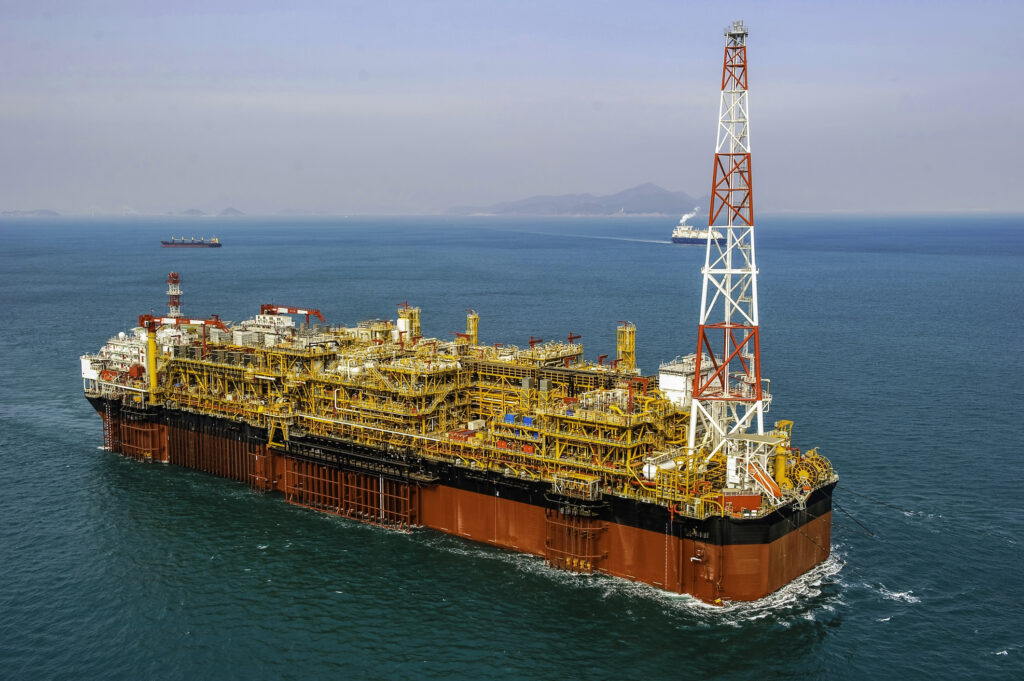
In a strategic move reflecting the evolving risk landscape of deepwater exploration, Hess (Suriname II) Exploration Limited is set to relinquish Block 59 in offshore Suriname by July 8, 2025. This decision, following the withdrawal of partners ExxonMobil and Equinor and an inability to secure new collaborators, underscores a broader industry pivot towards disciplined capital allocation and risk mitigation, particularly in high-cost, high-uncertainty ventures. For investors, this development offers a crucial lens through which to view the future of frontier exploration amidst fluctuating commodity prices and heightened scrutiny on returns.
Deepwater Exploration Retreat Signals Prudent Portfolio Management
Hess’s decision to exit Block 59 in Suriname is a clear example of strategic portfolio optimization in the face of significant geological and economic hurdles. After fulfilling its minimum work obligations, the company opted not to proceed with the next phase of the exploration period, which was set to conclude in July 2025. This move was preceded by the withdrawal of partners ExxonMobil Exploration and Production Suriname B.V. and Equinor Suriname B59 B.V. (formerly Statoil) in July 2024, who transferred their stakes to Hess. Despite becoming the sole party and actively seeking new partners, Hess was unable to secure collaborators to share the substantial costs and risks associated with the block.
The Production Sharing Contract for Block 59, signed in July 2017, covered approximately 11,480 square kilometers in the far northwest of Suriname’s offshore, with water depths ranging from 2,700 to 3,500 meters. Extensive seismic data acquisition, including 6,000 km of 2D and 9,000 km2 of 3D data, revealed that the block would require significant volumes to achieve economically viable oilfield development. The exiting partners’ assessment of the drilling risk as “too high” highlights the formidable challenges of deepwater exploration, where project economics are highly sensitive to discovery size and development costs. This strategic exit by Hess, following its former partners, illustrates a common industry practice where companies continually assess their global portfolios against risk and reward profiles.
Market Headwinds Amplify Pressure on Exploration Investments
The timing of Hess’s decision, and indeed the earlier withdrawals, cannot be divorced from the broader dynamics of the global oil market. As of today, Brent crude trades at $90.38 per barrel, experiencing a notable intraday decline of 9.07% from its high, with WTI crude similarly affected at $82.59, down 9.41%. This recent volatility follows a more significant trend; Brent has shed $20.91, or 18.5%, from its price of $112.78 on March 30th to $91.87 just yesterday. Such sharp downward corrections in crude prices naturally tighten capital availability and increase the hurdle rates for high-capex, frontier exploration projects like those in deepwater Suriname.
Lower and more volatile oil prices reduce the potential returns on investment, making the “significant volumes” required for economic viability in Block 59 even more challenging to achieve. For investors, this environment translates into a heightened focus on capital discipline and efficiency. Companies are increasingly pressured to demonstrate clear pathways to profitability and avoid speculative ventures without robust economic justifications. This market backdrop reinforces the prudence of Hess’s decision to step back from a project deemed too risky by multiple parties, allowing the company to reallocate capital to more certain or lower-risk opportunities within its portfolio.
Investor Focus on Risk-Adjusted Returns and Future Price Trajectory
Our proprietary reader intent data reveals a strong investor emphasis on future oil price predictions and the strategies companies are adopting to navigate uncertainty. Common inquiries, such as “what do you predict the price of oil per barrel will be by end of 2026?”, underscore the pervasive concern about market stability and long-term profitability. Hess’s move in Suriname directly addresses this investor sentiment by de-risking its portfolio. In an environment where every dollar of capital expenditure is under scrutiny, reducing exposure to highly speculative, multi-billion-dollar deepwater projects is a proactive response to shareholder demands for capital efficiency and predictable returns.
Investors are keenly observing how E&P firms manage their balance sheets and project pipelines amidst macro pressures. Questions, albeit specific, like “How well do you think Repsol will end in April 2026,” reflect a broader interest in individual company performance and resilience in a volatile market. The relinquishment of Block 59 by Hess signals a clear preference for projects with a more defined risk-reward profile, aligning with a market that increasingly rewards operational excellence and strategic capital deployment over aggressive, high-risk exploration. This trend is likely to continue as companies prioritize robust financial health and shareholder value in the face of unpredictable commodity cycles.
Upcoming Market Events to Shape Future Exploration Outlook
The near-term trajectory of the oil and gas market, and consequently the appetite for future exploration, will be significantly influenced by a series of critical upcoming events. This weekend, the OPEC+ Joint Ministerial Monitoring Committee (JMMC) meeting tomorrow, April 18th, followed by the full Ministerial Meeting on April 19th, will be paramount. Given the recent steep decline in crude prices, market participants, including our readers who are actively asking about “OPEC+ current production quotas,” will be closely watching for any signals regarding production policy adjustments that could stabilize or rebalance the market.
Beyond OPEC+, weekly data releases will provide crucial demand and supply indicators. The API Weekly Crude Inventory reports on April 21st and 28th, coupled with the EIA Weekly Petroleum Status Reports on April 22nd and 29th, will offer insights into inventory levels and consumption trends. Furthermore, the Baker Hughes Rig Count on April 24th and May 1st will serve as a bellwether for drilling activity in North America. These collective events will play a pivotal role in shaping crude price stability and, in turn, influence the willingness of international oil companies to commit to high-cost, long-cycle deepwater exploration ventures. Staatsolie’s strategy to reincorporate Block 59 into its open acreage and seek new international partners highlights the ongoing potential of Suriname’s offshore, but attracting future investment will largely depend on a more favorable and stable market outlook.