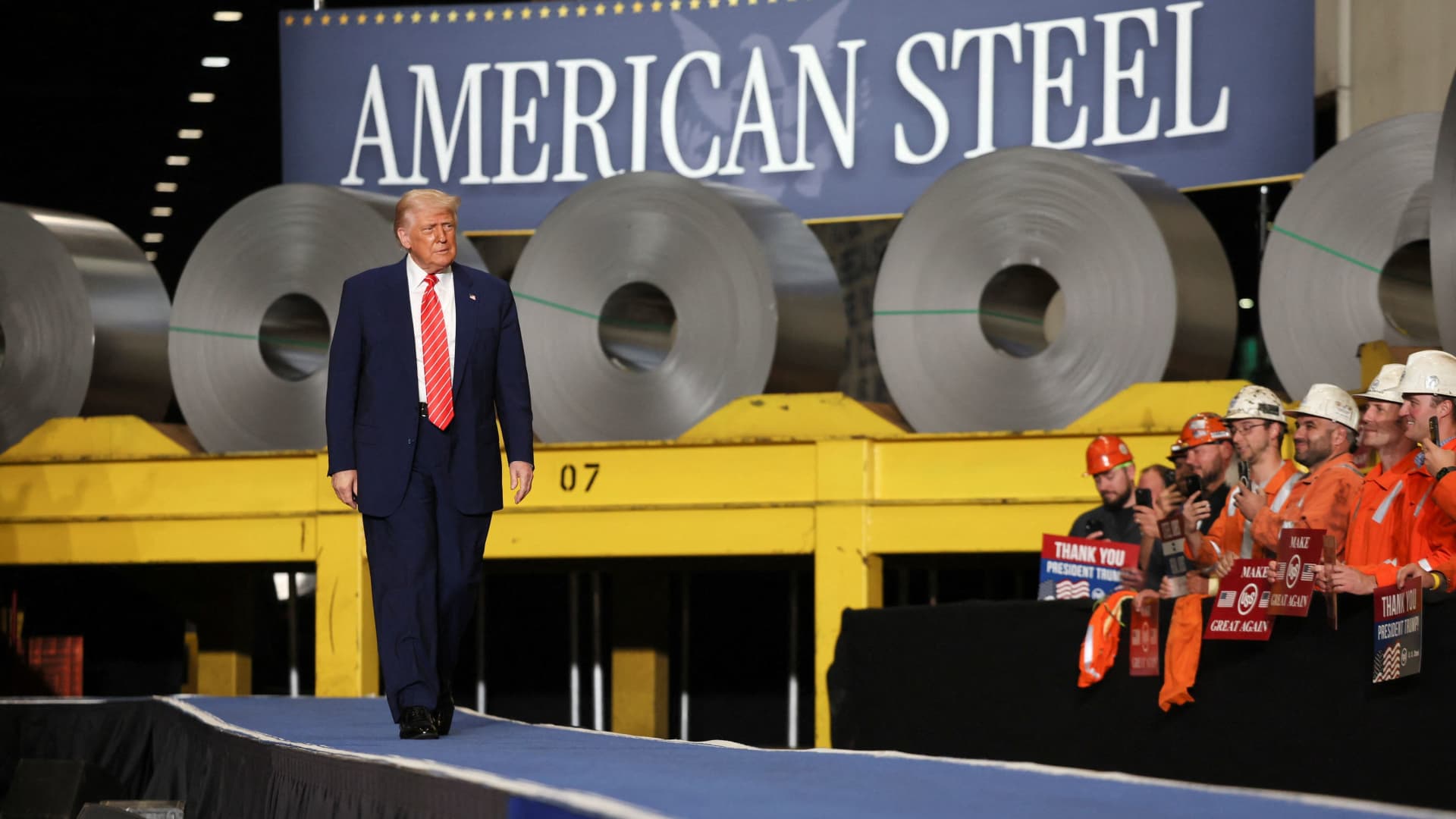
In a significant development for the global industrial landscape, shares of U.S. Steel experienced a robust surge in early trading following President Donald Trump’s official endorsement of its contentious acquisition by Japan’s Nippon Steel. The Pittsburgh-based steelmaker saw its stock price climb approximately 5% in premarket activity, signaling investor confidence after the final regulatory and political hurdles were cleared for the multi-billion-dollar transaction.
The pivotal approval arrived late Friday in the form of an executive order issued by President Trump. This decree authorized U.S. Steel and Nippon Steel to proceed with their merger, contingent upon the signing of a comprehensive national security agreement with the U.S. government. Both companies confirmed they have executed this crucial pact, thereby removing the last major obstacle to the deal’s completion.
National Security Safeguards: The Golden Share
A central element of the national security agreement is the inclusion of a “golden share” for the U.S. government within the newly formed entity. While U.S. Steel’s regulatory filing on Monday acknowledged this provision, it did not explicitly detail the full scope of powers the government would wield through this special share. However, President Trump, speaking previously, asserted that this golden share grants the U.S. president “total control” over the company’s future operations and strategic decisions.
Typically, a golden share bestows upon its holder significant veto authority over critical corporate actions, ranging from major asset sales and capital expenditures to changes in production levels or board composition. Senator Dave McCormick of Pennsylvania, a vocal figure in discussions surrounding the merger, elaborated on the golden share’s implications in May, stating that it would secure several board seats for U.S. government representatives and, crucially, prevent any reduction in domestic production capacity. This ensures that the U.S. government maintains a substantial oversight role in a key strategic industry, a move that resonates with broader national security and industrial policy objectives.
From Merger to Partnership: Semantic Nuances and Strategic Realities
Interestingly, President Trump has consistently refrained from labeling the transaction a “merger,” preferring to characterize it as a “partnership.” Despite this linguistic framing, U.S. Steel’s own regulatory disclosure on Monday unequivocally confirmed the company’s impending status: it will become a wholly-owned subsidiary of Nippon Steel North America. This clarification in filings with the Securities and Exchange Commission leaves no ambiguity regarding the structural outcome of the deal.
The company’s statement further affirmed that “All regulatory approvals required for the completion of the Transaction have been received.” While the transaction remains subject to the satisfaction of customary closing conditions, the expectation is for the deal to conclude “promptly.” This marks the culmination of months of intense scrutiny and negotiation, particularly given the political sensitivities surrounding the acquisition of an iconic American industrial firm by a foreign entity.
Broader Implications for Industrial Commodities and Energy Markets
For investors focused on oil and gas, this significant M&A activity in heavy industry serves as a vital indicator of broader economic health and future commodity demand. Steel is an indispensable material across the energy sector, fundamental to the construction of pipelines, refineries, drilling rigs, offshore platforms, and various essential infrastructure projects. A robust, consolidating steel industry, backed by significant foreign investment, can signal an optimistic outlook for industrial production and infrastructure development, which in turn drives demand for energy resources and associated services.
The integration of U.S. Steel into Nippon Steel’s global operations could lead to enhanced efficiencies, technological advancements, and a more competitive global steel market. This global competitiveness is crucial for maintaining stable supply chains for critical industrial components, indirectly benefiting the stability and cost-effectiveness of energy project development worldwide. Furthermore, the willingness of a major global player like Nippon Steel to invest heavily in U.S. manufacturing assets, even with stringent national security provisions, suggests a long-term confidence in the American industrial base and its future growth potential.
Such large-scale industrial transactions often act as bellwethers for economic sentiment. The successful navigation of complex regulatory and political landscapes for a deal of this magnitude implies a level of certainty and predictability that is welcomed by international investors. For oil and gas market participants, this translates into a potentially stronger demand environment for industrial fuels, lubricants, and specialized materials used in steel production and subsequent manufacturing processes that support energy infrastructure.
Investor Outlook and Market Dynamics
The positive premarket reaction to U.S. Steel’s stock underscores investor enthusiasm for the deal’s finalization. While specific synergies and long-term financial impacts will unfold post-closing, the immediate uptick suggests that market participants view the resolution of regulatory uncertainties as a significant de-risking event. The golden share mechanism, while potentially limiting some corporate freedoms, simultaneously offers a degree of political stability and national support that could be perceived as beneficial in the long run.
This development also highlights the ongoing trend of consolidation in mature industrial sectors, driven by the pursuit of economies of scale, technological integration, and global market leadership. For those tracking commodity cycles and industrial demand, the U.S. Steel-Nippon Steel saga offers valuable insights into the interplay between geopolitical considerations, national industrial policy, and the fundamental financial drivers of large-cap M&A, all of which have ripple effects across the entire industrial and energy value chain.