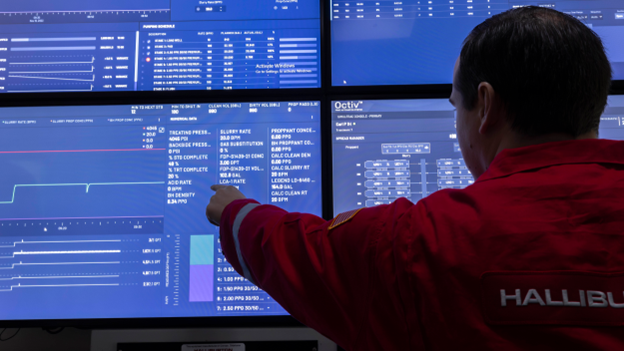
Halliburton’s recent multi-year contract win with ConocoPhillips for comprehensive well stimulation services in the North Sea marks a significant development for the oilfield services giant and offers a compelling lens through which to view the evolving dynamics of the energy sector. This strategic agreement, spanning five years with options for extension, underscores a critical industry trend: the increasing reliance on advanced technology and integrated solutions to optimize production from mature assets. For investors, this deal provides crucial insights into Halliburton’s long-term revenue visibility, ConocoPhillips’ operational strategy in a key region, and the broader implications for capital allocation in a market still navigating considerable price volatility and a push for efficiency.
Halliburton’s Strategic Foothold Amidst Market Swings
This contract represents a substantial win for Halliburton, cementing its role as a key technology provider in a crucial offshore basin. The agreement to transform Tidewater’s North Pomor vessel into an advanced stimulation platform, incorporating Halliburton’s Octiv® digital fracturing services, highlights a commitment to cutting-edge solutions designed to maximize well performance and reservoir productivity. Such long-duration contracts, particularly in a high-cost environment like the North Sea, provide Halliburton with invaluable revenue stability and backlog, mitigating some of the exposure to short-term market fluctuations.
The timing of this award is particularly noteworthy given the current market backdrop. As of today, Brent crude trades at $99.28 per barrel, reflecting a strong 4.58% gain on the day. However, this rebound follows a significant downturn, with Brent having shed 12.4% from $108.01 on March 26th to $94.58 just yesterday. This recent volatility, characterized by an intraday range of $94.42 to $99.84 for Brent and $87.32 to $91.82 for WTI, underscores the unpredictable nature of global oil prices. In such an environment, E&P companies like ConocoPhillips prioritize efficient, long-term service agreements that lock in operational expertise and advanced technology, ensuring consistent production optimization regardless of daily price gyrations. For Halliburton, securing a five-year commitment with extension options provides a robust foundation for future earnings in a market where predictability is a premium.
North Sea Optimization: A Blueprint for Mature Basins
ConocoPhillips’ decision to enter into this multi-year agreement with Halliburton signals a clear strategic focus on maximizing value from its North Sea assets. The North Sea, a mature basin, increasingly demands innovative approaches to extend field life and improve recovery rates from existing wells rather than relying solely on new frontier exploration. The deployment of advanced well stimulation services and digital fracturing technology is a testament to this strategy. By investing in the transformation of a dedicated stimulation vessel and integrating digital solutions, ConocoPhillips aims to enhance operational efficiency, reduce downtime, and ultimately boost reservoir productivity across its portfolio.
This move is indicative of a broader industry trend where E&P companies are leveraging technological advancements to unlock remaining potential in established fields. For investors evaluating North Sea exposure, this contract reinforces the idea that future value creation in the region will be driven by technological innovation and operational excellence. Companies that can demonstrate a clear path to optimizing existing infrastructure through digital tools and advanced completion techniques are likely to see sustained investment and improved returns.
Forward Outlook: Navigating Price Forecasts and Upcoming Catalysts
Our proprietary reader intent data reveals a consistent demand from investors for insights into future price trajectories, particularly a base-case Brent price forecast for the next quarter and the consensus 2026 outlook. The long-term nature of this Halliburton contract provides a counter-cyclical element for service providers, but the broader operating environment for E&P clients remains tied to global supply and demand dynamics. As such, upcoming events on the energy calendar will be critical in shaping the near-term and medium-term investment landscape.
Investors should closely monitor the OPEC+ Joint Ministerial Monitoring Committee (JMMC) meeting on April 18th, followed by the full Ministerial Meeting on April 20th. Any signals regarding production policy adjustments could significantly impact crude prices. A decision to maintain or cut current output levels would likely support prices, while an unexpected increase could put downward pressure on the market, affecting the profitability of E&P operators and, indirectly, the demand for future service contracts. Furthermore, the Baker Hughes Rig Count reports on April 17th and April 24th will offer crucial indicators of North American drilling activity, while the API Weekly Crude Inventory (April 21st, April 28th) and EIA Weekly Petroleum Status Report (April 22nd, April 29th) will provide weekly snapshots of U.S. supply and demand balances. These data points collectively inform investor sentiment and contribute to the refined Brent price forecasts that our readers are actively seeking. The stability offered by multi-year service contracts becomes even more attractive for oilfield service companies when the market faces such significant potential catalysts.
Digitalization and Integration: The Future of Oilfield Services Investing
The emphasis on Octiv® digital fracturing services within the ConocoPhillips-Halliburton agreement highlights a broader, irreversible trend in the oil and gas sector: digitalization. Integrated digital solutions are no longer merely efficiency enhancers; they are becoming fundamental to maximizing asset value and ensuring operational safety and environmental compliance. For investors looking at oilfield services, companies that are aggressively investing in and deploying digital technologies—from advanced analytics and AI-driven optimization to remote operations and automation—are positioning themselves for sustained growth and market leadership.
This contract serves as a prime example of how service providers are evolving from offering standalone tools to delivering comprehensive, integrated solutions that encompass hardware, software, and operational expertise. This shift creates stickier customer relationships and higher barriers to entry for competitors. As E&P companies continue to focus on capital efficiency and optimizing existing brownfield assets, the demand for service providers capable of delivering end-to-end digital and integrated solutions will only intensify, making this a key criterion for investment analysis in the oilfield services space.


