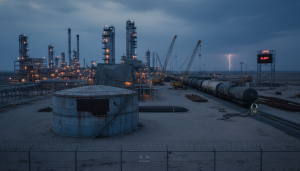
The global oil markets initiated the trading week with a notable uptick, propelled by an Iranian missile strike over the weekend that inflicted damage on Israel’s Haifa refinery. This incident, reported by Israeli media, led to a partial shutdown of the facility, though operations largely continued. The immediate aftermath saw Brent crude trading at $74.83 per barrel, while West Texas Intermediate (WTI) fetched $73.77 per barrel, reflecting an emergent risk premium in the energy sector.
Haifa Refinery Targeted: A Closer Look at the Impact
The missile attack, launched by Iran, reportedly involved approximately 40 projectiles targeting the Haifa area on a Saturday night. Bazan, the operator of the Haifa refinery, confirmed that the damage was contained, primarily affecting pipelines and transmission lines within the complex. Despite the localized nature of the impact, certain downstream facilities experienced a shutdown, as stated by Bazan in reports, while the core refining operations remained active. This resilience in the face of direct assault underscores the robust infrastructure but also highlights the escalating vulnerabilities for energy assets in the region.
Escalation Cycle: Retaliation and Heightened Tensions
Israel’s response to the Haifa attack was swift and direct, targeting critical Iranian energy infrastructure. Reports indicate Israeli forces struck two gas treatment plants situated in southern Iran and an oil storage facility in Tehran. These retaliatory strikes ignited fires at two or three storage tanks, signaling a dangerous escalation in the tit-for-tat conflict. The ongoing exchange of missiles, with Iran reportedly aiming at major Israeli population centers like Tel Aviv and Haifa, fuels growing concerns among energy analysts and investors alike. The specter of prolonged conflict looms large, carrying with it the significant risk of disrupting vital oil flows through the Strait of Hormuz, a choke point through which over 20 million barrels of oil are exported daily. Further Israeli strikes on Iranian oil infrastructure remain a distinct and unsettling possibility, adding layers of uncertainty to an already volatile market.
Investor Implications: Strait of Hormuz and Global Supply Chains
For energy investors, the potential for a full-scale disruption of crude oil exports via the Strait of Hormuz is the most critical concern. Such an event would send shockwaves through global energy markets, fundamentally altering supply dynamics. Richard Joswick, Head of Near-Term Oil Analysis at S&P Global Commodity Insight, emphasized the domino effect if Iranian crude exports face interruption. Chinese refiners, currently the primary buyers of Iranian barrels, would be compelled to seek alternative supplies from other Middle Eastern nations or increase their intake of Russian crudes. This sudden shift in demand patterns would inevitably tighten the global market and drive up prices.
Economic Ripple Effects Across the Supply Chain
Beyond direct supply issues, the escalating tensions carry broader economic implications for the oil and gas value chain. Joswick highlighted that increased geopolitical risk in the Persian Gulf would likely trigger a surge in freight rates and tanker insurance premiums. Shipping companies, already wary of operating in a conflict zone, would demand higher compensation for the elevated risks. This dynamic would contribute to a narrowing of the Brent-Dubai spread, an important indicator for global oil traders, and could significantly compress refinery margins, particularly for operations in Asia that are highly sensitive to crude pricing and shipping costs. Investors in refining companies and those with exposure to Asian energy markets should monitor these indicators closely.
Maritime Industry Reacts to Heightened Risk
The maritime sector has already begun to respond to the palpable increase in danger. Tanker owners are reportedly refusing to dispatch their vessels into the Persian Gulf and are actively withdrawing ships already present in the region. This cautious stance by shipping operators underscores the tangible risks involved. The chief executive of Frontline, one of the world’s largest tanker operators, succinctly captured the sentiment, stating that “Trade is going to become more inefficient and, of course, security has a price.” This statement serves as a stark reminder that the cost of transporting crude oil, a fundamental component of the global economy, is directly tied to geopolitical stability. Higher shipping costs translate to higher landed costs for crude, impacting everything from refinery profitability to consumer fuel prices.
Outlook for Oil and Gas Investors
The recent events surrounding the Haifa refinery attack and the subsequent retaliatory strikes mark a significant escalation in Middle East tensions, injecting a substantial risk premium into crude oil prices. For oil and gas investors, this volatile environment necessitates a heightened awareness of geopolitical developments. The potential for further disruptions to oil supply, rising operational costs for shipping, and shifts in global crude flows could dramatically impact profitability and market valuations across the energy sector. Monitoring diplomatic efforts, military movements, and their immediate effects on key shipping lanes and energy infrastructure will be paramount in navigating these turbulent times. The current geopolitical landscape ensures that the Middle East remains a critical determinant of global energy market stability and investor sentiment.