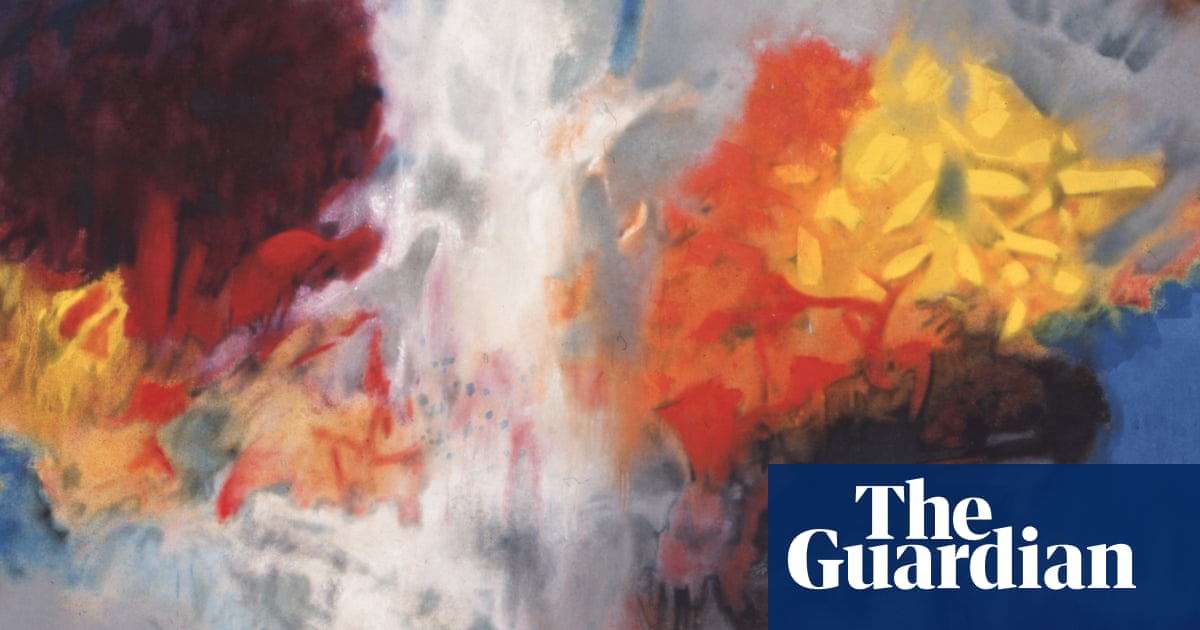
Guyana, a nation rapidly ascending as a global energy powerhouse, is witnessing an equally compelling resurgence in its cultural narrative. The overdue reappraisal of pioneering abstract artist Aubrey Williams, a Guyanese luminary who profoundly influenced the British art scene, offers a compelling lens through which to view the nation’s burgeoning confidence and its increasingly attractive investment climate. For investors monitoring the dynamic Caribbean energy landscape, this cultural awakening signals a deeper national stability and a robust identity forming alongside its significant hydrocarbon discoveries.
Aubrey Williams: A Cultural Titan Reclaims His Stature
Aubrey Williams, born in Guyana and moving to Britain in the 1950s, was a seminal figure whose abstract works presciently addressed themes of climate breakdown and the intricate legacies of British colonialism. Despite achieving recognition during his lifetime, including numerous exhibitions across the UK, his profound influence on abstract painting and the broader cultural discourse gradually receded after his passing in 1990. Now, experts and critics are spearheading a comprehensive re-evaluation, bringing his powerful contributions back into sharp focus.
Williams’s artistic signature was unmistakable: colossal canvases pulsating with intense, dramatic color. As Chili Hawes of October Gallery, which represented Williams, observes, “There was nothing pale about his work. He loved the drama; he loved the color.” This vibrant intensity, arguably, mirrors the dynamic energy currently coursing through Guyana’s economy. Residing predominantly in the UK after his 1952 arrival, with studios also in Miami and Jamaica, Williams engaged with prominent figures in the art world. A notable anecdote recounts his meeting with Pablo Picasso in Paris, facilitated by Albert Camus, where Picasso, recognizing Williams’s distinct features, invited him to pose – an encounter Williams dryly noted was not as one artist to another.
Beyond individual encounters, Williams played a pivotal role in the Caribbean Artists Movement (CAM), which emerged in Britain in the mid-1960s. This collective, founded by West Indian artists, authors, and playwrights, aimed to propel their work into the mainstream and define the essence of Black art in the post-colonial 20th century. Williams, alongside luminaries like John La Rose, Althea McNish, and Edward Kamau Brathwaite, participated in intimate gatherings he termed “warshis”—an Amerindian word from Guyana signifying meetings for “unburdening.” Academic Malachi McIntosh, authoring a new history of CAM, identifies Williams as a key intellectual force within the movement. McIntosh highlights a significant philosophical division within CAM, where some advocated for community-engaged art, while Williams championed complete artistic freedom—a principle that resonates with Guyana’s assertion of economic sovereignty today.
The current resurgence of interest in Williams mirrors the recent major retrospectives for fellow Guyanese artists Frank Bowling at Tate Modern in 2019 and Althea McNish’s significant touring exhibition in 2022. Williams’s work was prominently featured in Tate Liverpool’s landmark “Afro Modern” show in 2010, followed by a dedicated room between 2022 and 2024. Last year, Frieze Masters bestowed upon Williams a coveted spot in its “Spotlight” section, recognizing his groundbreaking contribution to painting.
Guyana’s Oil Boom: Fueling National Ambition
This vibrant cultural reawakening does not occur in a vacuum. It coincides with Guyana’s meteoric rise as a global oil and gas frontier. Offshore discoveries, particularly within the prolific Stabroek Block, have transformed the nation’s economic outlook, attracting billions in foreign direct investment and positioning it as a key player in the international energy market. Current estimates suggest Guyana could be producing over 1.2 million barrels of oil equivalent per day (boepd) by 2027, making it one of the fastest-growing producers globally. This rapid influx of wealth is not merely transactional; it is reshaping national infrastructure, educational opportunities, and, crucially, fostering a renewed sense of national pride and identity.
The vast revenues generated from its oil reserves provide the capital for transformative development across various sectors. While the primary focus remains on robust governance and sustainable resource management, the ability to invest in and celebrate national heritage, as exemplified by the Williams reappraisal, underscores a maturing nation confidently asserting its place on the world stage. For discerning investors, a nation that prioritizes both economic prosperity and cultural enrichment often presents a more stable and predictable operating environment.
Culture and Capital: A Synergistic Investment Landscape
The renewed international spotlight on artists like Aubrey Williams is more than just an art world phenomenon; it is a powerful indicator of Guyana’s burgeoning soft power and a reflection of its broader national ascendance. A nation that actively champions its cultural icons and narratives signals a deep-seated confidence and a commitment to its identity, qualities that significantly enhance its overall attractiveness to global capital. This cultural vibrancy, underpinned by robust economic growth from the energy sector, creates a compelling synergy for investors.
For those investing in Guyana’s energy sector, this cultural flourishing reinforces the narrative of a nation on a sustainable growth trajectory. Beyond the impressive geological data and production forecasts, the human element—a confident, culturally aware populace—contributes to a stable political and social environment, essential ingredients for long-term investment success. As Guyana leverages its newfound oil wealth, strategic investments in infrastructure, education, and cultural preservation are not merely expenditures but integral components of building a resilient, diversified economy capable of weathering global economic fluctuations.
Guyana’s Enduring Appeal for Energy Investors
The story of Aubrey Williams’s rediscovery, much like Guyana’s journey from an overlooked South American nation to a pivotal energy producer, is one of profound significance and overdue recognition. It underscores a national trajectory marked by resilience, innovation, and a growing global footprint. For investors scrutinizing the opportunities within the oil and gas sector, Guyana offers more than just prolific offshore blocks and attractive fiscal terms; it presents a nation in the midst of a holistic transformation.
The confluence of a thriving cultural scene and a booming energy sector paints a picture of a nation with profound potential. This dual momentum, where economic prosperity fosters cultural pride and cultural pride reinforces national stability, positions Guyana as an exceptionally compelling investment destination for energy companies seeking not only high returns but also a stake in a nation actively shaping its prosperous future. The unfolding narrative suggests that Guyana’s cultural richness, much like its vast oil reserves, is proving to be an invaluable asset, bolstering the nation’s appeal on the global stage.


