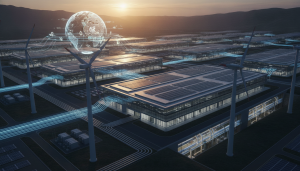
The global energy landscape is undergoing a monumental transformation, with capital flows rapidly shifting towards clean technologies at an unprecedented scale. While investors are pouring trillions into renewable energy, signaling a critical inflection point in the world’s energy transition, a central question looms large for those tracking the sector: Can the existing power grid infrastructure adequately support this rapid expansion, or will it become the ultimate bottleneck capping returns?
The Unprecedented Capital Surge in Clean Energy
Investment in renewable energy is on track to hit a staggering $2.2 trillion this year. This figure represents more than double the capital allocated to fossil fuels, underscoring a fundamental reordering of global energy priorities. According to the International Energy Agency (IEA), clean power initiatives now command over 40% of the estimated $3.3 trillion flowing into the entire global energy sector. Within this surge, solar power stands out, projected to attract an impressive $450 billion in investment.
This dramatic influx of capital is not merely supplementing the traditional energy mix; it is fundamentally reshaping power markets and how energy is consumed worldwide. The momentum behind these investments is building scale, propelling clean energy from a niche alternative to an economic imperative. Fatih Birol, the IEA’s director, highlighted the driving force behind this colossal $3.3 trillion investment, noting that “energy security” remains a primary concern amid prevailing geopolitical and economic uncertainties. While some investors adopt a cautious “wait-and-see” stance for new project approvals, Birol indicated that existing projects largely remain unaffected, demonstrating the underlying robustness of the energy transition.
China’s Pivotal Role in Global Energy Reconfiguration
At the forefront of this global energy investment surge is China, a nation whose capital deployment in the energy sector now rivals that of the United States and the European Union combined. Over the past decade, China’s share of global clean energy spending has expanded significantly, growing from a quarter to nearly a third. This formidable commitment spans a diverse portfolio, encompassing solar, wind, hydropower, nuclear, advanced battery technologies, and electric vehicles, cementing China’s position as a dominant force in shaping future energy markets.
This expansive investment is profoundly impacting the global energy balance, particularly for oil and gas investors. The sheer scale of China’s clean energy build-out, exemplified by installations like the one in Xi’an where one in five solar panels installed globally last year found a home on a Chinese roof, signifies a strategic pivot away from fossil fuel dependency. This trend has far-reaching implications for commodity demand and long-term energy pricing, signaling a structural shift in global energy consumption patterns.
Fossil Fuels Cede Ground to Electrification
The historical dominance of fossil fuel investment has unequivocally reversed. For years, capital expenditure in oil, gas, and coal outstripped investment in electricity generation, grids, and storage by a significant 30%. However, the landscape has fundamentally shifted. By 2025, projections indicate that investments in electricity production will surpass the amount spent on bringing fossil fuels to market by a remarkable 50%.
This represents a profound recalibration of capital allocation within the energy sector. While the oil and gas sector remains critical for global supply, it is now facing unprecedented competition for investment dollars. Indeed, investment in the oil and gas sector is anticipated to decline by 6% this year, marking the first such drop since 2020. This contraction is a clear indicator of the broader industry’s response to both market dynamics and evolving investor sentiment. Complementing the renewable build-out, battery storage technologies, though attracting a comparatively modest $65 billion, play an outsized role in enabling the reliable, round-the-clock delivery of intermittent renewable power. Nuclear energy, too, is experiencing a resurgence, with an expected $75 billion investment by 2025, highlighting a renewed focus on stable, low-carbon baseload generation.
The Critical Bottleneck: Is the Grid Ready?
Despite the colossal investments flowing into renewable generation, a fundamental challenge threatens to constrain growth and undermine investor returns: the capacity and readiness of the world’s electricity grids. The vast majority of existing grid infrastructure was designed for a centralized, one-way power flow from large fossil fuel or nuclear plants to consumers. This architecture is ill-suited to accommodate the decentralized, intermittent nature of renewable sources like solar and wind, which often generate power far from demand centers.
The sheer volume of new renewable generation, as exemplified by projects like the Zhangbei-Shengli 1000kV UHV AC project in China’s Inner Mongolia, necessitates massive upgrades to transmission and distribution networks. Aging grids in many developed nations struggle with congestion, limiting the amount of clean energy that can be integrated. Furthermore, the variability of solar and wind power demands sophisticated smart grid technologies, advanced energy storage solutions, and dynamic demand-side management capabilities to maintain stability and reliability. Without these upgrades, renewable projects, despite their generation capacity, may face curtailment, directly impacting their revenue streams and, consequently, investor profitability.
The investment required for grid modernization is staggering, potentially running into trillions of dollars globally. This includes new high-voltage transmission lines, digital substations, advanced sensors, and artificial intelligence-driven control systems. Regulatory frameworks, permitting processes, and local opposition often present significant hurdles to these infrastructure projects, leading to delays and increased costs. For investors in renewable energy, understanding the grid’s limitations and the pace of its evolution is paramount, as it directly influences project feasibility, operational efficiency, and ultimate financial performance. Conversely, for oil and gas investors, grid instability could paradoxically extend the reliance on dispatchable fossil fuel generation as a backup, creating complex dynamics within the broader energy market.
Navigating the Evolving Energy Investment Landscape
The energy sector is in the midst of a profound pivot, with capital decisively favoring clean power technologies. While the opportunities in renewable energy are immense, investors must critically assess the systemic challenges, particularly the state and future readiness of global electricity grids. The success of the energy transition, and the realization of projected returns, hinges not just on building more generation capacity but on an equally robust, intelligent, and flexible grid infrastructure to deliver that power effectively. For those navigating the complex interplay between traditional and new energy sources, a keen eye on grid development will be as crucial as tracking investment in generation itself, shaping the risk-reward profiles across the entire energy investment spectrum.