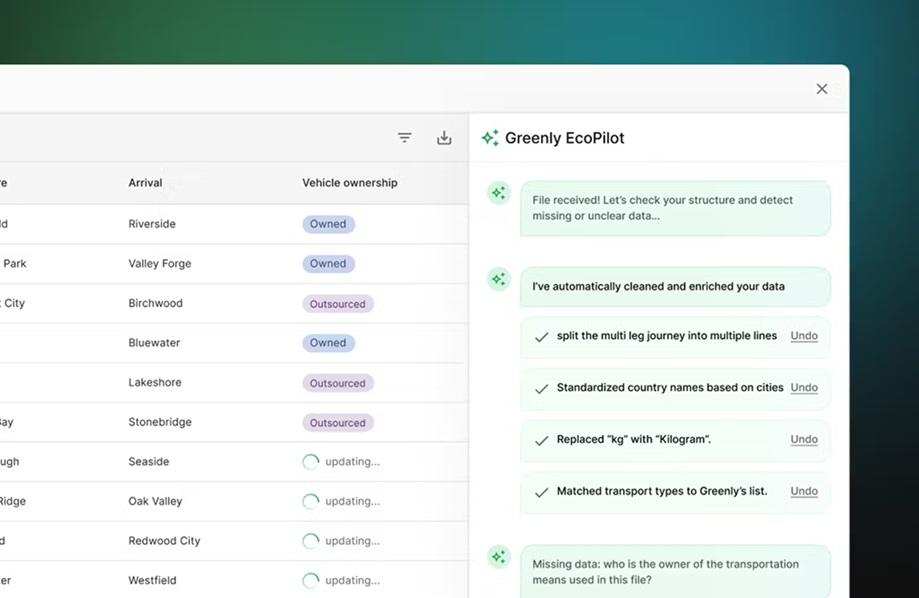
The energy sector navigates a complex interplay of market volatility, evolving regulatory landscapes, and intense investor scrutiny regarding environmental, social, and governance (ESG) performance. In this challenging environment, technological advancements designed to streamline ESG compliance are no longer a niche concern but a strategic imperative. The recent launch of EcoPilot by Greenly, an AI and language model-powered platform aimed at simplifying and accelerating carbon accounting, offers a compelling case study for oil and gas investors. This development signifies a shift from mere data collection to intelligent carbon management, a move that could significantly impact how O&G firms manage risk, attract capital, and ultimately, drive shareholder value.
AI-Powered ESG: A New Standard for Carbon Intelligence
For oil and gas companies, the burden of comprehensive ESG reporting, particularly carbon accounting, has grown exponentially. Regulatory frameworks like the EU’s CSRD, IFRS sustainability standards, and Voluntary Sustainability Reporting Standards for Micro-enterprises and SMEs (VSME) demand granular, auditable data. Greenly’s EcoPilot platform addresses this head-on by automating historically complex and labor-intensive tasks. Its proprietary algorithms are designed to automatically import physical inventory, accounting, and logistics data, rapidly structuring information and assigning emissions factors with high accuracy. This capability is crucial for O&G operators grappling with vast and intricate supply chains, where Scope 3 emissions often represent the largest portion of their carbon footprint.
The platform’s “What If” feature, allowing for live visualization of different simulations and interactive trajectories, is particularly valuable. For an industry undergoing a significant energy transition, the ability to model the impact of various decarbonization strategies or supplier commitments in real-time provides a distinct strategic advantage. This goes beyond simple reporting; it enables proactive climate strategy adaptation, transforming raw data into actionable intelligence necessary for both operational efficiency and investor relations.
Navigating Volatility: ESG as a Differentiator in a Tumultuous Market
The current market dynamics underscore the importance of robust operational and ESG frameworks for oil and gas companies. As of today, Brent Crude trades at $90.38, marking a significant 9.07% decline within the day, and a steep 19.9% drop from $112.78 just 14 days ago. WTI Crude mirrors this trend, standing at $82.59, down 9.41% today. Even gasoline prices have retreated to $2.93, a 5.18% daily decrease. This pronounced volatility, with prices fluctuating wildly within daily ranges (Brent $86.08-$98.97, WTI $78.97-$90.34), highlights an environment where capital allocation is increasingly selective.
In such a landscape, strong ESG performance can act as a critical differentiator. Investors are increasingly seeking companies that demonstrate resilience, not just against price swings, but also against regulatory and environmental risks. An AI-powered tool like EcoPilot, by simplifying compliance and providing clear, auditable carbon data, allows O&G firms to showcase their commitment to sustainability with greater transparency and efficiency. This can help attract a broader base of capital, including ESG-mandated funds, potentially lowering a company’s cost of capital and enhancing its long-term valuation amidst ongoing market uncertainty.
Anticipating Future Demands: Proactive ESG Amidst Key Energy Events
Oil and gas investors are constantly weighing future supply, demand, and policy shifts. Our proprietary data indicates a strong reader interest in forward-looking questions, such as “what do you predict the price of oil per barrel will be by end of 2026?” and “What are OPEC+ current production quotas?”. These questions underscore the prevailing uncertainty and the need for companies to be agile.
The upcoming energy calendar reinforces this need for proactive management. Investors will be keenly watching the OPEC+ JMMC Meeting on April 19th and the full OPEC+ Ministerial Meeting on April 20th for any indications of production policy changes that could further impact global supply and pricing. Beyond OPEC+, weekly data points like the API Weekly Crude Inventory (April 21st, 28th), EIA Weekly Petroleum Status Report (April 22nd, 29th), and the Baker Hughes Rig Count (April 24th, May 1st) provide crucial insights into short-term supply and demand dynamics. In this environment of constant data flow and potential shifts, O&G companies equipped with advanced carbon intelligence tools are better positioned to model potential impacts, adapt their strategies, and communicate their environmental stewardship effectively to investors who are increasingly focused on long-term resilience.
By leveraging platforms that reconcile and cross-reference data, provide aids to interpretation, and offer comparisons with industry peers, O&G operators can move beyond reactive compliance. This strategic foresight is essential for managing investor expectations and demonstrating preparedness for future regulations or market shifts, rather than being caught off guard.
Strategic Advantage: Beyond Compliance to Competitive Edge
The benefits of a platform like EcoPilot extend beyond mere regulatory compliance; they offer a genuine strategic advantage. By dramatically reducing the time and resources spent on carbon accounting, O&G companies can reallocate internal resources towards core business objectives or more impactful decarbonization initiatives. The ability to automatically import data and assign emissions factors with high accuracy significantly reduces the risk of errors and enhances the credibility of sustainability reports, which are increasingly scrutinized by stakeholders.
Furthermore, the platform’s features, such as comparing a company’s ESG indicators with others in the same sector, provide invaluable benchmarking. This allows O&G firms to identify areas for improvement, pinpoint competitive advantages, and articulate their ESG performance in a more robust and data-driven manner. This level of “carbon intelligence,” as Greenly’s CEO Alexis Normand aptly puts it, empowers companies to not only meet their reporting obligations but to actively integrate climate strategy into their overall business planning. For investors asking about the long-term prospects of individual companies, such as “How well do you think Repsol will end in April 2026,” the presence of such robust, AI-driven ESG frameworks indicates a management team focused on future-proofing their operations and maintaining a strong competitive position.
In conclusion, as the oil and gas sector continues to navigate significant market fluctuations and escalating ESG demands, technologies like Greenly’s EcoPilot represent a vital investment. By providing sophisticated, AI-driven tools for carbon accounting and intelligence, these platforms empower O&G companies to enhance operational efficiency, mitigate regulatory risk, attract diversified capital, and ultimately, build greater resilience in a dynamic and increasingly sustainability-focused global energy market.


