The global energy transition is anything but linear, and recent analysis of climate finance allocations underscores this complexity. While the stated goal of climate finance is to channel capital from wealthier, high-polluting nations to vulnerable developing countries, the reality on the ground presents a more nuanced picture. Billions of dollars are indeed flowing, but a significant portion finds its way to major economies and even prominent fossil fuel producers like China, Saudi Arabia, and the United Arab Emirates. For astute investors, this isn’t just a political footnote; it’s a critical signal about the evolving landscape of energy investments, the true pace of decarbonization, and the strategic positioning of key global players. Understanding these intricate capital flows is paramount to navigating the next phase of the energy market.
The Climate Finance Paradox: Green Capital for Oil Giants
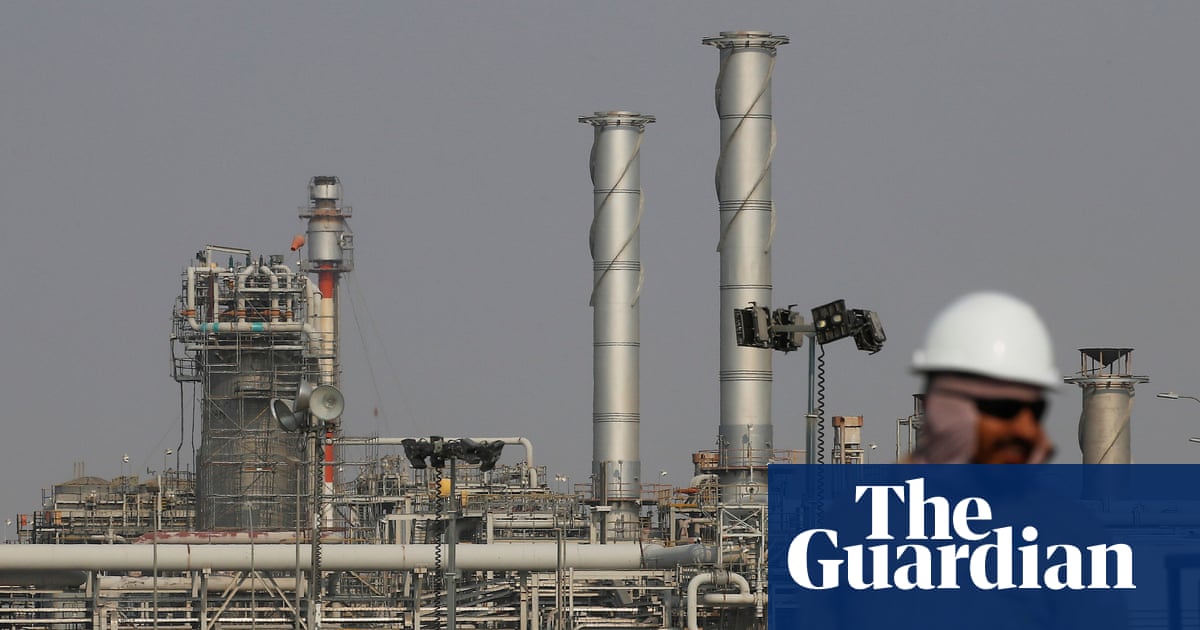
The latest data, covering over 20,000 global projects in 2021 and 2022, reveals a fascinating paradox: the very nations known for their vast fossil fuel reserves and economic might are also significant recipients of climate finance. The United Arab Emirates, a prominent oil exporter, secured over $1 billion in climate-tagged loans from Japan. These funds are earmarked for projects like a $625 million offshore electricity transmission initiative in Abu Dhabi and a $452 million waste incinerator in Dubai. Similarly, Saudi Arabia, a top-tier carbon emitter due to its colossal oilfields and ownership of Aramco, received approximately $328 million in Japanese loans, including $250 million for its electricity company and $78 million for a solar farm. China, the world’s second-largest economy, also features prominently among recipients.
This distribution challenges the conventional narrative of climate finance purely aiding the most vulnerable. While about a fifth of the funding in 2021 and 2022 did reach the 44 least developed countries (LDCs), much of it came as loans, not grants, with some LDCs like Bangladesh and Angola seeing 95% or more of their climate finance in the form of debt. This raises concerns about potential “debt traps” and the true efficacy of such aid. For investors, this pattern suggests that the energy transition is not a simple divestment from fossil fuels but rather a complex diversification strategy for major producers, aimed at building parallel green economies while maintaining their hydrocarbon dominance. This dual-track approach has significant implications for long-term commodity demand and the types of infrastructure investments that will prove most resilient.
Market Volatility Meets the Green Capital Influx
Against a backdrop of significant market volatility, the flow of climate finance into even traditional oil and gas strongholds presents a compelling picture. As of today, Brent Crude trades at $90.38 per barrel, marking a sharp 9.07% decline from its previous close, with an intraday range of $86.08-$98.97. WTI Crude mirrors this trend, currently standing at $82.59, down 9.41% for the day. This daily dip is part of a broader trend; Brent has seen a notable drop of $22.4, or 19.9%, from $112.78 just weeks ago on March 30th. Meanwhile, gasoline prices have also pulled back to $2.93, a 5.18% decrease.
This immediate market retraction in crude prices occurs even as billions in climate finance continue to be committed globally. For investors, this juxtaposition is crucial. It highlights that short-term supply-demand dynamics and geopolitical events still heavily influence crude prices, while the longer-term structural shift towards decarbonization is driven by different capital flows and strategic national interests. The fact that petrostates are receiving green loans suggests a calculated move to future-proof their economies, potentially insulating them from extreme oil price swings in the long run. Investors should consider how this dual strategy could impact the risk profile of companies operating in these regions, offering new avenues for growth in diversified energy sectors beyond pure upstream exploration and production.
Strategic Implications and Upcoming Market Catalysts
The allocation of climate finance to major oil producers like Saudi Arabia and the UAE is not merely a financial transaction; it’s a strategic maneuver with significant implications for global energy markets, particularly in the context of upcoming events. Investors must closely monitor the OPEC+ Joint Ministerial Monitoring Committee (JMMC) Meeting on April 19th, followed by the full OPEC+ Ministerial Meeting on April 20th. These gatherings are critical for assessing global oil supply policy. Will nations like Saudi Arabia and the UAE, now recipients of substantial climate finance, feel more compelled to diversify their economic base, potentially influencing their stance on production quotas?
Furthermore, the weekly API and EIA crude inventory reports, scheduled for April 21st, 22nd, 28th, and 29th, along with the Baker Hughes Rig Count on April 24th and May 1st, will provide granular insights into the immediate supply picture. While these reports reflect traditional market fundamentals, the underlying shift in capital towards green projects in petrostates could signal a gradual reorientation of investment priorities over the medium to long term. For investors, understanding whether these nations are genuinely accelerating a transition away from reliance on fossil fuels, or simply adding a green veneer to their existing energy strategy, will be key to predicting future supply trajectories and identifying emergent investment opportunities in renewable infrastructure or diversified energy plays within these regions.
Addressing Investor Concerns: Navigating a Hybrid Energy Future
Our proprietary reader intent data reveals a common thread this week, reflecting widespread investor uncertainty: “Is WTI going up or down?” and “What do you predict the price of oil per barrel will be by end of 2026?” These questions underscore the challenge of forecasting in an increasingly complex energy landscape. The flow of climate finance, particularly to major oil-producing nations and economic powerhouses, profoundly complicates these predictions.
It’s clear that the energy future is not a binary choice between fossil fuels and renewables, but rather a hybrid model. Petrostates receiving green loans are unlikely to abandon their hydrocarbon assets overnight. Instead, they appear to be pursuing a strategy of economic diversification, leveraging climate finance to build new industries, enhance energy efficiency, and develop renewable capacity. This approach could extend their economic relevance and influence, even as global energy demand patterns shift. For investors, this means moving beyond simplistic narratives. Opportunities will arise not just in pure-play renewable energy companies or traditional oil and gas majors, but in entities that facilitate this complex transition – those involved in grid modernization, carbon capture technologies, sustainable infrastructure development, and advanced materials. Understanding the nuances of these capital flows and the strategic responses of key global players is essential for constructing resilient and forward-looking investment portfolios in the evolving energy market.


