The global energy landscape is undergoing a monumental transformation, with the automotive sector leading a decisive charge towards electrification. In a move that underscores this strategic pivot, Gotion High-Tech, a prominent battery manufacturer with strong ties to Volkswagen, has secured substantial public funding to bolster its European battery production ecosystem. This development, centered on a colossal €944.3 million investment in Spain, represents far more than just another factory; it’s a critical piece in the evolving puzzle of energy security, supply chain resilience, and the relentless march of the electric vehicle (EV) revolution – a revolution with profound implications for investors in the traditional oil and gas sector.
Strategic European Investment Signals Energy Transition Acceleration
Gotion High-Tech’s significant commitment in Spain is being partially underwritten by the nation’s eMobility funding programme, PERTE. This targeted government initiative highlights a coordinated European strategy to localize the critical components of the EV supply chain. Spain, like other European nations, is actively leveraging public funds to accelerate the transition away from fossil fuels, fostering domestic capabilities in advanced manufacturing. Prior beneficiaries of the PERTE program, including Volkswagen’s own subsidiary Seat, the Stellantis Group, and VW’s dedicated battery entity PowerCo, have collectively received hundreds of millions of euros. This pattern of substantial state support for battery initiatives sends an unmistakable signal to the market: the electrification of transport is a top-tier industrial priority, backed by significant capital and political will, which will inevitably shape future energy demand scenarios.
The intricate corporate web behind Gotion’s Spanish ventures further illuminates the strategic depth of these investments. These projects were initially conceived in collaboration with Slovakian battery cell innovator InoBat. However, following Gotion High-Tech’s strategic acquisition of a shareholder position in InoBat, the operational control of these ambitious initiatives transferred to the Chinese firm. Crucially, Gotion’s largest shareholder is none other than German automotive behemoth Volkswagen. This synergistic relationship is not merely financial; Gotion plays a pivotal role in aiding Volkswagen in the development and subsequent mass production of its revolutionary “Unified Cell” battery technology. Such integrated partnerships between OEMs and battery specialists are becoming the norm, reflecting a race to secure proprietary battery technology and ensure robust supply lines – a direct competitive threat to the long-term demand for internal combustion engine vehicles and, by extension, the petroleum products that fuel them.
Pivotal €944.3 Million Investment in Valladolid
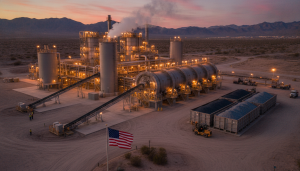
The heart of Gotion’s immediate European strategy lies in Valladolid, Spain, where the company is deploying a formidable €944.3 million investment. This capital will fund the construction of two state-of-the-art facilities. The first will be dedicated to the production of battery cathodes – a critical component defining battery performance and cost. The second will establish a sophisticated battery recycling plant. This dual-pronged approach is particularly insightful for investors tracking the energy transition. The recycling facility’s mandate is to recover ‘black mass’ – a valuable intermediate material from which essential raw materials for new battery cells, such as lithium, cobalt, and nickel, can be efficiently extracted. This focus on circularity is not merely environmentally commendable; it’s a crucial strategic play to reduce reliance on volatile global commodity markets and secure a sustainable, localized supply of critical minerals. For oil and gas investors, understanding the strategic importance of these material supply chains is paramount, as their stability and cost directly influence the competitiveness and widespread adoption of electric vehicles, ultimately impacting the demand for traditional fuels.
Integrated Supply Chain: From Morocco to Europe
Gotion’s Spanish operations are not isolated; they are conceived as an integral part of a broader, strategically planned North African-European battery production axis. The company intends to operate its new facilities in conjunction with a previously announced, substantial battery cell production plant in Morocco, slated for an impressive 20 GWh capacity. This regional integration strategy, linking raw material processing and recycling in Europe with large-scale cell manufacturing in North Africa, is designed to create a resilient and geographically diversified supply chain. Such “nearshoring” initiatives, aimed at bringing critical manufacturing closer to end markets, are a direct response to global supply chain vulnerabilities exposed in recent years. For investors in the energy sector, this strategic geographical alignment highlights the evolving global energy map, where access to resources, processing capabilities, and skilled labor in new industrial hubs like Morocco and Spain are becoming as critical as traditional oil and gas reserves.
Implications for Oil & Gas Investors
While this news directly concerns the EV battery sector, its ramifications for oil and gas investors are profound and cannot be overstated. The massive capital injection into battery production and recycling, particularly with the backing of automotive giants like Volkswagen and significant government incentives, underscores the accelerating pace of electrification. This trend directly erodes the long-term demand outlook for refined petroleum products, particularly gasoline and diesel. As EV adoption grows, fueled by such robust infrastructure investments, the peak demand for oil could arrive sooner than many traditional energy models predict. Investors must consider how this shift will impact asset valuations, future exploration and production strategies, and the imperative for traditional energy companies to diversify into new energy vectors or risk stranded assets. The proactive investment in circular economy solutions, like ‘black mass’ recycling, also reduces the environmental footprint and supply risks of EVs, making them an even more compelling alternative to internal combustion engine vehicles over the long term. This sustained, coordinated investment in battery technology and infrastructure is not just building factories; it’s systematically constructing a new energy paradigm that will inevitably reshape global commodity markets and investment portfolios for decades to come.