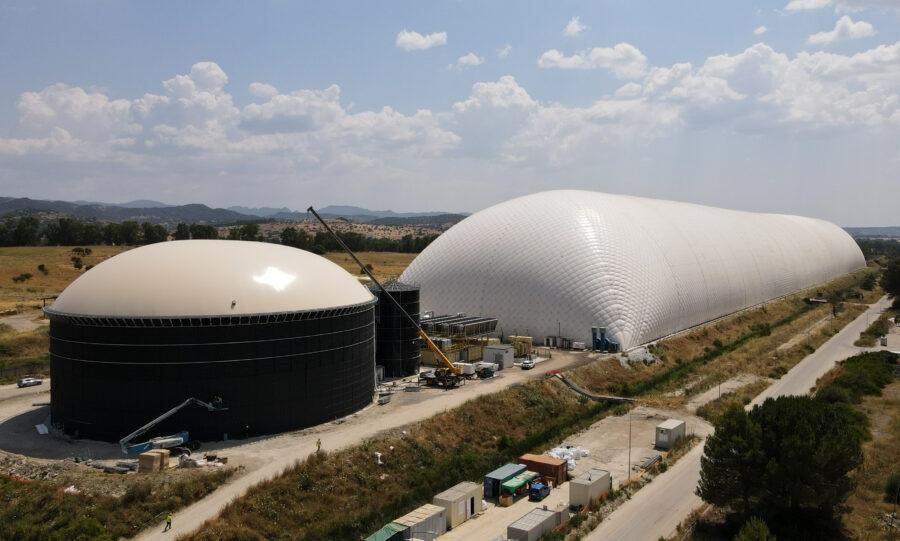
In a significant development signaling the accelerating shift towards robust, always-on renewable energy infrastructure, tech titan Google has unveiled a pivotal long-term partnership with Energy Dome, an innovative energy storage startup based in Milan, Italy. This collaboration, fortified by a strategic investment from Google, aims to globally deploy Energy Dome’s advanced long-duration energy storage (LDES) solution, directly addressing one of the most pressing challenges in achieving round-the-clock clean energy supply.
For investors keenly tracking the energy transition, this announcement underscores the critical role of energy storage as a foundational element for a grid increasingly reliant on intermittent renewable sources like wind and solar. As global energy demand escalates, driven by factors such as the electrification of transport and the surging power requirements of AI computing, ensuring continuous, reliable energy dispatch without waste becomes paramount. Long-duration storage solutions are emerging as a vital component for grid stability and asset utilization in this evolving landscape.
Energy Dome’s CO2 Battery: A Game-Changer for Grid Reliability
Founded in 2019, Energy Dome has quickly positioned itself at the forefront of the LDES sector with its proprietary CO2 Battery. This innovative system enables the expanded integration and dispatchability of renewable energy by utilizing thermodynamic processes. The CO2 Battery employs carbon dioxide as an energy storage fluid at ambient temperature. When energy is needed, the CO2 warms, expands, and drives a turbine to generate electricity, which is then dispatched into the grid as required.
What distinguishes Energy Dome’s CO2 Battery from many existing technologies, particularly lithium-ion batteries, is its remarkable ability to continuously dispatch energy for up to 24 hours. This extended duration capability directly tackles the inherent short-term limitations of conventional battery storage, providing a crucial bridge for maintaining grid stability and ensuring uninterrupted power supply when renewable generation falters due to weather conditions or time of day. For investors, this represents a significant technological leap, offering a more resilient and scalable solution for future energy grids.
Google’s Strategic Imperative: 24/7 Carbon-Free Energy by 2030
This partnership aligns directly with Alphabet’s (Google’s parent company) ambitious commitment, first declared in 2020, to operate its entire global business on carbon-free energy (CFE) 24 hours a day, seven days a week, by 2030. This objective requires Google to match its electricity demand with CFE supply every hour of every day, across every region where it operates. Achieving such a stringent goal necessitates a diverse portfolio of advanced clean energy technologies, with long-duration energy storage playing an indispensable role.
The agreement with Energy Dome marks Google’s inaugural commercial long-duration energy storage deal, signifying a critical step in its journey towards complete CFE integration. This strategic move by one of the world’s largest tech companies provides substantial validation for the LDES market and highlights the readiness of capital to flow into proven, scalable solutions that can deliver on aggressive decarbonization targets.
Global Deployment and Accelerated Commercialization
Claudio Spadacini, Founder and CEO of Energy Dome, emphasized the transformative potential of the collaboration. He noted, “The programmatic and strategic deployment of our technology at scale to help Google reach carbon-free energy represents the core of our industry-first agreement. We’re proving that a 24/7 cost-effective and carbon-free energy supply is achievable with the right technology and partnership model.” This statement underscores the commitment to not just technological innovation, but also to practical, large-scale implementation.
Under the terms of this new agreement, Google will actively support multiple commercial deployments of Energy Dome’s CO2 Battery technology across key strategic geographical regions. The pipeline for these projects is already in development, with sites and contracting stages identified in Europe, America, and the Asia-Pacific. Beyond the commercial deployment support, Google’s direct equity investment in Energy Dome further solidifies its commitment and belief in the startup’s technology and market potential.
From Google’s perspective, as conveyed by Maud Texier, a key benefit of LDES technology is its potential for significantly faster commercialization compared to some other emerging clean energy solutions. This rapid path to market enables its near-term use to flexibly and reliably expand the electricity system. The partnership with Energy Dome is specifically designed to accelerate the scaling of this technology, bringing down costs and making it more accessible for broader adoption. For investors, this signals a high-growth sector with validated demand and a clear trajectory towards widespread market penetration.
Investment Implications for the Energy Sector
This collaboration between a global technology leader and an innovative energy storage firm sends a strong signal to the broader energy market, including traditional oil and gas companies exploring diversification and investment opportunities in the new energy economy. The emphasis on long-duration energy storage as a cornerstone for reliable renewable grids suggests significant capital deployment will be directed towards this segment in the coming years.
Investors should view this partnership as a powerful indicator of the increasing maturity and commercial viability of advanced energy storage solutions. It highlights the growing demand for technologies that can bridge the intermittency gap of renewables, thereby unlocking greater investment in wind and solar projects while simultaneously strengthening grid infrastructure. The potential for LDES to enable faster, more cost-effective grid modernization presents a compelling investment thesis, offering opportunities in technology development, project financing, and infrastructure build-out across multiple continents. As the energy transition accelerates, strategic alliances and technological breakthroughs like the Google-Energy Dome partnership will be instrumental in shaping the future of global energy markets.


