Golden Pass LNG Commissioning Begins: A Deep Dive for Investors
The colossal Golden Pass Liquefied Natural Gas (LNG) export facility, a strategic collaboration between energy giants QatarEnergy (70% stake) and Exxon Mobil Corp. (30% stake), has officially initiated its commissioning phase, marking a pivotal moment for investors monitoring the burgeoning natural gas export market. Recent regulatory clearances from the Federal Energy Regulatory Commission (FERC) and a vital export timeline extension from the Department of Energy (DOE) underscore the project’s momentum, even as its financial scope expands significantly.
FERC Greenlights Initial Operations at Sabine Pass
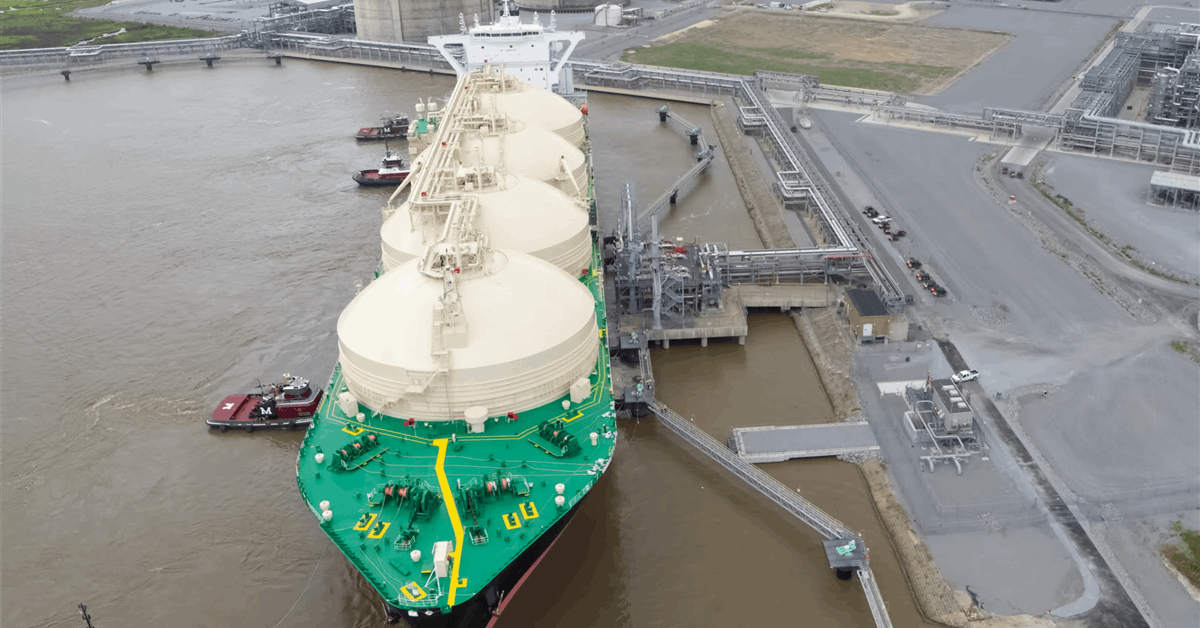
On a recent Monday, the Federal Energy Regulatory Commission granted crucial approval for the initial operational phase of select systems at the Golden Pass LNG terminal, strategically situated in Sabine Pass, Texas. This regulatory nod represents a significant step in the intricate process of bringing a mega-scale energy infrastructure project online, permitting the energization and testing of several core functionalities.
Specifically, FERC has authorized the activation of the facility’s sophisticated boil-off gas compression system, the expansive LNG storage tanks, the fundamental liquefaction system itself, the essential LNG pumps designed for product transfer, and the end flash gas compression system. This approval follows a meticulous request submitted by the project developers in December 2023, reflecting the rigorous, methodical oversight characteristic of the energy sector’s regulatory environment.
However, a nuanced understanding of this authorization is paramount for investors. Ghanshyam Patel, Chief of LNG Branch 1 within FERC’s projects office, explicitly clarified that this initial approval does not encompass the commissioning or the introduction of hazardous fluids into other sections of the vast LNG terminal. Future regulatory clearances hinge entirely upon Golden Pass LNG’s demonstrated, unwavering adherence to all conditions stipulated in FERC’s foundational December 2016 order, which originally sanctioned the project’s construction and operation. FERC staff continue to underscore their unwavering commitment to enhancing the safety and reliability standards for LNG facilities, both during their construction and throughout their operational lifespan.
Crucial Export Deadline Extended by DOE
In parallel with FERC’s commissioning approvals, the Department of Energy’s Office of Fossil Energy and Carbon Management recently granted Golden Pass LNG a critical extension to its export deadline. The original deadline for commencing exports under its long-term authorizations was December 2023. This has now been extended to December 2025, providing the project with vital flexibility.
This extension is a direct acknowledgment of construction delays experienced by the project, attributed to a confluence of factors including the global COVID-19 pandemic, pervasive supply chain disruptions, and widespread labor shortages. The significance of this DOE decision cannot be overstated for the project’s long-term commercial viability. It ensures Golden Pass LNG retains its authorization to export natural gas to non-free trade agreement (non-FTA) countries for a full 20-year period, commencing from the commercial operation date (COD) of each of its three liquefaction trains.
The project anticipates staggered commercial operations: Train 1 is projected to come online in the first quarter of 2025, followed by Train 2 in the third quarter of 2025, and finally Train 3 in the first quarter of 2026. Once fully operational, the facility is designed to boast a formidable total export capacity of 18.1 million tonnes per annum (MTPA), positioning it as a significant player in the global LNG supply chain.
Soaring Costs and Investor Considerations
While regulatory progress is a positive signal, investors must closely examine the escalating financial footprint of the Golden Pass LNG venture. Initially estimated at approximately $10 billion, the project’s cost has dramatically surged. During Exxon Mobil’s first-quarter 2024 earnings call, Chief Operating Officer Kathryn Mikells revealed that the project is now “nearing the $20 billion mark.” This near-doubling of the original budget presents a considerable factor for assessing the project’s ultimate return on investment and overall economic viability.
Construction on Golden Pass LNG commenced in 2019, with full commercial operations originally anticipated for 2025. The substantial cost increase, while not uncommon for mega-projects in the current inflationary and supply-constrained environment, will undoubtedly impact the project’s internal rate of return and payback period for its joint venture partners. Investors in ExxonMobil and QatarEnergy should factor these revised capital expenditures into their financial models, understanding that higher upfront costs typically necessitate stronger, more sustained market prices for LNG to achieve target profitability. The ability of the partners to manage these costs and deliver on time, despite the revised budget, will be critical.
Strategic Imperative in a Tightening Global LNG Market
Despite the significant cost inflation, the strategic imperative behind the Golden Pass LNG project remains robust, fueled by persistent strong global LNG demand. Europe continues its pivot away from Russian pipeline gas, driving demand for flexible LNG supplies, while Asian economies, particularly China, India, and other emerging markets, are increasingly relying on natural gas as a cleaner transition fuel. This sustained demand underpins the long-term value proposition of major export facilities like Golden Pass.
The United States has rapidly emerged as a dominant force in global LNG exports, with its abundant shale gas resources and strategic geographical position. Golden Pass LNG’s eventual full operational status will further solidify the U.S.’s role as a key energy supplier, offering crucial supply diversification to global buyers. For QatarEnergy, this project represents an important expansion of its global footprint and diversification of its export capabilities beyond its domestic production. For ExxonMobil, it integrates its upstream natural gas production with high-value downstream liquefaction and marketing, enhancing its presence across the entire gas value chain.
The successful, albeit costly, completion of Golden Pass LNG is not just about individual company performance; it significantly impacts the global energy landscape, providing critical energy security and market stability. As commissioning progresses and the first cargoes loom on the horizon, the financial community will be closely watching how this multi-billion dollar investment translates into tangible returns in a dynamic and increasingly competitive global LNG market.
Looking Ahead for Natural Gas Investors
The commencement of commissioning activities at Golden Pass LNG marks a tangible step towards its operational reality. While the project faces the challenge of significantly increased capital costs, the confluence of regulatory approvals and strong underlying global demand for natural gas paints a compelling picture of its long-term strategic importance. Investors focused on the natural gas export sector should monitor the project’s final cost figures, its precise commercial operation dates, and the realized market prices for LNG, all of which will ultimately dictate the success of this monumental joint venture in the evolving global energy arena.