Golar’s Hilli FLNG: Anchoring Long-Term Value in Argentine Energy
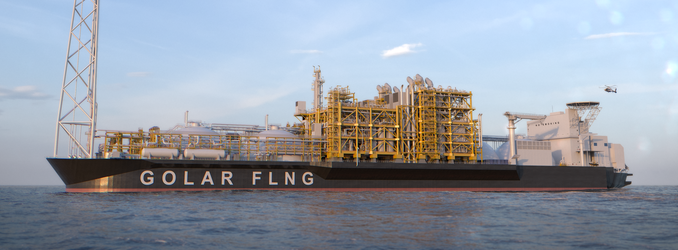
Golar LNG has solidified a monumental strategic play, reaching a final investment decision (FID) for the 20-year re-deployment charter of its Floating Liquefied Natural Gas (FLNG) vessel, the Hilli Episeyo. This pivotal agreement, initially unveiled on July 5, 2024, firmly entrenches Golar within Argentina’s rapidly expanding energy landscape. The Hilli FLNG will now serve Southern Energy S.A. (SESA), a crucial entity focused on monetizing vast gas reserves from the offshore Vaca Muerta shale formation. This development not only highlights the increasing global appetite for agile LNG solutions but also underscores Golar’s proven proficiency in delivering them.
Argentina’s Vaca Muerta shale, a geological powerhouse ranking as the world’s second-largest such resource, presents an unparalleled opportunity for the nation to emerge as a significant global LNG exporter. Golar’s engagement with SESA directly taps into this immense potential, providing essential infrastructure to process and export natural gas that would otherwise remain untapped. For investors scrutinizing growth trajectories within the energy sector, this represents a robust, enduring commitment to a high-potential region, promising stable revenue streams and direct exposure to a critical global energy resource.
Dual FLNG Strategy Poised to Unlock Billions in Earnings
The strategic vision extends beyond the Hilli FLNG. Golar and SESA have also executed definitive agreements for a 20-year charter of the MKII FLNG vessel. This second unit is currently undergoing conversion at the CIMC Raffles shipyard in Yantai, China, and its inclusion further deepens Golar’s collaboration with SESA. While this MKII charter still awaits its own FID and necessary regulatory approvals, both anticipated within 2025, the commitment signals an assertive expansion strategy designed to maximize the Vaca Muerta opportunity for both parties.
Cumulatively, these two FLNG agreements are projected to inject an impressive US$13.7 billion into Golar’s contractual earnings backlog over their respective 20-year terms. This substantial figure, calculated prior to adjustments for US-CPI and any commodity-linked tariff upside, establishes a clear financial bedrock for the company. Moreover, the agreements incorporate a compelling commodity upside mechanism: for each US$1/MMbtu increase beyond an US$8/MMbtu base price, Golar anticipates an additional US$100 million in revenue once both FLNG units are fully operational. This innovative structure offers investors direct leverage to rising natural gas prices, significantly enhancing the overall investment thesis in these energy infrastructure assets. It is important to note, however, that SESA retains the flexibility to reduce the charter terms to 12 years for the Hilli FLNG and 15 years for the MKII FLNG. This option can be exercised with a three-year notice period and the payment of an associated fee, a common feature in large-scale infrastructure contracts that balances long-term commitment with operational adaptability.
Argentina’s Ascendance as a Global LNG Export Hub
Both FLNG vessels will be strategically positioned in close proximity offshore Argentina, forming a critical hub for gas processing and export. This strategic placement underscores Argentina’s ambitious pivot towards becoming a significant player in the international LNG market. The Vaca Muerta shale, characterized by its low production costs and vast reserves, is set to transform Argentina’s energy landscape from a domestic supplier to a global exporter. Golar’s FLNG technology offers the flexibility and speed to market that conventional land-based liquefaction plants cannot match, making it an ideal solution for rapidly developing new gas fields.
The successful execution of these charters positions Golar as a premier provider of floating LNG solutions, capitalizing on the increasing global demand for natural gas and the strategic importance of energy security. Investors seeking exposure to the high-growth potential of emerging energy markets, coupled with the stability of long-term infrastructure contracts, will find Golar’s latest moves particularly compelling. The company’s expertise in converting and operating FLNG vessels provides a competitive edge, allowing for quicker deployment and monetization of stranded gas assets, which is crucial for nations like Argentina aiming to unlock their full energy potential.
Investment Outlook: Stability, Growth, and Commodity Upside
The long-term nature of these 20-year charters provides substantial revenue visibility and stability for Golar, a critical factor for investors in the volatile energy sector. The US$13.7 billion earnings backlog, combined with the built-in commodity upside, offers a compelling financial narrative. As global natural gas markets continue to evolve, influenced by geopolitical factors and the energy transition, the ability to capitalize on price fluctuations through the innovative tariff structure becomes a significant advantage. The potential for Argentina to become a leading LNG exporter, supported by Golar’s cutting-edge FLNG technology, creates a robust foundation for sustained growth.
Golar’s dual FLNG strategy with SESA is more than just a series of contracts; it represents a strategic alignment with a nation on the cusp of a major energy transformation. For stakeholders monitoring the oil and gas investment landscape, this development offers a clear signal of Golar’s continued leadership in flexible LNG solutions and its commitment to unlocking value from major unconventional gas resources. The combination of established technology, significant financial backing, and exposure to a burgeoning export market positions Golar LNG for a period of robust performance and substantial returns.