GM’s V8 Bet: A Clear Signal for Enduring Fuel Demand
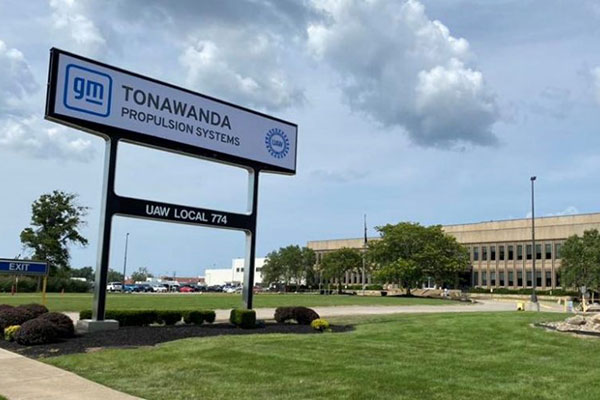
In a landscape increasingly dominated by electric vehicle (EV) narratives and ambitious decarbonization targets, General Motors has quietly made a colossal statement about the future of internal combustion engine (ICE) vehicles. With an $888 million investment in its Tonawanda Propulsion facility to build the next generation of V8 engines for full-size trucks and SUVs, starting in 2027, GM is signaling a long-term commitment to gasoline-powered demand. This isn’t just a maintenance upgrade; it’s a strategic, forward-looking capital allocation that offers a vital counter-perspective to the prevailing “peak oil demand” discourse, particularly for investors navigating the complex energy transition.
A Billion-Dollar Bet on Sustained ICE Demand
GM’s decision to pour nearly $900 million into its Tonawanda plant, following a previous $500 million investment in its Flint Engine plant, represents a multi-billion dollar commitment to its V8 engine program. This isn’t a short-term hedge; it’s a strategic vision extending well into the next decade. The new V8s, slated for production in 2027, promise enhanced performance, improved fuel economy, and lower emissions, directly addressing consumer expectations and regulatory pressures. By focusing on full-size trucks and SUVs – a highly profitable segment – GM is acknowledging the enduring consumer preference for these vehicles, particularly in North America. This investment secures 870 jobs, including 177 at-risk roles, underscoring the company’s belief that a robust market for these vehicles will persist. For oil and gas investors, this move should serve as a powerful reminder that while the energy transition is underway, the demand for refined petroleum products, especially gasoline for high-value segments, remains a fundamental component of the energy mix for the foreseeable future.
Navigating Current Volatility with a Long-Term View
GM’s long-term investment decision unfolds against a backdrop of significant short-term market volatility, a common challenge for energy investors. As of today, Brent crude trades at $90.38 per barrel, experiencing a notable 9.07% decline within the day, with a range between $86.08 and $98.97. Similarly, WTI crude has fallen 9.41% to $82.59, fluctuating between $78.97 and $90.34. Gasoline prices have also seen a dip, currently at $2.93, down 5.18% for the day. This immediate market sentiment, influenced by various global factors, reflects a bearish tone. Looking at the broader trend, Brent crude has seen a substantial drop of 18.5% over the past 14 days, falling from $112.78 on March 30th to $91.87 yesterday. While these daily and bi-weekly swings capture headlines and influence short-term trading strategies, GM’s nearly $900 million commitment to V8 production starting in 2027 offers a crucial counter-narrative. It suggests that underlying, structural demand for gasoline-powered vehicles, particularly in key segments, is expected to remain robust enough to justify such significant capital expenditure, irrespective of near-term price fluctuations. This dichotomy highlights the importance for investors to differentiate between transient market noise and foundational long-term demand signals.
Investor Questions Point to Future Demand Uncertainty
Our proprietary reader intent data reveals a consistent focus among investors on understanding the future trajectory of oil demand and prices. A frequently posed question this week is, “what do you predict the price of oil per barrel will be by end of 2026?” This underscores a prevailing uncertainty about long-term market fundamentals. While much of the public discourse centers on the rapid adoption of electric vehicles and the potential for peak oil demand, GM’s strategic V8 investment directly challenges this singular narrative. If a major automaker is willing to sink nearly a billion dollars into developing and manufacturing new generation V8 engines for production commencing in 2027, it implies a strong internal forecast for sustained demand for gasoline-fueled trucks and SUVs well beyond the middle of the decade. This perspective suggests that while EV penetration will grow, it may not displace ICE vehicles as quickly or comprehensively as some models predict, especially in high-payload, long-range, or performance-oriented applications. For investors grappling with future price predictions, GM’s move provides a tangible, real-world data point suggesting a more resilient demand floor for petroleum products than often assumed in aggressive peak-demand scenarios.
Upcoming Market Catalysts and the Enduring Demand Signal
Looking ahead, the energy market will be acutely focused on several critical upcoming events that could influence near-term price action. The OPEC+ Joint Ministerial Monitoring Committee (JMMC) meeting on April 18th, followed by the full Ministerial meeting on April 19th, will be closely scrutinized for any shifts in production quotas, a topic our readers are keenly interested in, often asking “What are OPEC+ current production quotas?”. Additionally, weekly crude inventory reports from the API (April 21st, 28th) and the EIA (April 22nd, 29th), along with the Baker Hughes Rig Count (April 24th, May 1st), will provide vital insights into immediate supply-demand balances. These events are crucial for managing short-term positions and understanding market sentiment. However, the significance of GM’s multi-year investment transcends these immediate catalysts. It functions as a powerful, tangible signal of enduring long-term fuel demand. While OPEC+ decisions and inventory swings will dictate volatility in the coming weeks, GM’s strategic capital allocation serves as a robust indicator that the demand for gasoline, driven by a resilient market for full-size ICE trucks and SUVs, will likely remain robust for years to come. This necessitates a balanced investment strategy, weighing short-term market dynamics against compelling long-term industry commitments that underpin future demand for crude derivatives.