The energy landscape is undergoing a profound transformation, and established players are rapidly adapting their strategies to capture new growth vectors. General Motors, a titan of the automotive industry, is making a significant move beyond its traditional electric vehicle (EV) focus by strategically partnering with Redwood Materials to repurpose and deploy its battery technology for stationary energy storage systems. This initiative represents a critical pivot, leveraging GM’s multi-billion dollar investment in battery production to address surging electricity demand from the power grid and, critically, from the burgeoning artificial intelligence (AI) data center sector. For investors, this diversification offers a crucial hedge against potential EV market fluctuations and positions GM as a key player in the rapidly expanding energy infrastructure market.
Maximizing Battery Investment Amidst Shifting Priorities
General Motors has poured substantial capital into establishing U.S.-based EV battery production capabilities. This strategic partnership with Redwood Materials, founded by Tesla co-founder JB Straubel, allows GM to extend the lifecycle and utility of these advanced battery cells. By supplying both new and used U.S.-made battery cells for large stationary packs, GM is effectively creating a robust secondary market for its core EV technology. This move is not merely about sustainability; it’s a shrewd business decision to maximize return on investment (ROI) from its extensive research, development, and manufacturing efforts in battery technology. The market for grid-scale batteries and backup power is no longer niche; it’s rapidly becoming essential infrastructure, driven by escalating electricity demand. This strategic expansion aligns with a growing sentiment among investors who are encouraging companies to pursue new applications for cleaner energy technology, particularly in areas that enhance domestic security and supply chain resilience. As one venture capitalist recently put it, “climate tech has gone from green to khaki,” emphasizing the shift towards solutions that support national interests and mitigate uncertainties inherent in purely climate-driven investments.
The Macro Energy Environment and Investor Focus
Against the backdrop of GM’s strategic shift, the broader energy market continues to present a complex picture. As of today, Brent Crude trades at $94.7 per barrel, reflecting a slight dip of 0.24% within a day range of $94.7 to $94.91. Similarly, WTI Crude is at $90.97, down 0.35%, fluctuating between $90.85 and $91.5. This relatively stable intraday pricing follows a more significant trend over the past fortnight, where Brent saw a notable decline of $9, or 8.8%, from $102.22 on March 25 to $93.22 on April 14. This volatility underscores the ongoing uncertainties in global oil supply and demand dynamics, which in turn influence the economic landscape for all energy investments, including renewables and storage. Our proprietary reader intent data reveals a keen investor interest in understanding these dynamics, with frequent queries about base-case Brent price forecasts for the next quarter and the consensus 2026 Brent outlook. This focus highlights the market’s continuous search for stability and predictability, elements that GM’s diversification into stationary storage aims to provide through a more resilient revenue stream, less susceptible to direct oil price fluctuations.
Forward Outlook: Upcoming Events and Emerging Demand Drivers
The coming weeks hold several key events that will shape the global energy narrative, and while primarily focused on traditional oil and gas, their ripple effects are pertinent to the burgeoning battery storage market. The OPEC+ Joint Ministerial Monitoring Committee (JMMC) meeting on April 18, followed by the Full Ministerial meeting on April 20, will be closely watched for any signals regarding production policy. Decisions from these gatherings can significantly impact crude prices, influencing everything from industrial operational costs to the perceived urgency of energy transition investments. Furthermore, weekly API and EIA crude inventory reports, scheduled for April 21, 22, 28, and 29, will offer crucial insights into U.S. supply and demand. A tighter oil market, potentially driven by OPEC+ cuts or strong demand, could further accelerate the push for energy independence and alternative solutions, making GM’s battery storage venture even more compelling. Importantly, GM and Redwood Materials have indicated that they will share more financial details about their partnership later this year. These forthcoming disclosures will be critical for investors to quantify the potential revenue streams and long-term value creation from this collaboration, especially as the energy storage market, fueled by explosive growth in data centers, continues to expand. The Energy Department forecasts that data centers alone could consume 12% of U.S. power generation by 2028, creating an undeniable and rapidly accelerating demand for reliable, scalable power solutions.
Technological Advancement and Investment Implications
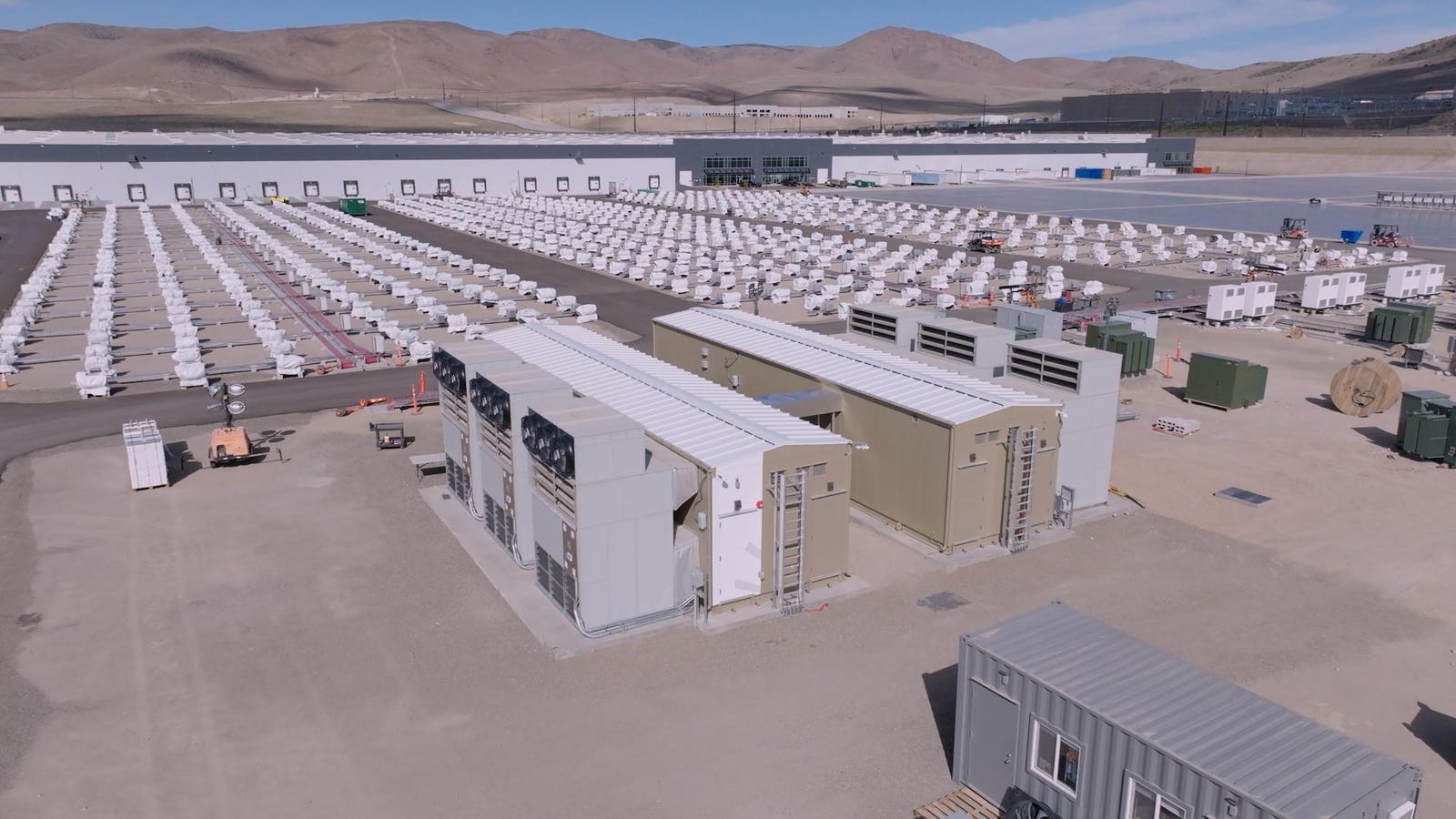
GM’s commitment to battery innovation extends beyond its existing lithium-ion EV cells. The company recently announced plans to produce lower-cost lithium-iron phosphate (LFP) cells at its Spring Hill, Tennessee, plant, alongside new lithium-manganese-rich cells designed to shave at least $6,000 off the cost of electric truck battery packs. These technological advancements are not confined to the EV sector; they have profound implications for stationary energy storage. Cheaper, more energy-dense, and more durable battery chemistries will make grid-scale storage, microgrids, and data center backup solutions significantly more economically viable and scalable. Redwood’s successful deployment of a 63 megawatt-hour battery microgrid for Crusoe, an AI infrastructure company, utilizing used GM batteries at its Nevada headquarters, serves as a tangible proof point of this strategy in action. For investors, this demonstrates GM’s capability to not only produce cutting-edge batteries but also to create value from their entire lifecycle. This diversification mitigates risks associated with a sole reliance on the fluctuating EV market, positioning GM as a more resilient and versatile energy technology provider. The partnership underscores the increasing importance of integrated supply chains and the circular economy for batteries, highlighting investment opportunities not just in manufacturing, but also in recycling and repurposing critical materials.