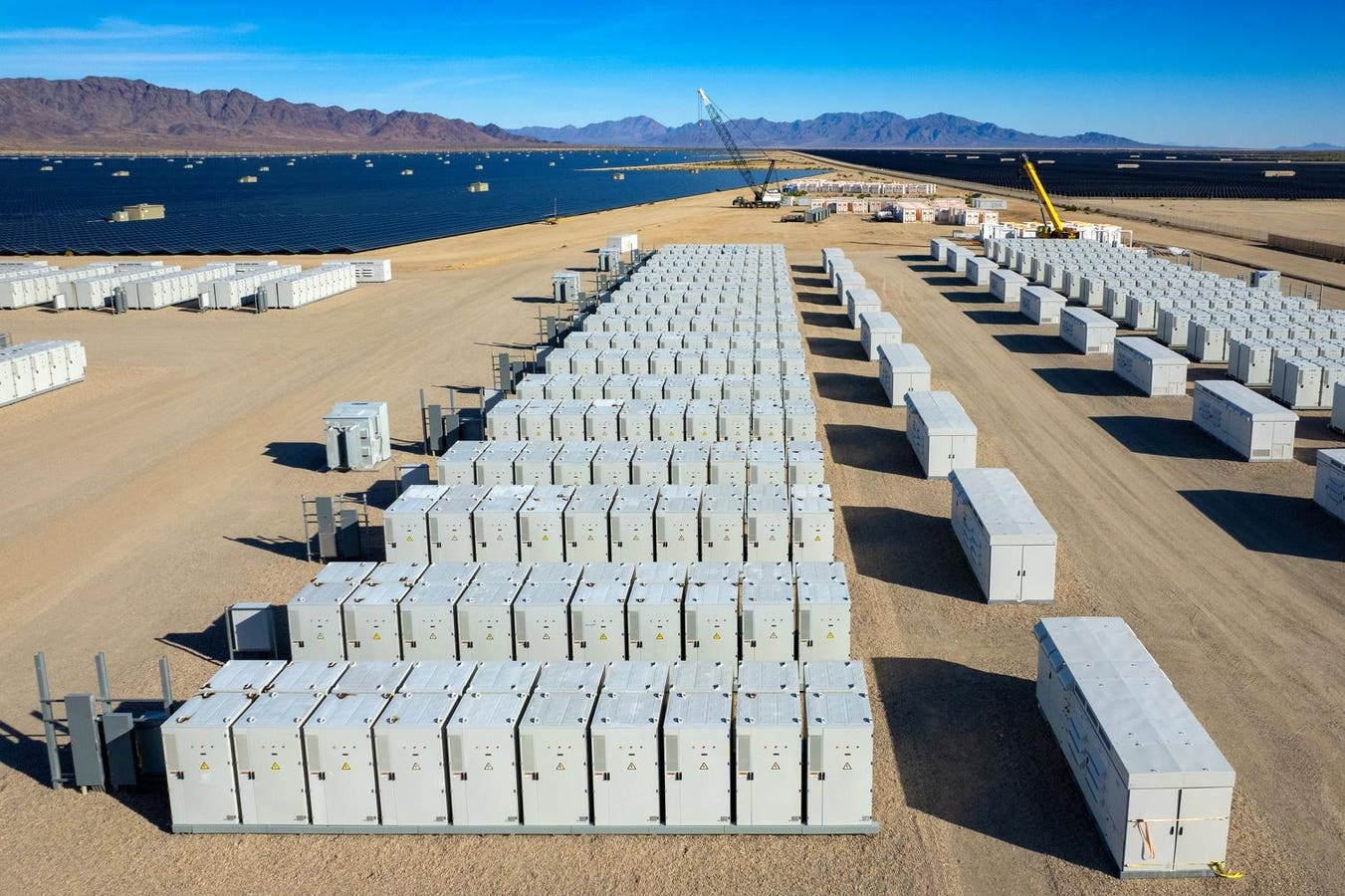
In a significant strategic maneuver that signals evolving dynamics within the broader energy sector, General Motors, a titan of American manufacturing, is extending its considerable investment in battery technology beyond electric vehicles (EVs). The automaker has forged a partnership with Redwood Materials, a prominent player in battery recycling and now energy storage, to deploy its U.S.-manufactured battery cells into stationary energy storage systems designed for grid infrastructure and the burgeoning needs of artificial intelligence (AI) data centers.
This collaboration sees GM leveraging its substantial R&D and production capabilities, supplying both new and previously used battery cells. Redwood Materials, a company co-founded by Tesla luminary JB Straubel, will then integrate these cells into large-scale, stationary battery packs. The initiative follows Redwood’s recent establishment of Redwood Energy, a dedicated unit focused on delivering such energy storage solutions. For investors tracking the intricate dance between traditional energy and emerging technologies, this development underscores a critical shift: the quest for reliable, scalable power is creating new markets and competitive pressures across the energy landscape.
The Expanding Frontier of Grid-Scale Storage
Kurt Kelty, GM’s battery chief, succinctly captured the essence of this pivot, stating, “The market for grid-scale batteries and backup power isn’t just expanding, it’s becoming essential infrastructure.” He further emphasized, “Electricity demand is climbing and it’s only going to accelerate.” This sentiment resonates deeply with oil and gas investors who understand the foundational role of consistent energy supply. As intermittent renewable sources like wind and solar proliferate, the stability of electrical grids becomes a paramount concern. Stationary battery storage offers a crucial solution, buffering power fluctuations and providing critical backup, potentially reducing the reliance on traditional natural gas peaker plants for grid balancing.
For O&G companies, this trend presents both challenges and potential opportunities. While enhanced grid storage could theoretically dampen demand for some fossil fuel-derived electricity generation, it also highlights the immense and growing need for *all* forms of energy. The sheer scale of demand, particularly for stable baseload power to charge these massive battery arrays, could still lean on efficient natural gas-fired generation in many regions, creating a complex interplay rather than outright displacement.
Diversifying Beyond the EV Horizon
GM’s move can be viewed as a calculated diversification strategy, maximizing returns on its multi-billion-dollar investments in battery technology. The automotive giant has been a frontrunner in the U.S. EV market, boasting an impressive 104% sales gain in the first half of the year, placing it second only to Tesla in total volume, thanks to models like the battery-powered Chevrolet Equinox. However, the road ahead for EV sales is not without its bumps.
Industry analysts, such as Cox Automotive’s Stephanie Valdez Streaty, project a more turbulent second half of the year for the EV market. “With government-backed incentives set to end in September and economic pressures mounting, the second half of the year will be a critical test of EV demand,” Streaty noted, anticipating “Q3 will likely be a record, followed by a collapse in Q4, as the electric vehicle market adjusts to its new reality.” This anticipated deceleration, coupled with the potential impact of new policy frameworks, encourages companies to seek additional revenue streams and applications for their core technologies.
A recent legislative act, reflecting a shift in administrative policy, introduces uncertainties not only for EV adoption but also for large-scale wind and solar projects. This environment compels innovators to explore new avenues for cleaner energy technologies, a strategy actively encouraged by many investors seeking to mitigate risks associated with singular market dependencies. Nicole LeBlanc, a partner at Toyota’s Woven Capital venture fund, articulated this evolving perspective, observing that “climate tech has gone from green to khaki,” emphasizing a shift from purely environmental motivations to considerations of domestic security and robust supply chains. This “second market” provides a compelling financial rationale, de-risking investments by tapping into accelerated demand and increased capital flows beyond just climate-driven initiatives.
Data Centers: A Colossal Appetite for Power
Perhaps one of the most compelling drivers for stationary energy storage comes from the explosive growth of data centers, particularly those fueling the AI revolution. These digital behemoths are rapidly becoming insatiable consumers of electricity. The U.S. Energy Department projects that data centers could account for a staggering 12% of the nation’s power generation by 2028. This immense demand necessitates not just significant power capacity but also extreme reliability and resilience—qualities that battery microgrids are perfectly positioned to deliver.
Redwood Materials has already demonstrated its capabilities in this arena, having supplied a substantial 63 megawatt-hour battery microgrid to Crusoe, an AI infrastructure company, for its Nevada headquarters. This example highlights the immediate and critical need for dedicated, robust power solutions that can ensure uninterrupted operations for computationally intensive AI applications. For oil and gas investors, this presents a nuanced picture: while these data centers might increasingly rely on battery storage for stability, the sheer scale of their power needs means that baseload generation—often supplied by natural gas—remains a fundamental component of the energy mix, providing the raw energy to charge and maintain these systems.
Implications for Oil & Gas Investors
This evolving landscape, characterized by significant investment in battery technology for grid and data center applications, demands close attention from oil and gas investors. The strategic moves by companies like GM illustrate a broader trend towards diversified energy portfolios and a proactive response to escalating electricity demand.
Firstly, the rise of grid-scale storage could reshape the competitive dynamics for natural gas peaker plants. While batteries offer rapid response, the economics of long-duration storage and the overall energy input still present opportunities for gas-fired generation. Secondly, the insatiable power demands of AI data centers will require monumental energy inputs. Even with advanced battery storage, the underlying baseload generation, often derived from natural gas or other stable sources, will be critical to sustain these operations. This implies continued, and potentially growing, demand for reliable fossil fuel generation to support the digital economy.
Finally, the emphasis on domestic supply chains and security, as highlighted by the “green to khaki” shift, resonates with the energy independence narrative often championed by the O&G sector. Investments in critical minerals for batteries, or in technologies that enhance the efficiency and environmental footprint of traditional energy sources, could present new avenues for O&G companies to participate in the broader energy transition. The GM-Redwood partnership is more than just an EV story; it’s a clear signal that the future energy market will be a complex mosaic where all forms of energy, and the infrastructure to support them, will play vital roles.