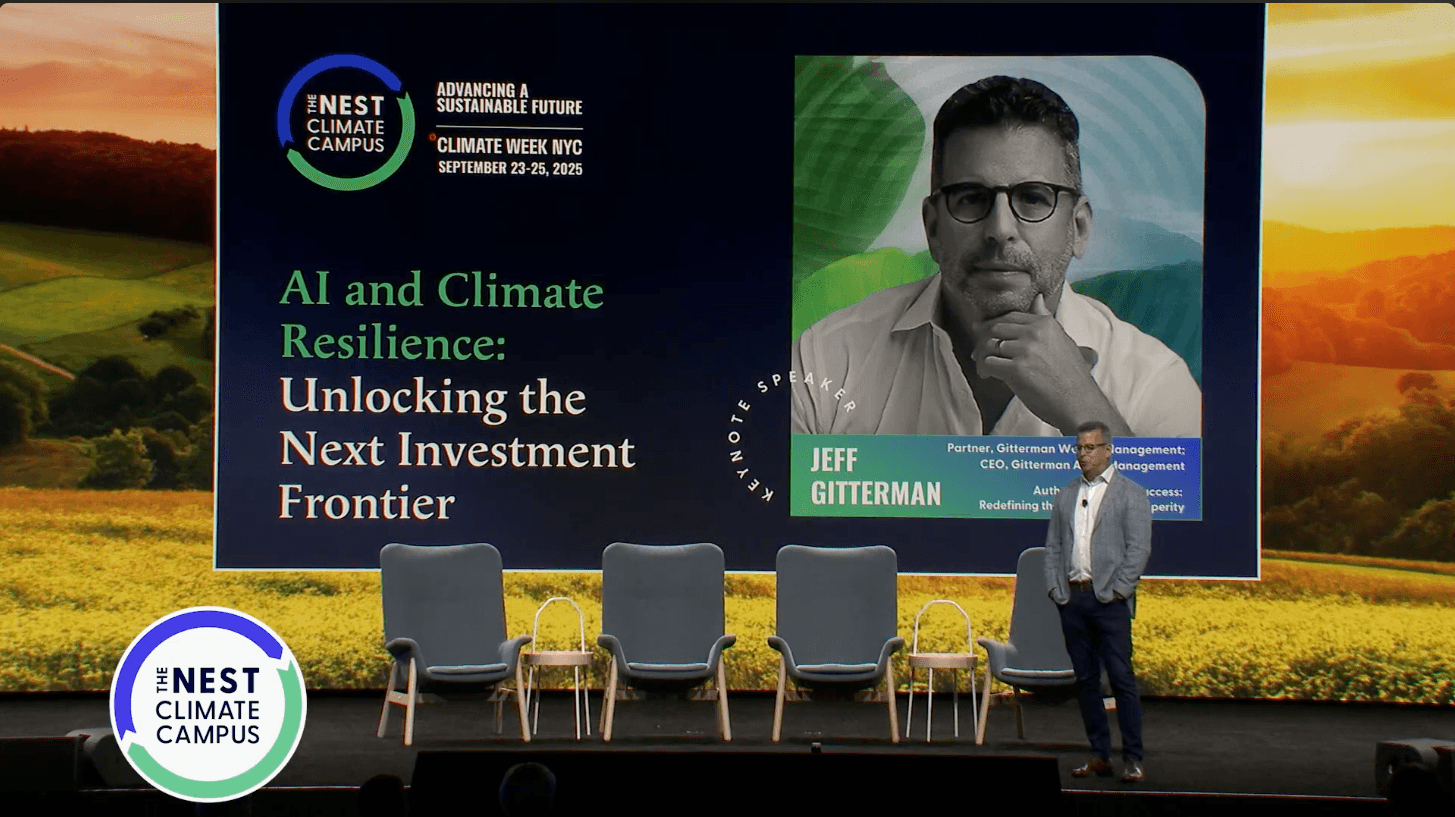
The convergence of Artificial Intelligence (AI) and climate change is rapidly reshaping global capital markets, creating both unprecedented demands and innovative investment opportunities. While the broader energy sector grapples with traditional supply-demand dynamics and geopolitical shifts, a compelling new narrative is emerging: AI’s insatiable energy appetite is accelerating the need for climate resilience investments. This paradigm shift, recently articulated by a leading voice in climate-focused investment, underscores that physical climate risk is becoming a dominant factor in capital allocation, creating a ripe environment for strategic plays in foundational infrastructure.
Shifting Capital Focus Amidst Market Volatility
For years, the energy investment landscape has been dominated by cycles of boom and bust, driven by geopolitical events, production quotas, and global demand fluctuations. However, the foundational thesis that physical climate risk will become the paramount consideration for capital markets is gaining significant traction. This perspective suggests that while the transition to a fully decarbonized economy may be slow and arduous, the immediate and ongoing impacts of climate change necessitate urgent investment in adaptation and resilience. This strategic pivot is dramatically accelerated by the AI race, which demands immense energy and infrastructure, thereby creating a powerful, albeit indirect, catalyst for climate-focused development.
This long-term investment horizon, however, coexists with an undeniably volatile immediate market. As of today, Brent Crude trades at $90.38, marking a significant 9.07% decline within the day, with its price range oscillating between $86.08 and $98.97. Similarly, WTI Crude stands at $82.59, down 9.41% for the day, having traded between $78.97 and $90.34. Gasoline prices have also dipped to $2.93, a 5.18% decrease. This immediate downward pressure on prices is part of a broader trend; our proprietary data shows Brent Crude has fallen nearly 20% in the last 14 days alone, dropping from $112.78 on March 30th to today’s $90.38. This sharp decline underscores the inherent unpredictability of short-term energy markets, yet paradoxically, it highlights the pressing need for resilient infrastructure that can withstand both climate shocks and market turbulence, an area where AI’s demands ironically provide further impetus.
AI’s Energy Demands Fueling “Picks and Shovels” Investments
The conventional wisdom often posits AI as a potential savior for climate change, offering advanced modeling and optimization solutions. However, a more immediate and tangible impact is AI’s colossal energy footprint. The computational power required to train and run large AI models translates directly into soaring electricity demand, which in turn necessitates robust and often expanded energy infrastructure. This creates a unique investment thesis centered not on the speculative “AI gold,” but on the fundamental “picks and shovels” required to support this new technological frontier while simultaneously building climate resilience.
Three key investment verticals stand out in this accelerated landscape. Firstly, **Sustainable Infrastructure and the Grid** represents a prime opportunity. Utilities are at the forefront of AI adoption, deploying the technology to address critical operational challenges such as preventing brownouts, enhancing fire risk modeling, and optimizing vegetation management. The investment imperative here is clear: support the modernization and expansion of grid infrastructure to create a more efficient, reliable, and resilient energy system. This is a dual-benefit play, simultaneously meeting AI’s surging energy demands and fortifying against climate-induced disruptions.
Secondly, **Water Investment** emerges as an increasingly critical area. Water scarcity and management are accelerated physical climate risks that demand immediate, scalable solutions for both resilience and security. From advanced water treatment technologies to smart irrigation systems and infrastructure upgrades to prevent leaks and ensure equitable distribution, capital flows into this sector are poised for significant growth, driven by both climate adaptation needs and the foundational requirements of a growing, tech-reliant global economy.
Finally, **Adaptation and Resilience Companies** form a broad category encompassing various solutions that mitigate the impacts of an already changing world. This includes everything from advanced weather forecasting and early warning systems to climate-resilient building materials, coastal protection projects, and innovative agricultural practices. The central theory is that as physical climate risks intensify, capital will increasingly be directed towards companies providing tangible solutions to adapt and build resilience against these unavoidable changes.
Navigating Near-Term Volatility and Investor Priorities
While the long-term strategic shift towards climate resilience and AI-driven infrastructure is compelling, investors remain keenly focused on the immediate drivers of the oil and gas markets. Our proprietary reader intent data reveals a strong interest in short-to-medium term price predictions, with common inquiries including “what do you predict the price of oil per barrel will be by end of 2026?” and specific questions around “OPEC+ current production quotas.” This highlights the challenge for investors: balancing the urgent need for long-term climate adaptation with the imperative to navigate current market volatility and capitalize on traditional energy sector movements.
The upcoming energy events calendar underscores this immediate focus. This week, the **OPEC+ JMMC Meeting on April 19th** and the subsequent **OPEC+ Ministerial Meeting on April 20th** will be closely watched. Any decisions regarding production levels could significantly impact global supply, potentially influencing the trajectory of crude prices well into the second half of 2026. Following these, the **API Weekly Crude Inventory on April 21st** and the **EIA Weekly Petroleum Status Report on April 22nd** will provide crucial insights into U.S. supply and demand dynamics, offering a snapshot of the world’s largest consumer market. These events, alongside the regular **Baker Hughes Rig Count on April 24th and May 1st**, offer tangible points of analysis for investors seeking to understand near-term market direction. For those evaluating specific energy companies, such as inquiries about “How well do you think Repsol will end in April 2026,” understanding these immediate market drivers is paramount, even as the broader investment thesis pivots towards climate resilience and AI’s long-term demands.
The Provocation: AI’s Limits and the Human Factor
Despite AI’s potential to accelerate infrastructural improvements and data analysis for climate resilience, a critical, provocative question lingers: can AI truly “solve” climate change before it’s too late? The argument is that AI, designed to understand and even cater to human biases, may ultimately reflect our inherent divisiveness and aggression back at us. If an individual believes climate change is a fabrication, AI might, in its pursuit of user engagement and acceptance, coddle that view rather than challenge it with objective reality. Conversely, if an AI system is trained on data reflecting climate change as an existential threat, its generated solutions might be perceived as alarmist or overly aggressive by those with differing perspectives.
This “bias trap” is a crucial consideration for investors. While AI can certainly optimize energy grids, manage water resources, and improve adaptive strategies, its capacity to fundamentally shift human behavior and political will – the ultimate drivers of climate action – remains unproven. Therefore, investors must approach AI-driven climate solutions with a nuanced understanding, recognizing the technology’s powerful capabilities in infrastructure and data management, but also its inherent limitations when confronted with deeply ingrained human perceptions and societal divisions. The real investment opportunity lies in leveraging AI for the tangible, physical solutions that build resilience, rather than relying on it as a panacea for complex socio-political challenges.


