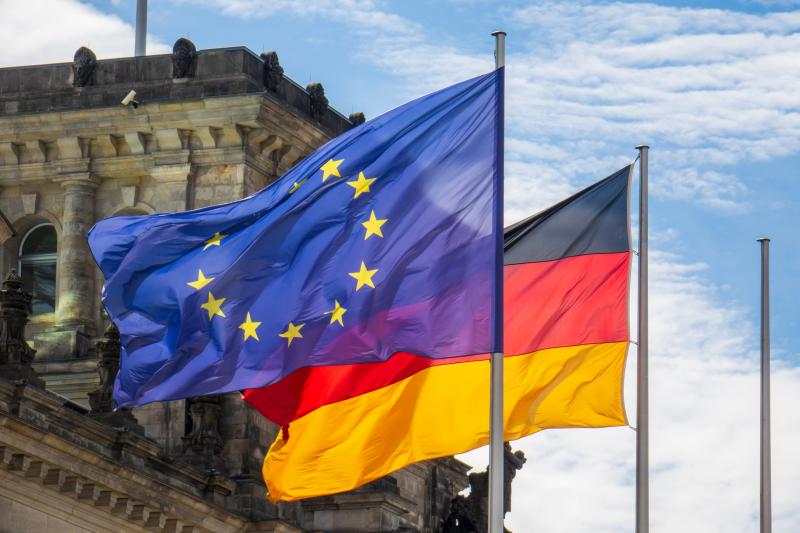
Germany is once again signaling its clear commitment to sustainable finance, a move with profound implications for the global energy landscape and traditional hydrocarbon investments. The Federal Ministry of Finance is preparing to reinstate its Sustainable Finance Beirat, the national advisory board tasked with shaping the country’s sustainable finance strategy. This isn’t merely a bureaucratic reshuffle; it’s a clear signal to capital markets that Europe’s largest economy intends to accelerate its green transition, further integrating environmental, social, and governance (ESG) objectives into its financial policy framework. For oil and gas investors, this represents a reinforcement of the long-term headwinds facing hydrocarbon demand and a renewed push towards financing clean technologies, warranting a critical re-evaluation of portfolio exposures and future growth drivers.
Germany’s Renewed Push for Green Finance Leadership
The decision to reactivate the Sustainable Finance Beirat (SFB) before the end of the year, following a post-election hiatus, underscores Germany’s ambition to be a pioneer in sustainable investment. Composed of influential figures from both the real economy and the financial sector, the board’s mandate extends beyond mere recommendations. It aims to reduce bureaucracy and streamline reporting requirements, explicitly designed to accelerate the financing of sustainable business models and clean technologies. This proactive stance by Berlin will inevitably impact capital allocation decisions across Europe. As a leading economic power within the EU, Germany’s strengthened sustainable finance agenda sets a precedent, encouraging other member states to intensify their own green initiatives. Investors must recognize that this isn’t just about Germany; it’s about the broader European commitment to decarbonization, which will incrementally shift capital away from traditional energy sources.
Macro Headwinds Intensify Amid Persistent Demand Skepticism
The timing of Germany’s renewed sustainable finance commitment comes against a backdrop of fluctuating, yet fundamentally pressured, crude prices. As of today, Brent crude trades at $94.58, reflecting a modest daily dip of 0.37% within a tight range between $94.56 and $94.91. However, this single-day movement masks a more significant trend: Brent has shed a substantial 12.4% in the last fortnight, falling from $108.01 on March 26th to its current level. This persistent downward pressure, also seen in WTI crude at $90.85, which is down 0.48% today, indicates underlying demand skepticism that policies like Germany’s only reinforce. The market’s preoccupation with future price trajectories is palpable, with our reader intent data highlighting a strong demand for base-case Brent price forecasts for the next quarter, alongside a keen interest in consensus 2026 Brent forecasts. This reflects an investment community grappling with how to model sustained demand shifts, particularly from major consuming regions like Europe. Germany’s policy, while not a direct daily price driver, is a structural component influencing these long-term demand assumptions, pushing the narrative towards peak oil demand sooner rather than later.
Upcoming Events and the Long-Term Demand Outlook
Looking ahead, while immediate price movements will be influenced by near-term supply-demand balances, the long-term trajectory is increasingly shaped by policy decisions from key economies. The upcoming OPEC+ Joint Ministerial Monitoring Committee (JMMC) meeting on April 18th, followed by the Full Ministerial meeting on April 20th, will be critical junctures for supply-side management. While these gatherings typically focus on quotas and output levels, the backdrop of strengthening sustainable finance commitments from major economies like Germany adds a unique dimension to their deliberations. OPEC+ must increasingly factor in the long-term trajectory of demand erosion driven by such policies, even as they manage immediate market balances. Furthermore, weekly data points like the API and EIA crude inventory reports, scheduled for April 21st/22nd and April 28th/29th, provide vital snapshots of inventory levels. However, these short-term indicators exist within a broader context where fundamental demand drivers are being systematically challenged by green policy initiatives. Investors must weigh the immediate impact of supply adjustments against the compounding effect of sustained efforts to reduce fossil fuel dependency, emanating from economic powerhouses like Germany.
Investment Strategy in a Decarbonizing Europe
For oil and gas investors, Germany’s renewed commitment to sustainable finance necessitates a deeper look at portfolio resilience. The direct implications include increased capital flow into clean technologies and green bonds, potentially raising the cost of capital for traditional fossil fuel projects. Indirectly, it signals a tightening regulatory environment and growing stakeholder pressure on companies with significant hydrocarbon exposure. Companies with diversified portfolios, those actively investing in carbon capture, hydrogen, or renewable energy projects, are better positioned to navigate this evolving landscape. Conversely, pure-play upstream or refining operations in regions highly exposed to European demand may face increasing scrutiny and valuation discounts. Investors are rightly asking about the longevity of demand and how geopolitical events intersect with the energy transition. Germany’s move underscores that the energy transition is not a distant concept but an active, policy-driven reality in major economies. Adapting investment strategies to account for accelerated decarbonization and reduced bureaucracy for green projects will be paramount for long-term success in the shifting energy paradigm.


