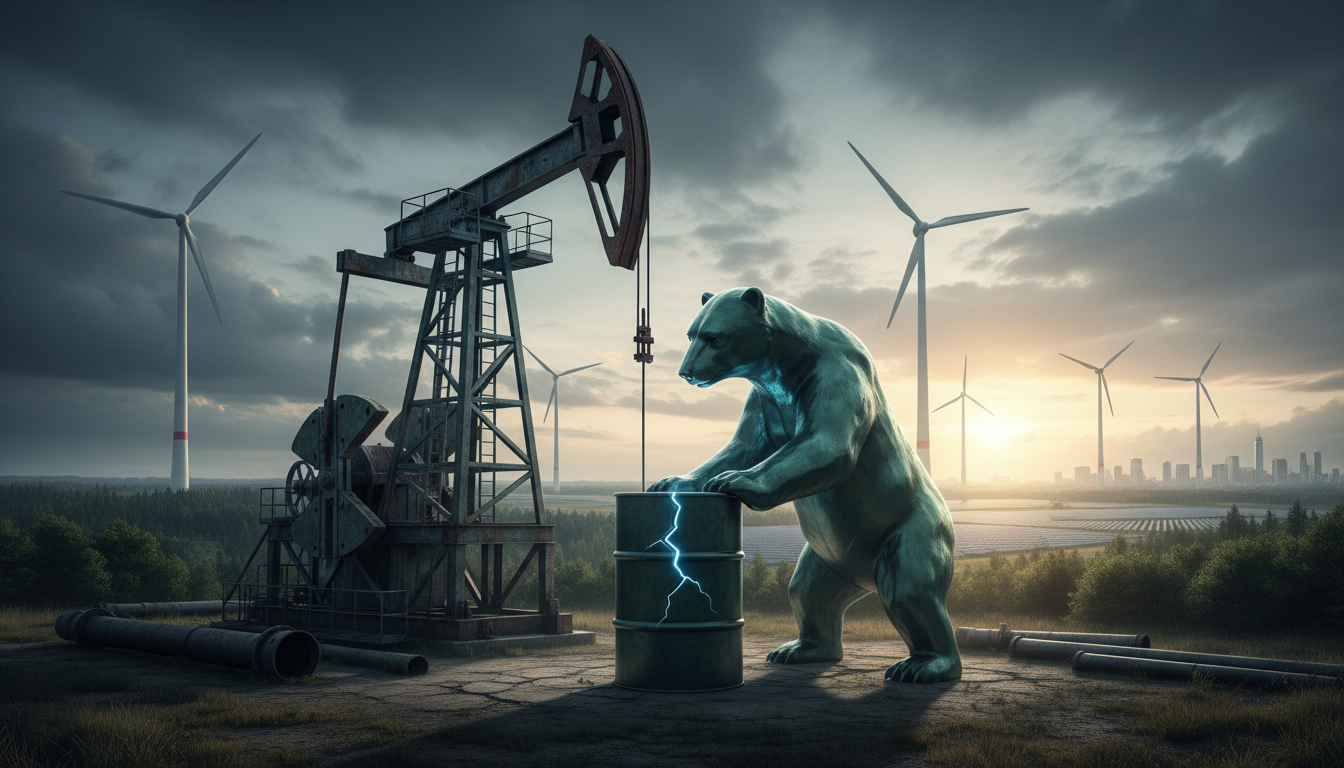
Germany has officially launched its Climate Protection Program, a substantial €8 billion initiative set to reshape the European energy landscape over the next four years. This bold move underscores Berlin’s unwavering commitment to slashing emissions by 65% by 2030, benchmarked against 1990 levels, and sends a clear, long-term bearish signal to investors with significant exposure to fossil fuels in Europe. This isn’t merely an environmental gesture; it’s a strategic economic maneuver designed to bolster national competitiveness and significantly reduce Germany’s susceptibility to the notorious volatility of global fossil fuel prices. For oil and gas investors, understanding the depth and breadth of this program is crucial for navigating the evolving European energy market.
Germany’s Dual Strategy: Climate Action Meets Energy Independence
The core of Germany’s new program lies in its dual objectives: aggressive climate mitigation and enhanced energy independence. With 67 distinct measures spanning energy, transport, buildings, and agriculture, the plan aims to eliminate over 25 million tons of CO2 annually by the end of the decade. This comprehensive approach signals a mature understanding of the energy transition, recognizing its economic imperatives alongside its environmental goals. Federal Environment Minister Carsten Schneider’s comments highlight a governmental resolve that transcends typical political cycles, emphasizing a vision where Germany’s economy modernizes, society builds greater resilience against crises, and the nation becomes demonstrably less reliant on costly and unpredictable oil and gas imports. For investors, this translates into a stable and predictable policy environment favoring green investments, while simultaneously signaling a systemic pivot away from traditional hydrocarbon reliance that will persist for the foreseeable future.
Wind Power: A Direct Headwind for Natural Gas Demand
A cornerstone of this ambitious plan is a significant expansion in onshore wind power capacity. Germany is targeting an additional 12 gigawatts (GW) of onshore wind generation. This direct substitution is projected to displace electricity production equivalent to 15 to 20 conventional gas-fired power plants, preventing approximately 6.5 million tons of CO2 emissions by 2030. The government’s commitment to new tender rounds underscores its determination to achieve a cumulative 115 GW of installed onshore wind capacity by 2030, a figure that demands close attention from natural gas and coal asset holders assessing long-term European demand forecasts. This aggressive push into renewables offers substantial opportunities for investors in wind energy development, manufacturing, and grid infrastructure, but poses a significant threat to the continent’s natural gas import volumes.
As of today, Brent Crude trades at $92.45, down 0.85% for the day, having ranged between $91.39 and $94.21. Similarly, WTI Crude stands at $88.69, down 1.09%, with its daily range from $87.64 to $90.71. Gasoline prices are also showing weakness at $3.1, down 0.96%. This current market softness, alongside a 14-day Brent trend that has seen prices decline from $101.16 to $94.09 – a notable $7.07 or 7% drop – underscores a market already grappling with demand uncertainties. Germany’s accelerated renewable push, particularly its ambitious wind targets, adds another significant layer of long-term demand erosion for natural gas, intensifying the bearish sentiment for European gas contracts and challenging the outlook for global crude demand.
Industrial Decarbonization: Reshaping European Energy Consumption Patterns
While specific details on every industrial measure were not fully disclosed, the program clearly signals a comprehensive approach to industrial decarbonization. This segment of the plan will undoubtedly drive significant shifts away from traditional fossil fuels in manufacturing, heating, and industrial processes. Such initiatives typically involve widespread electrification, the adoption of green hydrogen as a fuel and feedstock, and substantial investments in energy efficiency technologies. For investors, this implies a structural reduction in demand for natural gas and, to a lesser extent, industrial fuel oils across one of Europe’s largest economies. Many of our readers are keenly focused on the long-term price trajectory of commodities, with questions like “what do you predict the price of oil per barrel will be by end of 2026?” This German initiative, coupled with broader EU-wide directives, suggests that sustained high prices in European oil and gas markets will face increasing headwinds in the medium to long term as industrial consumption patterns fundamentally change. Companies heavily reliant on fossil fuel inputs in Germany will face increasing pressure to transition, creating both risks and opportunities for their respective supply chains and investors.
Navigating Upcoming Catalysts Amidst Policy Shifts
While Germany’s climate program represents a long-term structural shift, immediate market sentiment and price action will continue to be influenced by near-term supply-demand dynamics. Investors should closely monitor upcoming data releases for fresh insights. The EIA Weekly Petroleum Status Report, scheduled for release on April 22nd, April 29th, and May 6th, will provide crucial updates on crude oil and product inventories in the U.S., which often set the tone for global markets. Similarly, the API Weekly Crude Inventory reports on April 28th and May 5th offer an early indication of these trends. On the supply side, the Baker Hughes Rig Count on April 24th and May 1st will shed light on North American drilling activity, influencing future production forecasts. Furthermore, the EIA Short-Term Energy Outlook on May 2nd will provide updated projections for supply, demand, and prices, potentially incorporating the broader implications of aggressive climate policies like Germany’s. These near-term events, while important for tactical positioning, should always be viewed through the lens of the overarching structural shift signaled by Germany’s comprehensive push away from fossil fuels, which will exert persistent downward pressure on demand over time.
Investment Implications: Re-evaluating European O&G Exposure
Germany’s substantial €8 billion Climate Protection Program is a clear and unambiguous signal to the investment community: the pace of energy transition in Europe is accelerating, and the structural decline of fossil fuel demand is a governmental priority. For investors heavily exposed to European natural gas, coal, and even certain refined products, this program introduces significant long-term downside risk. The aggressive expansion of wind power and the systematic decarbonization of industry will directly erode demand for traditional hydrocarbons. Conversely, this creates immense opportunities for those positioned in renewable energy development, manufacturing of green technologies, grid infrastructure upgrades, and innovative energy efficiency solutions. We advise investors to critically re-evaluate their portfolios for alignment with this rapidly evolving landscape, scrutinizing the long-term strategies of companies operating in and supplying to the European energy sector. The era of predictable fossil fuel demand growth in Germany, and increasingly across Europe, is undeniably drawing to a close.


